


–President Ali urges culture, work ethic changes to maintain momentum for national development
–says government working to adopt a more flexible labour force to address shortages
LABOUR shortages and persistently low turnout rates on construction sites are challenges being faced that could threaten the pace of national development, President Dr. Irfaan Ali has warned, even as the government moves to adopt a more flexible labour model within existing laws to reduce delays on key projects.
An assessment of government-funded projects revealed that average labour attendance in December fell below 35 per cent across several major sites. According to the President, such levels of absenteeism are unsustainable for a country seeking to build resilient and long-term infrastructure.
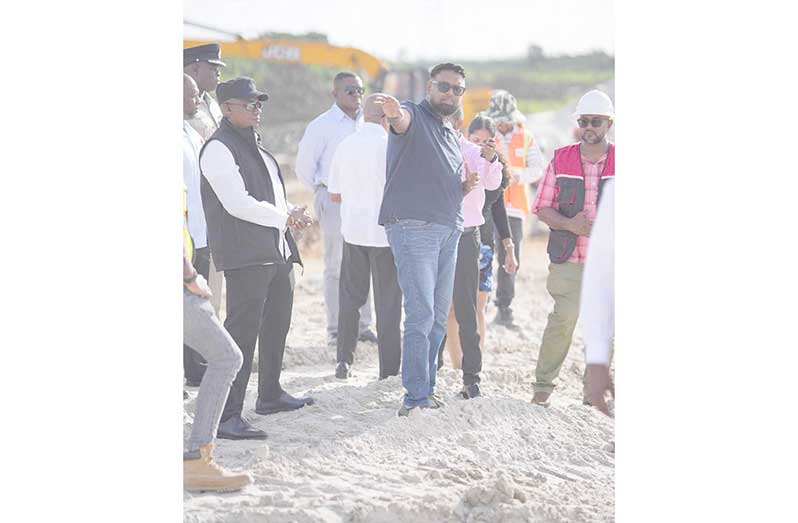
“And that is why you’re adopting a very flexible labour model within the context of our laws, so that we would not have too much delays or stagnation in the development and expansion of government infrastructure, private sector infrastructure, and investments,” Dr. Ali said on Tuesday during a site visit to the ongoing Buzz Bee Dam and Land of Canaan East Bank Demerara Highway.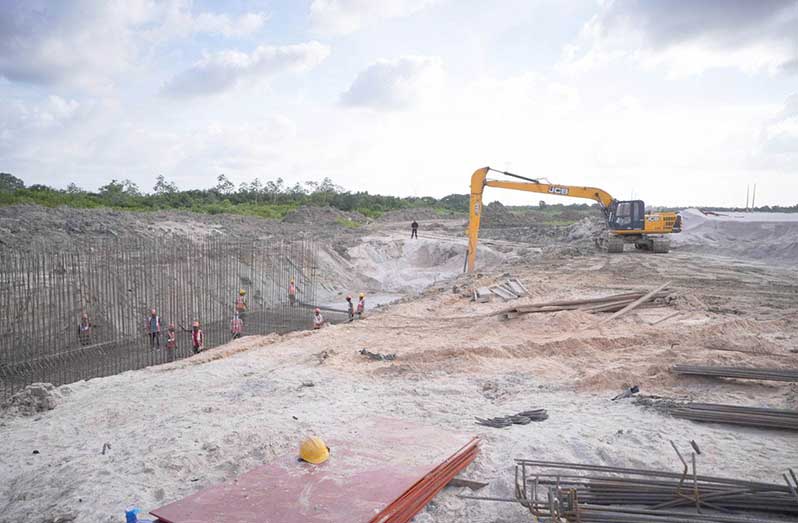
He explained that the findings of the assessment raise serious concerns about the prevailing work culture in both the public and private sectors. “We did an assessment among the projects; government projects, and the average turnout rate in December was below 35 per cent of labour on various project sites,” he noted, adding:
“Now that’s a culture we have to avoid! We can’t build a country that is resilient and sustainable with that work culture and that work ethic when you have 35 per cent labour turnout on major projects like these, and in the private sector.”
Dr. Ali said that addressing these challenges is critical as the country continues its rapid development drive. “So, as we continue to build, it’s important that we address these challenges, and we don’t develop a work culture or a work habit that you know is going to be detrimental to our development at a national and individual level in the long term,” he said.
He also disclosed that recent meetings with private sector representatives highlighted similar concerns, particularly regarding the availability, productivity, and cost of labour. “They, too, have expressed major concerns in terms of, one, availability of labour, and secondly, the productivity, of course, the increasing cost of labour, but importantly also is the work ethic,” Dr. Ali said.
Emphasising the need for urgent and coordinated action, the President said the issue must be tackled decisively if the country is to sustain its development momentum. “We must do better; we must do better if we are to build for the long term,” he said.
In 2025, efforts were made to begin establishing a comprehensive human capital strategy designed to tackle critical labour shortages.
President Ali had also said that in order to sustain the rapid pace of Guyana’s development, the country’s human capital must become more mature to thrive in a dynamic economy.
The President had then urged stakeholders and key private-sector players to take advantage of existing policies and programmes to support upskilling and greater access to tertiary education.
“We have to ensure that our human capital is being developed and matured at an equivalent pace. And what do I mean? Maturity of the human capital is understanding what is required in level of effort and level of commitment in this phase of our development,” he had said, noting: “If our human capital put the same level of effort in advancing themselves, whether it’s upskilling themselves and actually optimising the opportunities available for them to make money, then we will have a very broader growth trajectory.”
Just last month, the government launched a new public service upskilling platform, built in collaboration with Coursera, as a decisive shift away from outdated systems and towards digital adaptability and greater human-capital development.
The goal is to create a digitally-integrated Public Service, enhance productivity, and prepare for the next industrial revolution, ensuring that Guyana remains competitive globally.
President Ali had also stressed the need to embrace a new way of working, focused on agility, results, and accountability, backed by skilled human capital and advanced technology.
He underscored then that the aim is to build the best workforce for the future by integrating all activities to make life easier for citizens.