


KINGSTON – US Secretary of State Marco Rubio made a rare visit to the Caribbean this week, vowing to be an ally to the region in the “global war on gangs”.
He also acknowledged that more must be done to stem the flow of firearms from US ports.
The vast majority of gun crimes in the Caribbean are committed with weapons bought in the US. The Compass reported last year that at least 75% of firearms offences on the islands could be linked directly to American gun sales.
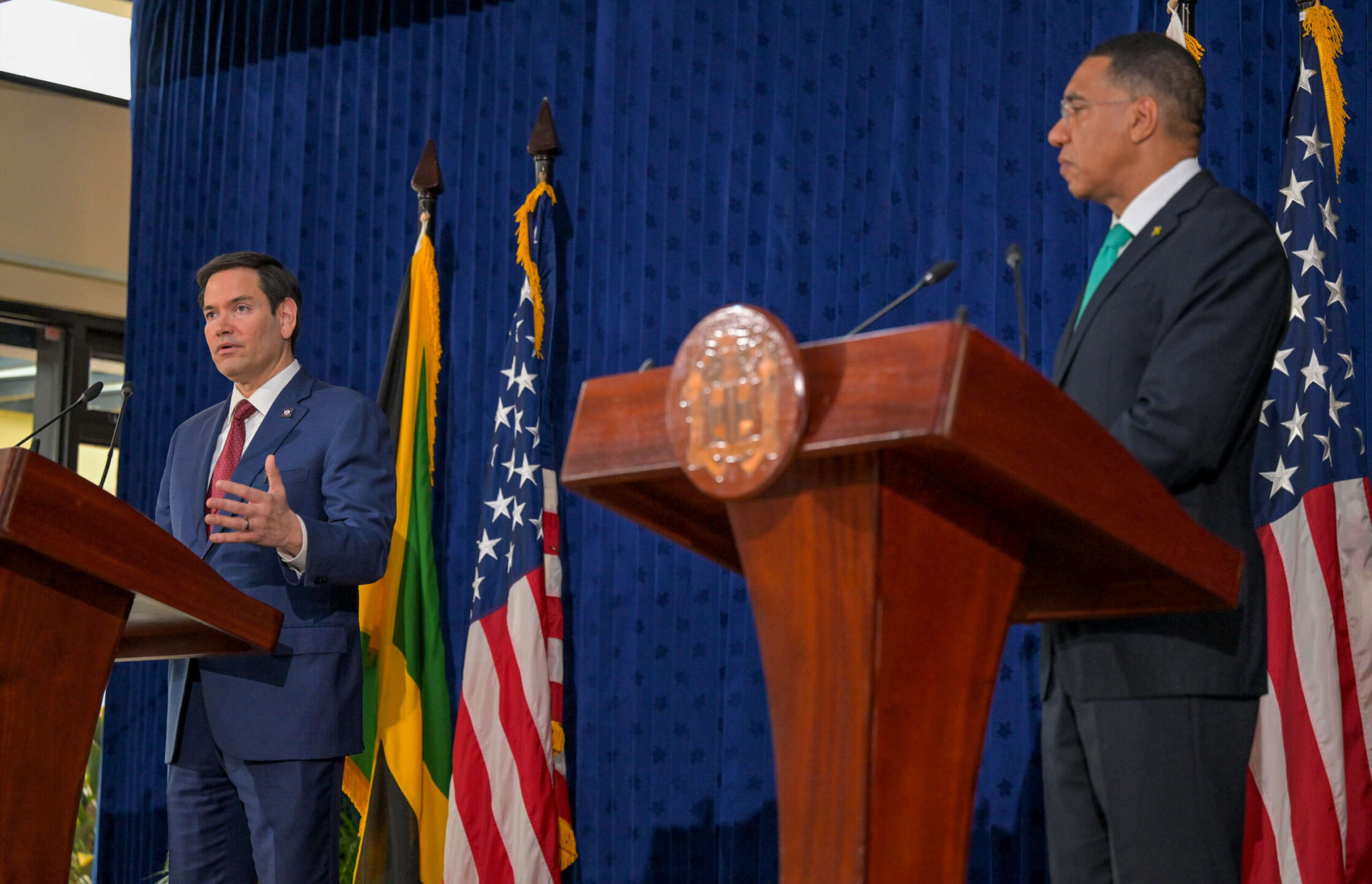
Rubio was in Jamaica on Wednesday for talks with Caribbean leaders on security, trade, energy and immigration as well as the crisis in Haiti.
The visit came against the backdrop of the Trump administration’s announcement of punishing tariffs on shipping and cuts to development spending and climate research.
Despite those concerns, Rubio suggested the US was looking to build alliances in a region it considers to be its “third border”. And he hinted at possible compromise with countries that ally with the US on security.
The Cayman Compass was on the ground in Kingston for a press conference with Rubio and Jamaica’s Prime Minister Andrew Holness following bilateral talks between the two men.
It was a rare opportunity to get a first-hand impression of how a US administration, which for better or worse is taking a keener interest in the Caribbean, views its role in the region.
Here we look at some of the key talking points.
Partners in a ‘global war on gangs’
A key element of the talks was the partnership between the US and Jamaica to fight organised crime networks.
This is something that has significant downstream effects for Cayman. As the Compass reported in detail last year, the majority of firearms used in crimes on the island come from the US via Jamaica, often arriving in clandestine overnight drug shipments.

Both Holness and Rubio talked up their joint commitment to make inroads in fighting this, saying transnational criminal enterprises require transnational crime fighting.
Guns in Cayman
Rubio made a significant concession here, acknowledging something that many in the Caribbean have known for some time.
“Many of the guns and the weapons that are being used by gangs to commit acts of violence here in Jamaica are purchased in the United States and then shipped here and we want to commit to doing more to stopping that flow,” he said.
He also committed to expand US support for Jamaica to help build capacity on maritime domain awareness, on intelligence surveillance and on training.
Holness said there was “significant policy alignment” between the two countries in what he called the “global war on gangs”.
‘The US is not getting out of the aid business’
Key areas of concern for many in the region, including Cayman, have been announcements of cuts to US development aid, to NOAA and to grant organisations for climate research and resilience projects.
Not all those issues came up on Wednesday, but the cuts to USAID, which funded a storm surge modelling exercise in Cayman and has a number of significant projects throughout the region, was something Rubio tackled head on.
“The United States is not getting out of the aid business,” he said.
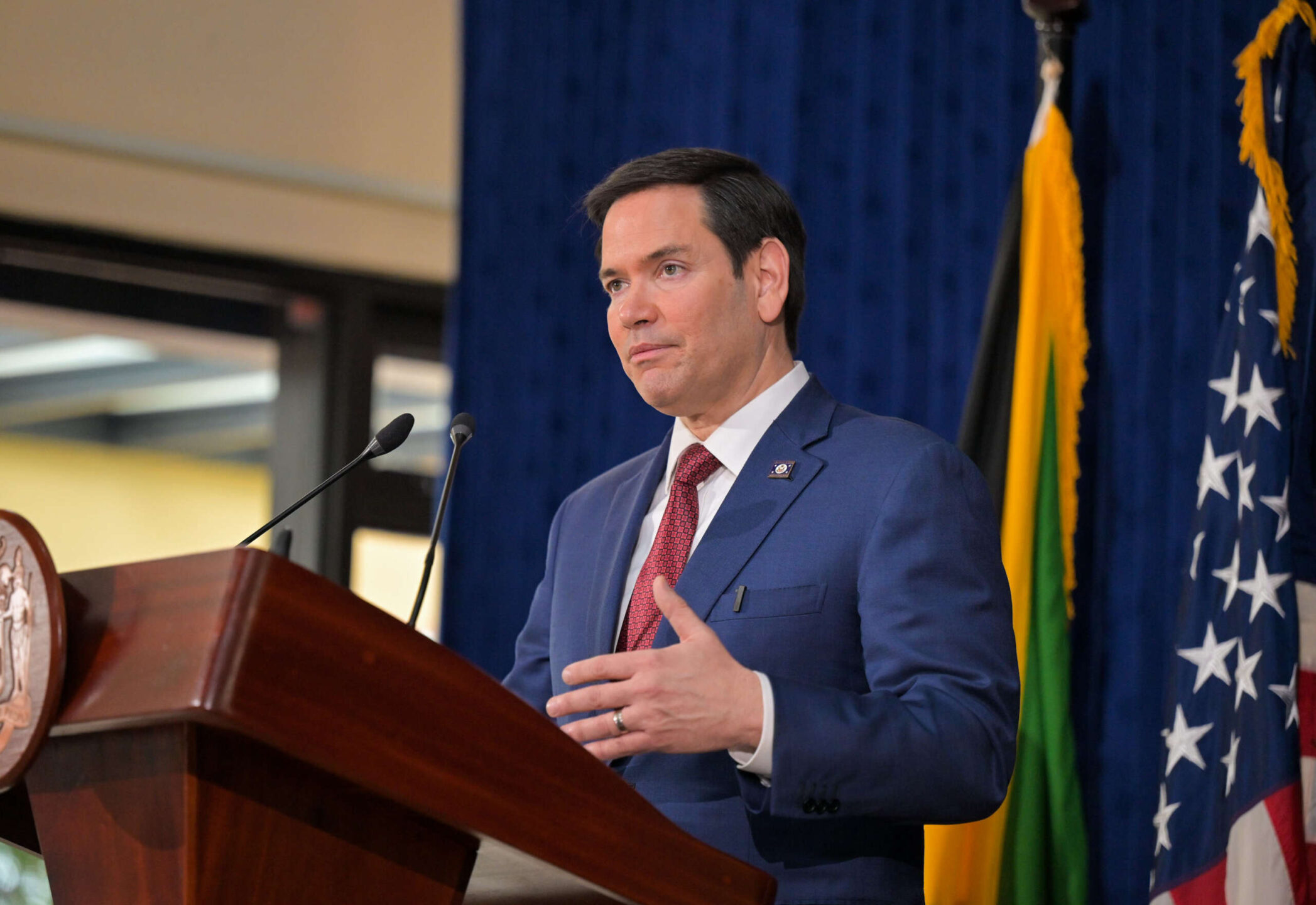
“We are going to be providing foreign aid. The difference is, we want to provide foreign aid in a way that is strategically aligned with our foreign policy priorities and the priorities of our host countries.”
In Jamaica, which he touted as a perfect example of how the retooled aid budget would be deployed, that likely means an alliance on security and crime-fighting projects. How that would look for the rest of the region was not clear.
But the implication was that the US wants to use its soft power more strategically.
“We want countries in the region to identify being close to the United States as something that is beneficial and helpful,” he said.
‘The president is resetting global trade’
Rubio’s talk of alliances doesn’t quite chime with some of the policy announcements we have seen in recent weeks.
The prospect of a US$1.5 million tariff on Chinese-built ships using US ports, for example, is something that analysts fear could cause double-digit inflation in many countries in the region. A lot of the cargo fleet in the Caribbean, including some of the ships that service Cayman, was built in China.
Those issues were not handled in depth at the press briefing. Barbados Prime Minister Mia Mottley, chair of CARICOM, was expected to press Rubio on a possible waiver for Caribbean countries on any shipping tariff during a later meeting at the US Ambassador’s residence in Kingston on Wednesday.
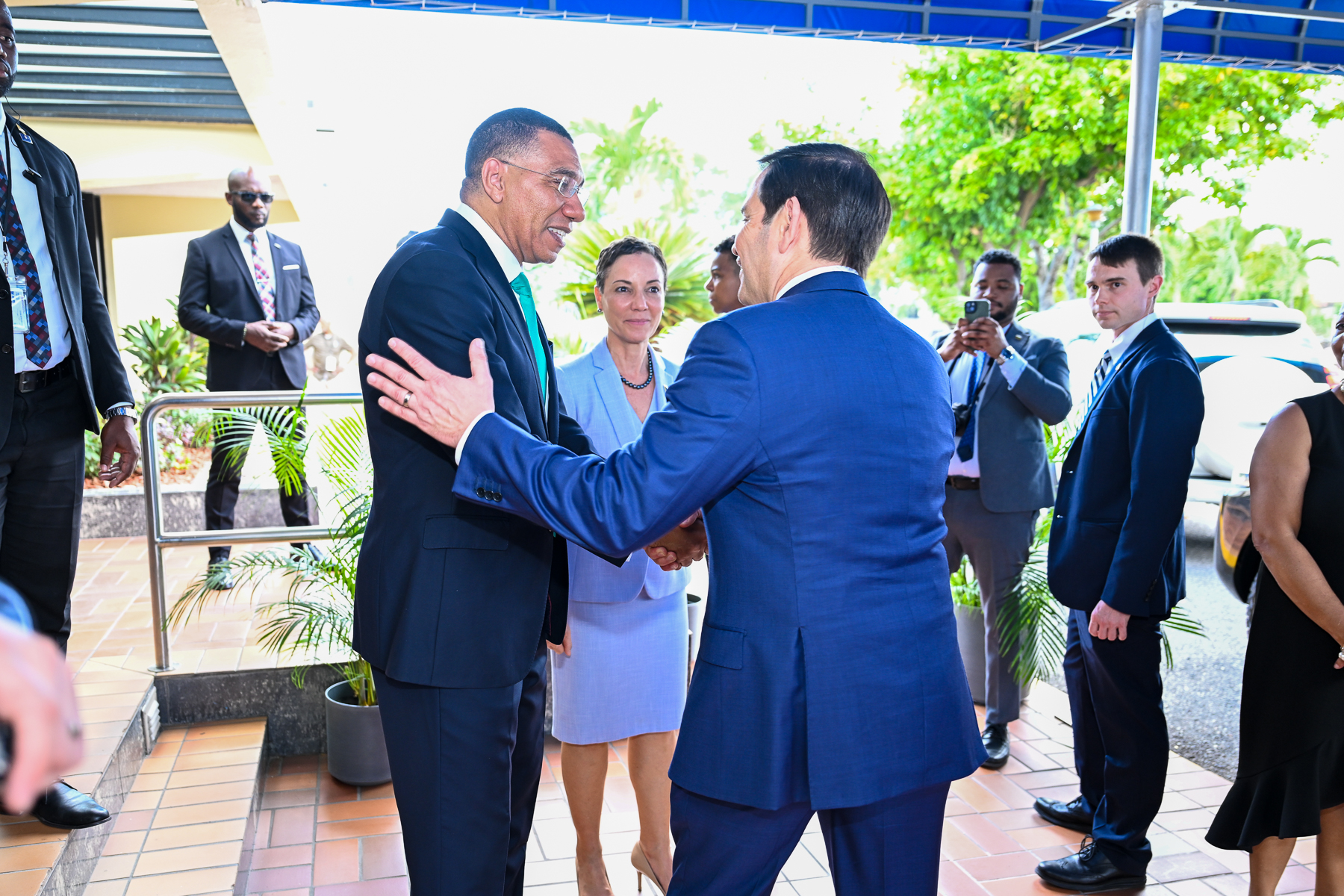
Rubio started by defending Trump’s approach to tariffs, saying the aim was to “reset global trade in a way that’s fair to the US after 20 or 30 years of what we believe is unfairness”.
He did hint at possible compromise with regional allies, however, saying there would be “real opportunities to create new alignments and new trade arrangements”.
Holness referenced a desire to renew the Caribbean Basin Economic Recovery Act initiative, suggesting that the US is at least willing to consider waivers on some levies for certain islands in the region.
‘Someone made a big mistake”
The elephant in the room, inevitably, was the Signal chat controversy that erupted in the US this week after a journalist was included in a high-level text chat group involving senior White House officials discussing a military operation in Yemen.
Pressed for comment by travelling US journalists, Rubio, who was on the chat, admitted, “Obviously, someone made a mistake. Someone made a big mistake and added a journalist.
“Nothing against journalists. But you ain’t supposed to be on that thing.”
He repeated claims that no classified information was shared and downplayed his own involvement in the chat, which appeared to be limited to two texts. The controversy rumbles on in the US, however, with Defence Secretary Pete Hegseth facing intensifying scrutiny over some of the details he divulged of an ongoing military operation on an unsecured messaging app.
Key take home
Despite the adversarial stance taken by the new US administration in talks with some of its allies over the past nine weeks, this was an amicable meeting. There are clearly points of contention but Rubio seemed keen to build bridges — metaphorical ones anyway.
The US wants to check Chinese power in the region. The Chinese have been spending a lot of money on infrastructure, building literal bridges, making loans and developing trade partnerships. It’s clear the Trump administration wants to reduce that Chinese influence.
But the other side of that coin is that they seem to be looking for allies in the region.
They have identified Jamaica as a potential partner and the fact of the visit in itself, so soon into Trump’s second term, says that this is perhaps a US administration that is going to take a keener interest in the region than we have previously seen.
A big part of their focus is migration and security, but there were signs that there is some leverage for Caribbean countries that do cooperate on those issues to escape some of the economic punishment that others are facing.
Rubio’s next stops on the Caribbean tour will be to Guyana and Suriname.