


Judges in the UK’s highest court are deliberating on whether the points system used by government to determine if a person should be granted permanent residency in Cayman is compatible with the Bill of Rights.
Under the current immigration legislation, a person who fails to obtain at least 110 points in their application process for permanent residency will not be allowed to remain living in Cayman.
Lawyers representing clients whose applications have been turned down argued before the UK’s Privy Council last month that section 37(3) of the Immigration (Transition) Act, which deals with the points system, is incompatible with the right to private and family life under section 9 of the Bill of Rights.
In a case that was heard by the Privy Council last month, the HSM law firm represented a woman — the mother of a Caymanian child — who has been refused permanent residency in Cayman because she did not obtain the requisite 110 points.
The law firm had previously represented two other clients, Joey Buray and Leon D’Souza, whose appeals against their denial of permanent residency status had been dismissed by the Immigration Appeals Tribunal and by the Grand Court. The matter was then heard by Cayman’s Court of Appeal on the grounds of being contrary to the Bill of Rights and was again dismissed in March 2023.
However, in its judgment on the case, the Court of Appeal in Cayman declared that the points system was incompatible with the Bill of Rights as it did not allow for any other mechanism, outside of that points system, to consider an unsuccessful applicant’s human rights. It is this declaration of incompatibility that was appealed by the Attorney General of the Cayman Islands and the Immigration Appeals Tribunal.
The appeal was heard by the Privy Council on 3 Feb.
The points system allocates points for various factors, such as the applicant’s age, occupation, education history, local investments, financial stability, and integration into the Caymanian community.
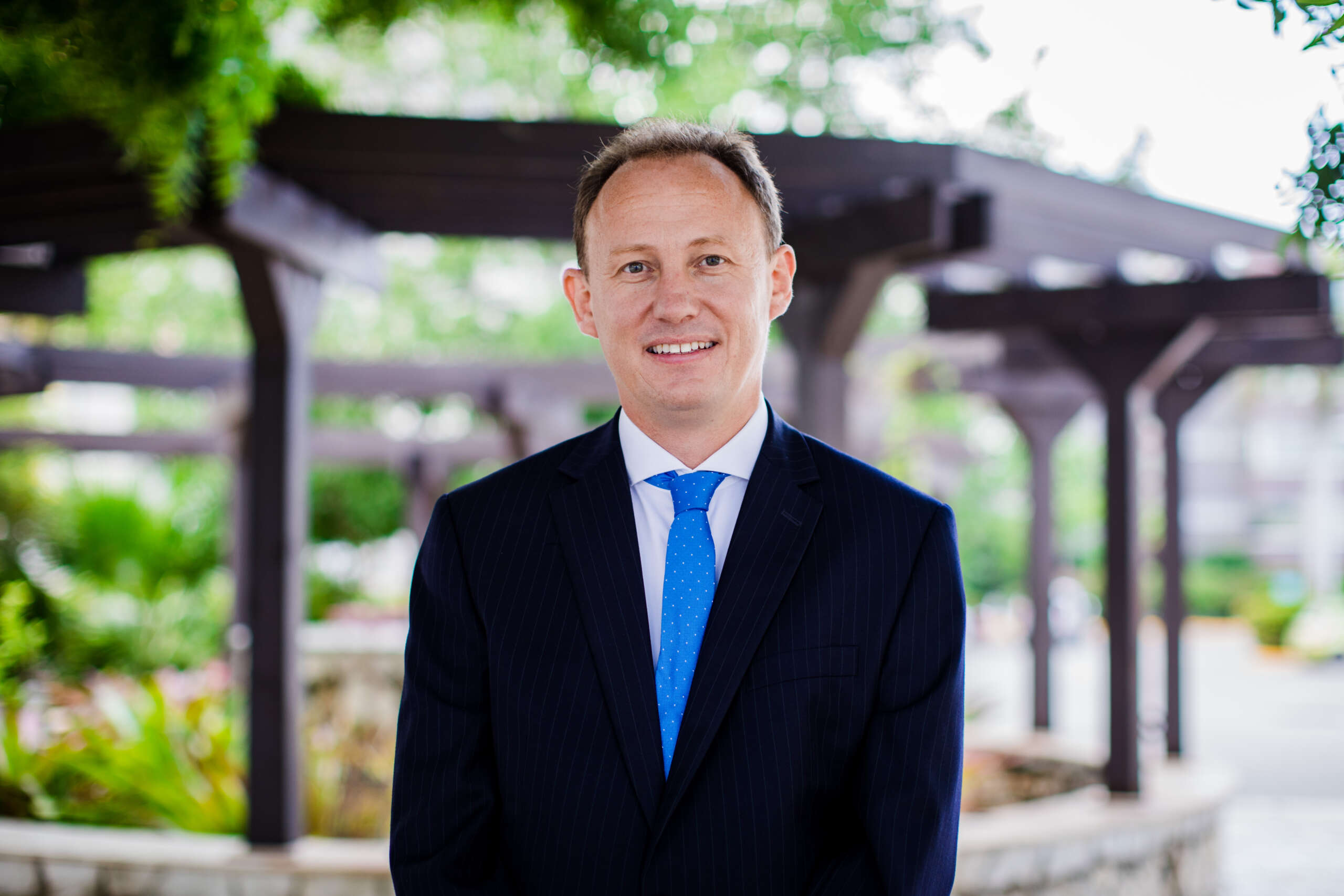
Alastair David of HSM law firm in Cayman, who instructed barrister Manjit Singh Gill, KC, of No 5 Chamber at the Privy Council hearing, told the Compass that a decision on the matter is still awaited.
During the hearing, the Privy Council was asked to consider various aspects of the permanent residence system, including section 53 (1)(b) of the Immigration (Transition) Act, which Tom Hickman, KC, representing the Cayman Islands government, told the justices provided an alternative means to reside in Cayman. This alternative permits Cabinet to grant permission to individuals to remain in Cayman.
HSM argues that there are very few policies or guidance regarding Cabinet-granted permanent residency, which, the law firm says, can take up to a year to be considered.
If the court finds in favour of HSM’s argument, David said, “the government will have to revisit” Cayman’s immigration legislation. If it finds in favour of the argument of the Immigration Appeals Tribunal and the attorney general, then the status quo will remain, he said.
HSM, which has represented several clients in immigration-related cases, has frequently highlighted issues with the points system, which has been in place since 2013.
Hickman, KC, in his submissions to the five Privy Council justices, acknowledged that the points system does not permit the Caymanian Status and Permanent Residency Board or the director of Workforce Opportunities and Residency Cayman, known as WORC, to take into account human rights considerations outside the points system.
However, he argued that the Cayman Islands Court of Appeal was wrong to conclude that the existing provisions in the immigration legislation were insufficient to ensure no individual rights under section 9 of the Bill of Rights are breached, and that the court should not have excluded the provision that enables Cabinet to grant residency rights.
He said Cabinet, in making a determination on whether a person can stay, can take human rights considerations, including the right to private and family life, into account.