


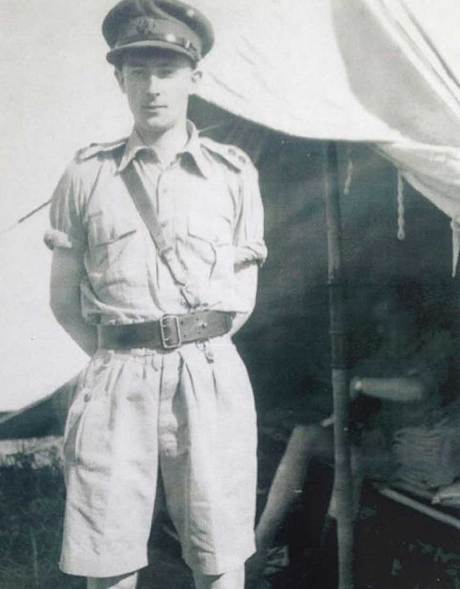
The Cayman Islands National Archive is a treasure trove of information about Cayman’s past but, like any search for treasure, it is not always easy to access.
Sometimes it’s even difficult to know what treasure to look for in the national collection on Archive Lane in George Town.
The archive has various responsibilities, including arguably their most important one: providing public access to Cayman’s historical records.
Currently there is no searchable database on the Cayman Islands National Archive website and most of the records are not digitised, so determining exactly what items of Cayman’s history are buried in the national collection can be challenging.
Sometimes, though, with perseverance and determination, historical treasures can be found at the National Archive.
1938 diary of Gemmell Alexander
The Compass became aware of the existence of a diary written in 1938, and so an appointment was made at the archive to view the record, which has not been transcribed.
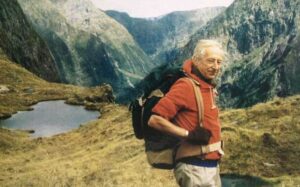
The diary belonged to Gemmell Alexander, who led the Oxford University Biological Expedition to the Cayman Islands in 1938. It is described by the Department of Environment as “the first major survey of the Cayman Islands’ natural history, documenting our unique flora, fauna, and geology”.
In addition to Alexander, the expedition included entomologist C. Bernard Lewis, botanist William Kings, entomologist Gerald Thompson and marine biologist W. Neil Paton. The visit eventually led to the publication of many scientific papers on the molluscs, insects, plants, birds and reptiles on Grand Cayman, Little Cayman and Cayman Brac.
Specimens collected during the four-and-a-half month visit were also deposited in various museums and institutions, and the Cayman Islands National Trust still holds a collection of insects from the 1938 Oxford expedition.
A website describes how Lewis, Alexander, Paton and Thompson sailed from the UK on the SS Samala on 22 March 1938 to Kingston, Jamaica, then on to Grand Cayman on the Cimboco.
“The expedition was in acceptance of a long-standing invitation by Cayman Islands Commissioner Allen Wolsey Cardinall (1934-1941) to make a biological survey of the islands,” the website states.
A small selection of the personal notes and observations made in Alexander’s diary during his 1938 visit to Cayman include:
2 April: “Richard Arlington Bush told us about Cayman, his father lives in George Town. [He] Told us of [a] treasure ship he had found over by the quays [cays] on the Nicaragua coast by Mosquito Bank.”
16 April: “Bernard [Biologist Charles Bernard Lewis] saw 19 different species of butterfly of which at present only ten are recorded.”
30 April: “Dinner with the Commissioner [Allen Wolsey Cardinall]. Minister Hicks was also dining. We hear some interesting stories of family treasure and Captain Sam Bodden’s ingots [Little Cayman].”
6 May: “Canoes are made from one solid piece of mahogany up to 30 feet long and catboats from cypress and some cedar.”
14 May: “The Commissioner has increased the police force from one to nine.”
22 May: “At 10:30 am a catboat called with 4 men and a lad aboard who stayed and chatted for ¾ of an hour or so. They mentioned how 30 years ago the [North] Sound was full of large sharks and now there are none.”
14 July: “Went right round the big shallow lagoon Malportas Pond. WK [Botanist Wilfred Kings] found a new orchid. Got back 2 pm. Got 5 water snakes from a cow well emptied by Brimmer Ebanks. He has this beastly venereal disease badly.”
14 July: “Sent a message down to Old Man Bay offering 2 Shillings each for a couple of live, unharmed rabbits [agoutis]. The boys down there have some good dogs and may be able to chase rabbits into holes and then take them out by hand.”
16 July: “Norris spent all evening in Forest Glen, setting up a mango tree with a cast net, set a trap to drop on rabbits [agoutis] coming to a bait of mangoes – no success.”
Notes on how to catch local fish were included in the back of the diary:
“Canoes and catboats catch grunts with conch on 24 thread with No 8 and 9 hooks.
“Mangroes (Mangrove Snappers) with sprat.
“Old Wife (Queen Triggerfish) with bits of fish.
“Grouper, Butterfish and Rock Fish with small fish.
“Snappers (Mutton, Lagoon and Dog Teeth) all with any of the above baits.
“Blue Thumper (Blue Parrotfish), Squabs (Parrotfish), Gilumbo (Princess Parrotfish), Grog caught with soldier crabs and mangoes.
“Jack (Fry and Yellow) with sprat and fries.
“Hogfish with soldiers (hermit crabs) and lobster.”
In addition to the diary, the National Archive also holds other records relating to Gemmel Alexander and the 1938 Oxford expedition, including notes he recorded in an exercise book relating to piracy, shipwrecks and the Greek “gypsies” marooned on Cayman in the early 1930s.
There are also three songs written by the author of the national song, ‘Beloved Isle Cayman’, Leila E. Ross, including one called ‘Tell me of Grand Cayman’. There is also an album of photographs taken during the expedition to Cayman in 1938.