


Rachel (not her real name) was barely more than a child herself when she became a mother. By 20, the generational Caymanian had two daughters from two different fathers. She juggled college, work, and single motherhood, determined to give her girls a better life. Her parenting style became strict and hyper-vigilant. Structure, she believed, would protect them from the chaos she had grown up with.
“I was figuring it out alone, the way I always have,” she told the Compass, speaking under condition of anonymity. “Love, to me, meant keeping your children close, watching over them like a hawk.”
But when her youngest daughter began to pull away – mood swings, acting out, slipping grades – Rachel didn’t recognise the signs. Burdened by what she called “stress and unsorted issues,” she mistook her behaviour for disobedience.
“I was so caught up – working, trying to pay bills, trying to be both mother and father,” she said.
What Rachel didn’t know was that her daughter had been abused by a trusted family member at just seven years old.
Now 18 and a recent graduate of a private George Town high school, her daughter has attempted suicide more than once. Rachel has never sought therapy for her daughter or herself.
“There is so much trauma in this environment, more than I’ve ever seen anywhere that I have worked,” said Dr. Chantal Basson, clinical psychologist and former NHS Lead Consultant in the UK, now serving as clinical and educational lead at the Alex Panton Foundation. She made the comment during a recent mental health workshop for members of the media.
“There’s lots of intergenerational trauma, as well as lots of single event trauma and lots and lots of grief, because when something happens in the community here, everybody’s interconnected. So many people feel it.”
Rachel’s story is one of many in Cayman, each with its own unique challenges and varying levels of struggle.
“I know parents love their children,” said Dr. Basson. “I know they do. And I know they want help.”
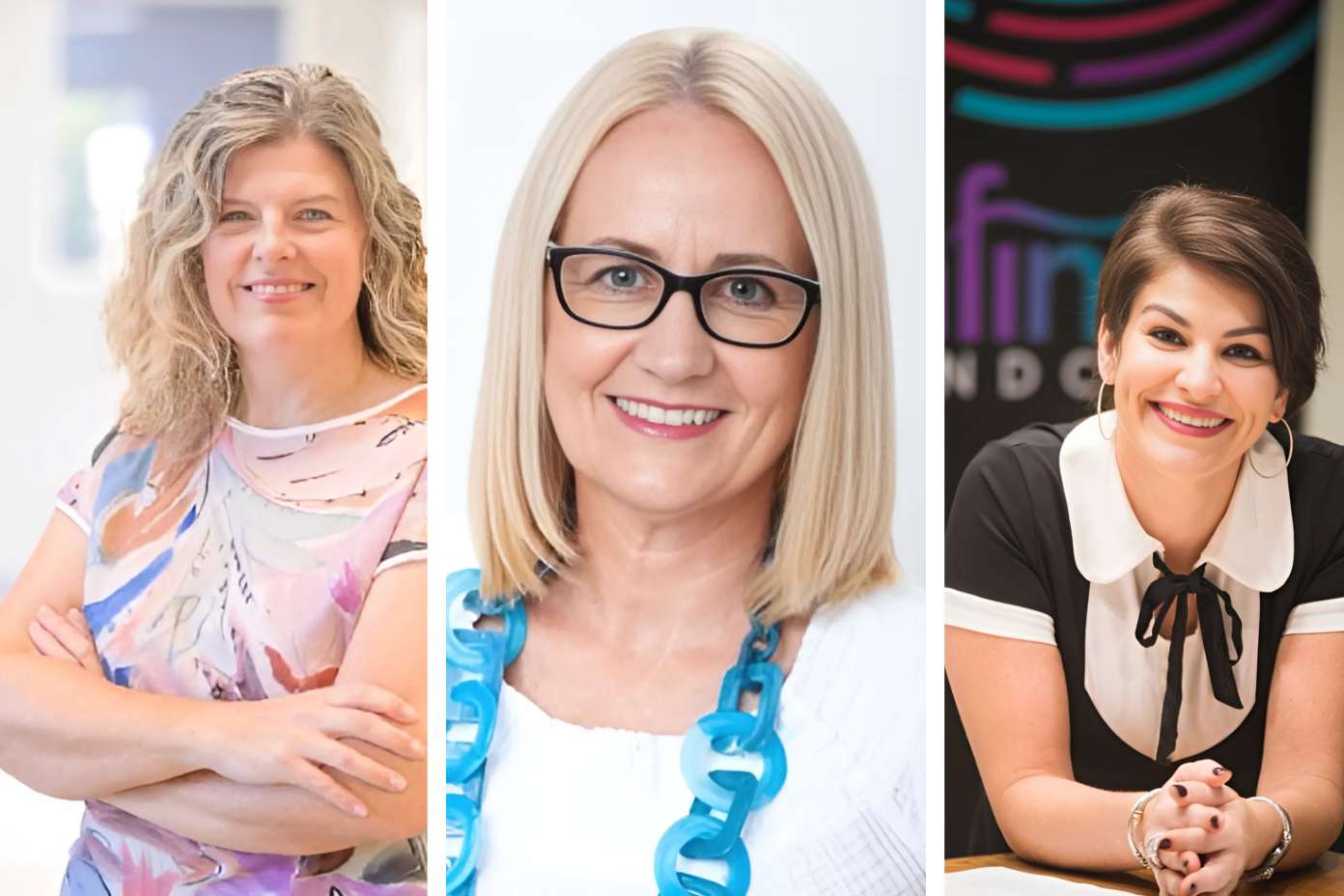
Sutton Burke, Founder and Clinical Director of Infinite Mindcare, spoke to the Compass about the growing stress faced by parents across Cayman. “Parents are so overwhelmed in their own lives, their own nervous systems are dysregulated, and they don’t know how to regulate,” she said.
The weight behind the data
Clinical psychologist Dr. Shannon Seymour, Director of The Wellness Centre, says the mental health of parents is foundational to a child’s development.
“Parents serve as the primary source of emotional regulation, modeling how to manage stress, express feelings, and navigate life’s challenges,” she told the Compass. “When parents are mentally healthy, they are more attuned, responsive, and consistent, providing children and adolescents with the secure foundation they need to thrive.”
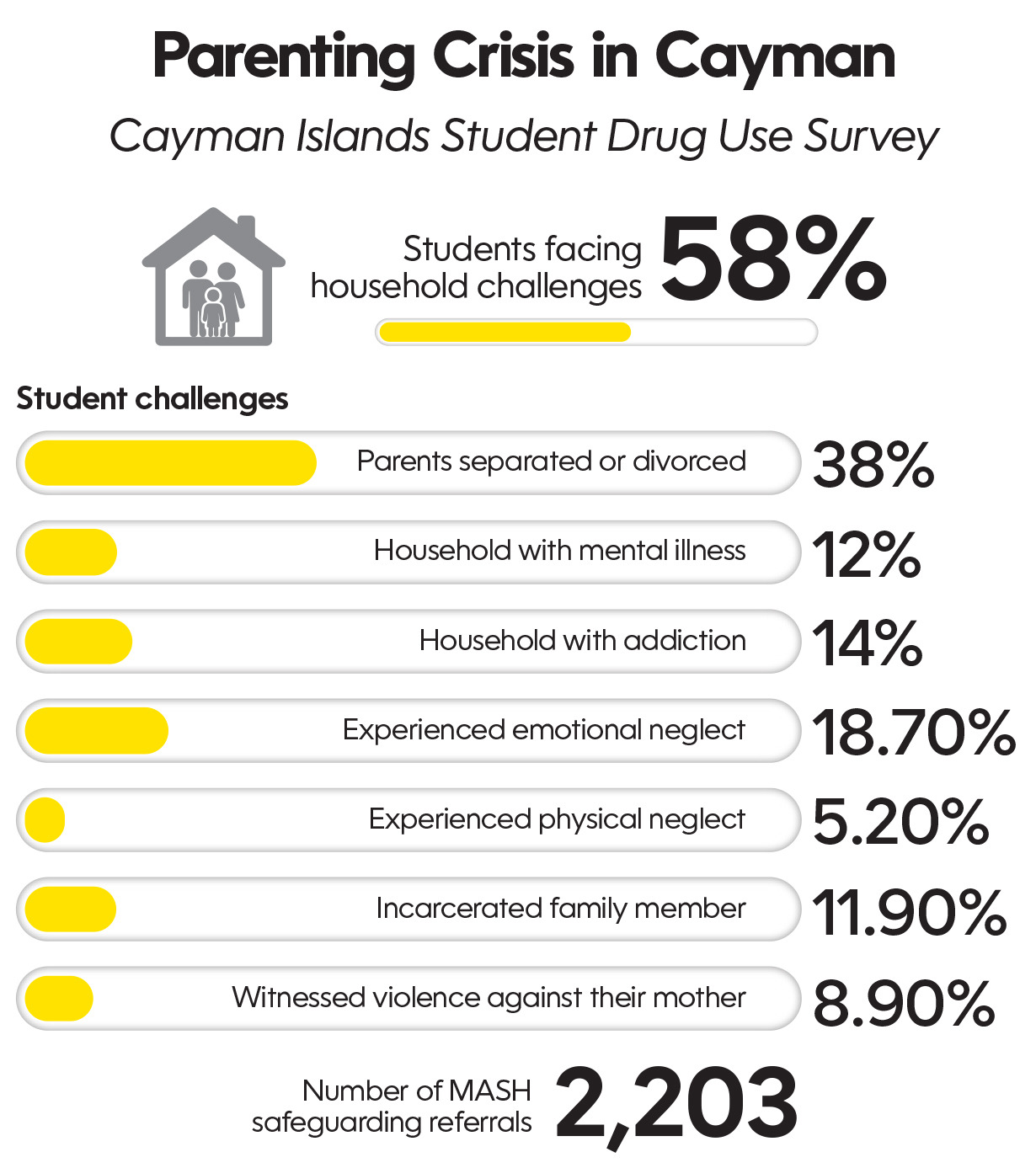
But data from the 2022 and 2024 Cayman Islands Student Drug Use Surveys reveals how far many homes are from that ideal.
More than 58% of students reported experiencing household challenges, known clinically as Adverse Childhood Experiences, or ACEs. These include parental separation, neglect, substance abuse, incarceration, and mental illness in the home. The higher the ACE score, research shows, the greater the risk of long-term mental and physical health issues.
Nearly 38% of students reported parental separation or divorce, and 12% said they lived in a household with mental illness. 14% reported substance abuse in the home. 18.7% of all students said their emotional needs were not met. 5.2% reported physical neglect, such as not having enough to eat.
Many children are also growing up in households marked by addiction. In 2022, 16.6% of students reported witnessing addiction at home, while 11.9% reported having an incarcerated family member.
The 2024 Crime and Traffic Statistics Report highlights a troubling rise in child protection concerns across the Cayman Islands.
Last year, the Multi-Agency Safeguarding Hub or M.A.S.H received 2,203 child safeguarding referrals – a 22% increase from 2023. Of those, 165 cases led to criminal investigations by Protective Services, with an additional 40 taken up by the RCIPS.
The report also documented 1,787 domestic violence referrals in 2024. Findings from the 2024 Student Drug Use Survey further reflect that 8.9% of students aged 13 to 18 reported witnessing their mother being treated violently.
For Sutton Burke, numbers such as these reflect what’s happening in real time – young people growing up in homes where adults are unequipped to cope.
“Adults might lack emotional skills, or are using drugs and alcohol and are angry instead of coping in a healthy way…,” she said.
Parenting anxiety and the weight of survival
In 2023, US Surgeon General Dr. Vivek Murthy issued a rare advisory on parental mental health – an unusual move that, as The New York Times put it, placed the strain of parenting in the same public health category as smoking. The core message was clear: parenting today is overwhelmingly hard.
While the Cayman context is different from the US, many of the same pressures apply – such as the growing expectation that parents must invest more time, money and energy to secure their children’s future.
“Parents are under tremendous pressure,” said Dr. Seymour. “They are managing their own stressors, while navigating parenthood under very challenging times.”
Much of that pressure is rooted in fear that if they don’t do enough, their children won’t be able to thrive in a rapidly changing world.
A report by the American Psychological Association found that 66% of parents worry constantly about money. Another 66% say they avoid talking about this stress so they won’t burden others and 62% feel that no one truly understands the extent of their exhaustion.
In Cayman, many parents are navigating the same quiet struggles – pushed to meet growing expectations while feeling increasingly alone. For countless families, it’s a relentless balancing act without enough financial, emotional or social support. Households are grappling with the weight of rising costs, generational trauma and a culture that prizes performance.
“With parents, there is a crisis, because they are overworked,” said Burke. “They’re stressed out, and not everyone is born with that capacity and emotional regulation.”
Burke points to the soaring cost of living as a key pressure point. “It’s expensive to pay the light bill. Food is expensive. I couldn’t believe how much I paid for gas yesterday. The cost of living is super high,” she said.
In the final quarter of 2024, food prices increased by 3.5%, healthcare by 4.3% and transport by 5.8%. But the sharpest rise was in education, which jumped by 14.3%, with preprimary and primary education costs up more than 20%.

Caymanian mother and author Catherine Tyson-Sewell says the burden is particularly heavy for average families and single parents.
“The cost of food is very expensive. The cost of childcare, the availability of good childcare… it’s unfair that everyone is paying the same across the board, when incomes and access to resources aren’t equal,” she told the Compass. “It’s tough for parents to provide their children with the best or even adequate life activities, schools, nutrition, transport.”
Another Caymanian mother of two, speaking anonymously, tied the stress faced by parents today to the aftermath of Hurricane Ivan.
“Ivan was a testament of the resilience of Caymanian people, but it also marked a time when persons of lesser financial means not only had to rebuild their lives but had to struggle to provide for their families,” she said. “Since then, the cost of everything has gone up. And imported labour now crowds out Caymanians by almost 60%. Who are we developing for when our own families are being left behind?”
Dr. Chantal Basson agrees that these structural and emotional pressures are colliding in dangerous ways.
“For generations of Caymanians, this is their home. But many parents look at their children’s future with fear, wondering how they’ll ever get by. It becomes all about grades, grades, grades,” she said. “And when that pressure to perform is combined with an intergenerational culture of obedience and ‘you listen, you don’t talk back’ it becomes toxic. That obedience plus performance mindset tells children: as an individual, you don’t really exist.”
Shame, stigma and silence
Professionals say that a deeply rooted culture of shame, blame, and stigma has eroded communication between parents and their children.

Burke recalls a conversation with a public-school guidance counsellor who expressed deep frustration: “Parents don’t respond to emails. They don’t come in. I’m trying to get this student the help they need, but the parents refuse.” The counsellor explained that families often reject counseling out of fear – fear of stigma, fear of being blamed, or simply not understanding what mental health support involves or what it says about them or their child.
Clinical psychologist Dr. Shari Smith, speaking at the Alex Youth Mental Health Symposium during her presentation ‘Helping to Instill Hope for Our Youth in the Caymanian Cultural Context’, pointed to longstanding beliefs that continue to shape parent-child relationships in Cayman.
Phrases like “We don’t share family information with strangers,” “That’s just how Uncle John is,” or “This life is easier than what we had, you got nothing to stress about,” are still commonly heard, she said. Others include “Put it out of your mind, all you need is rest,” “I survived, so will you,” and “It’s all in your mind – you just need to work harder in school.”
Dr. Smith also noted the stigma that surrounds mental health care: it’s culturally acceptable to visit a medical doctor, but seeing a psychiatrist or therapist is often viewed with suspicion.
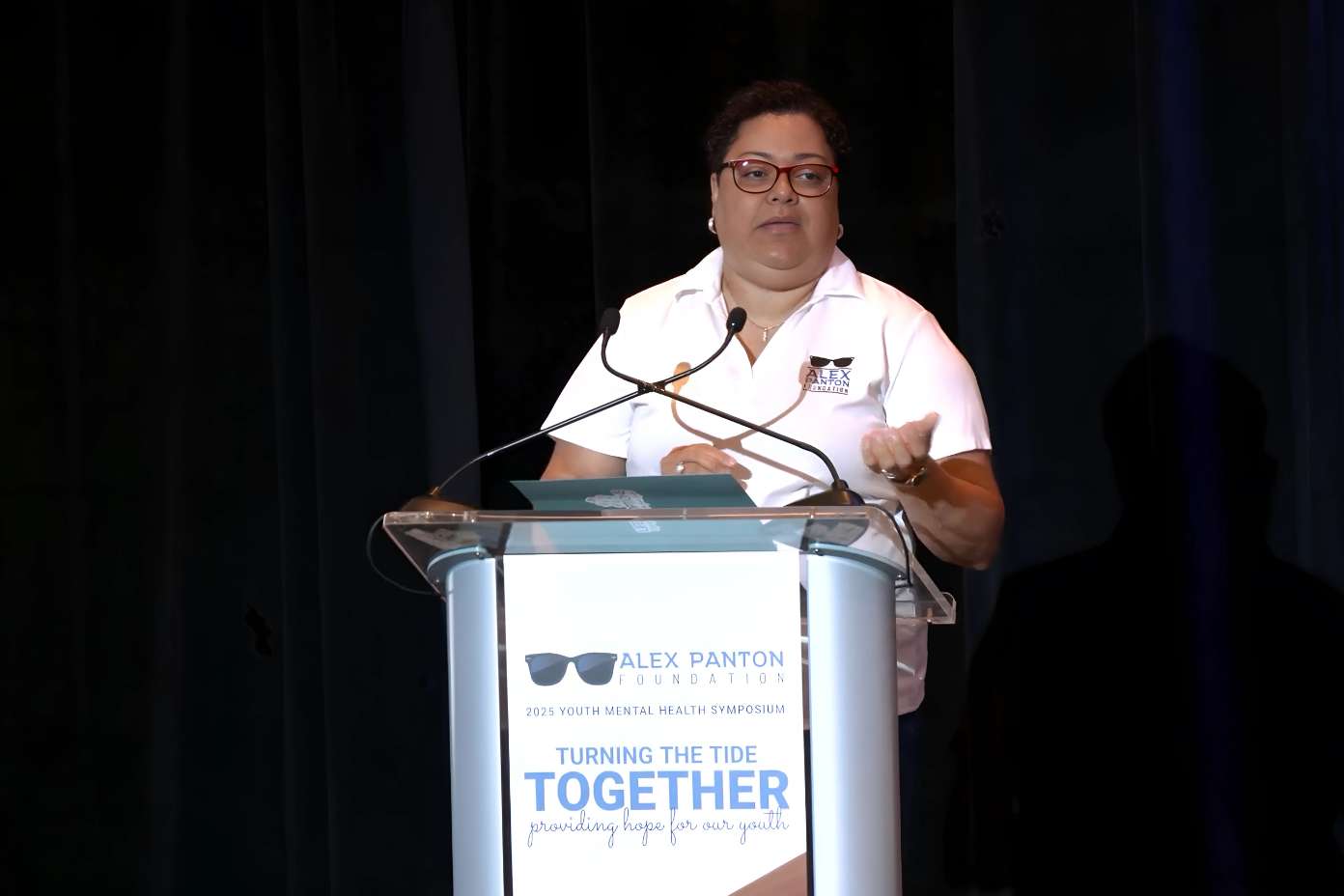
That silence is showing up in data collected by the Alex Panton Foundation through its Kids Helpline. Common themes include children feeling unsafe to speak with their parents, being dismissed or invalidated when they do and, in some cases, being insulted or belittled by the very adults meant to support them.
At last year’s ‘Inspire: A Youth Meetup to Speak Out’, 234 young people shared their personal experiences, marking the first major effort in Cayman to collect qualitative data on youth mental health. One of the issues articulated at the event was youth struggle to communicate with parents. Some of the statements made included:
“I can’t talk to my parents. It doesn’t feel safe.”
“If I express myself, it becomes an argument and I’m seen as disrespectful.”
“My parents call me names.”
“[They say:] If you’re going to kill yourself, then go ahead and do it.”
“My parents don’t listen or try to understand me.”
“[They say:] Well I had it way harder. You’ve got nothing to worry about.”
Dr. Basson said that one of the most overlooked reasons young people stay silent is empathy. “They see their parents struggling – financially, emotionally – and they don’t want to add to the burden.”
But silence also comes from cultural conditioning.
Dr. Basson points to entrenched attitudes like homophobia and the belief that boys must suppress emotion to be “strong.” Add to that the relentless academic pressure many children face, and emotional expression becomes even more difficult. “Kids start to believe they’re only as good as their grades,” she said.
Burke points to another growing concern: unchecked screen time.
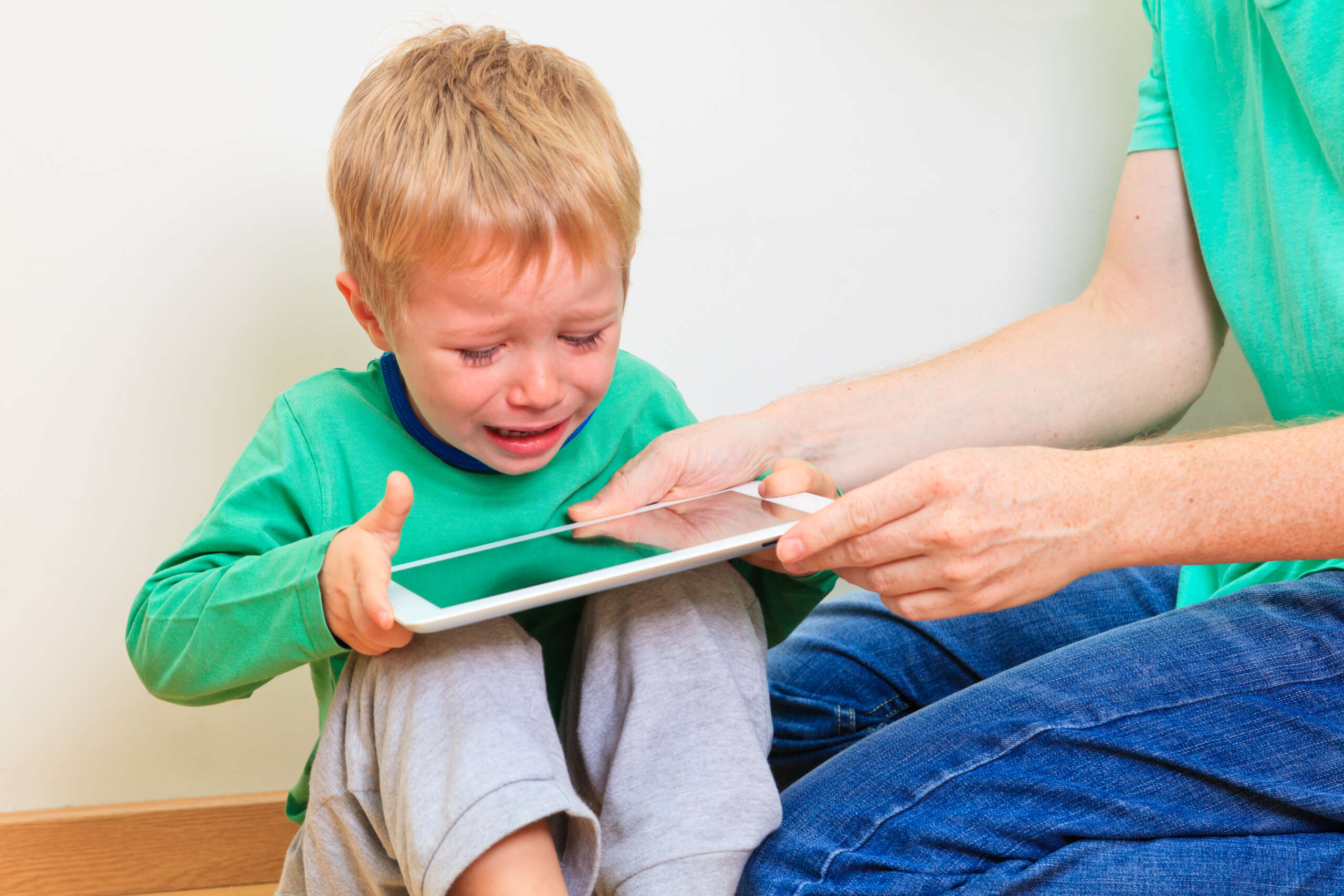
“The more addicted we are to our phone and the more reliant we are on technology, the more impact it has on our mental health, because it takes us away from connecting to our family, connecting to our friends,” she said.
One Cayman parent, speaking to the Compass, linked the problem to a lack of healthy spaces for teens. “Cayman is a calm and safe place for young children albeit very expensive – as my son has grown into a teen here, it’s quite challenging. It’s not surprising that he and his friends spend so much time online or gaming.”
Dr. Seymour says that social media is now overwhelming both parents and children.
“Social media is almost impossible for parents to stay on top of, and I know many parents who are struggling to figure out how to manage,” she said. “Not only is social media overwhelming our children, but parents are flooded with online advice, much of it not accurate or helpful. Parents today have access to vast amounts of information, while at the same time being more isolated and disconnected from communities of support and help than any previous generation of parents.”
Hope for the future
Burke, who grew up in a home shaped by addiction, often shares her personal story with teens -not just as a psychologist, but as someone who’s lived it.
As a parent herself, she models vulnerability: “Sometimes I’ll say to my kids, ‘I don’t know what to do right now. I’m sorry I yelled.’ I tell them, ‘My instinct is to yell at you and to smack you like I was when I was a kid.’ That’s when you build a more positive relationship and connection with your kid, when you acknowledge, I’m overwhelmed. So many parents are overwhelmed.”
In 2023, she launched Cayman Mindcare, a programme designed to support adults in building emotional awareness and regulation. “Adults are struggling too – and they’re the ones shaping our youth,” she said. “We ask so much of parents without giving them the support they need.”
Dr. Basson agrees: “Mental illness isn’t a moral failing – it’s a health issue. We need programmes that focus on parents and we need to dismantle the shame around asking for help.”
Burke sees a common pattern: children dropped off at therapy, while parents stay outside the process – too busy, too overwhelmed, or too afraid. “But therapy doesn’t work in isolation,” she said. “You can’t fix a child who’s in a house that’s still on fire.”
Dr. Shari Smith urges parents to break the silence. To say, “I’m overwhelmed. I don’t know what to do.’ Let your kids see that adults can have big feelings too – and that asking for help is okay.” She encourages parents to stay curious, check in, and create space for conversation.
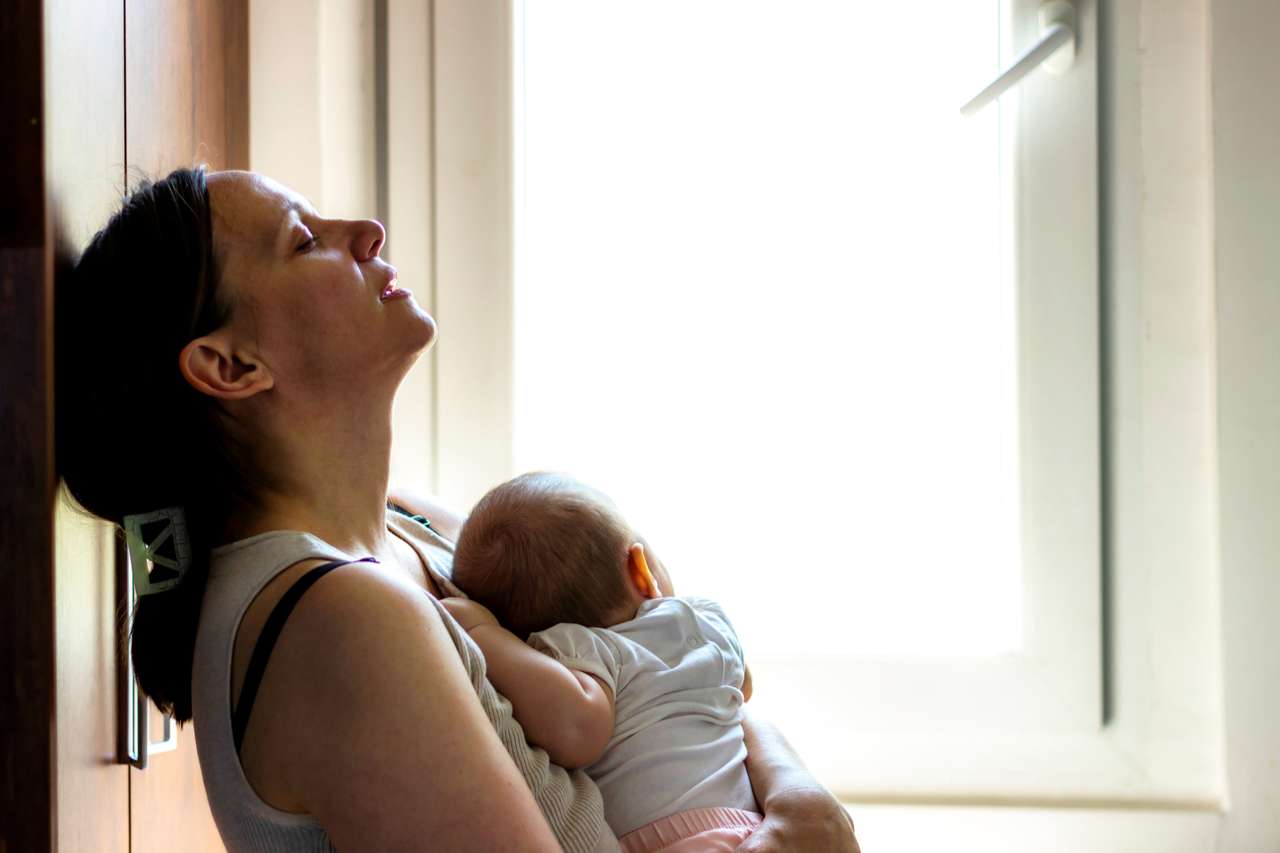
Dr. Basson describes it this way: “In families shaped by trauma, one generation can become the semicolon – the pause. The next generation gets to be the full stop.”
But that pause takes effort and healing.
“Untreated or under-treated parental mental health issues can increase a child’s risk for anxiety, depression, and behavioral difficulties,” said Dr. Seymour. “Supporting parents in prioritising their own mental health is not a luxury – it is a protective factor that builds resilience across generations, and something we as a community should be more concerned about… If we as a community care about child and adolescent mental health, we have to ensure our parents have the support and connections they need to thrive.”
Rachel’s story, like many others, was never meant to be told. But after her daughter’s suicide attempt and hospitalisation, she began to speak more openly. Her daughter, reflecting, said of her mother: “She was doing her best.”
In those words lies the first step toward healing.
In Cayman, many parents are doing their best. But without adequate support, “best” might not always be enough.
And when the cost of not healing is a child’s wellbeing, it’s far too high.
Mental Health Resources
If you or someone you know is facing challenges related to the issues discussed in this article, the Alex Panton Foundation recommends the following resources for support and assistance:
Alex’s Place, Health Services Authority
Adolescent mental health hub for ages 10-20
Telephone: 244-7856
Located at the front of Anthony S. Eden Hospital (formerly George Town Hospital) on the left after passing the main atrium.
Open Mondays to Fridays from 10am-6pm
Services available by walk-in or referral
Cayman Islands Crisis Centre
Provides support to all victims of domestic violence through “services and programmes focusing on domestic and sexual abuse”. Among its services, it provides shelter, counselling and a 24-7 crisis helpline at 943-2422 (or toll free at 1 (800) 543-2422)
Administration telephone: 949-0366
Administration email: [email protected]
For more information, go to the Crisis Centre website.
CayMind Mental Health Help Line
Call 1-800-534-6463 (MIND)
Open Mondays to Fridays from 6pm-11pm
Department of Counselling Services
Call 949-8789 or email [email protected]
For more information, go to the Department of Counselling Services website.
HSA Behavioural Health Services
Call 244-2530 or go to the Behavioural Health Services website.
The Kids Helpline chat and phone line is available Wednesday to Sunday, 3pm–9pm at 649-5437.
For a more extensive list of mental health and parenting resources, go to the Alex Panton Foundation website.