


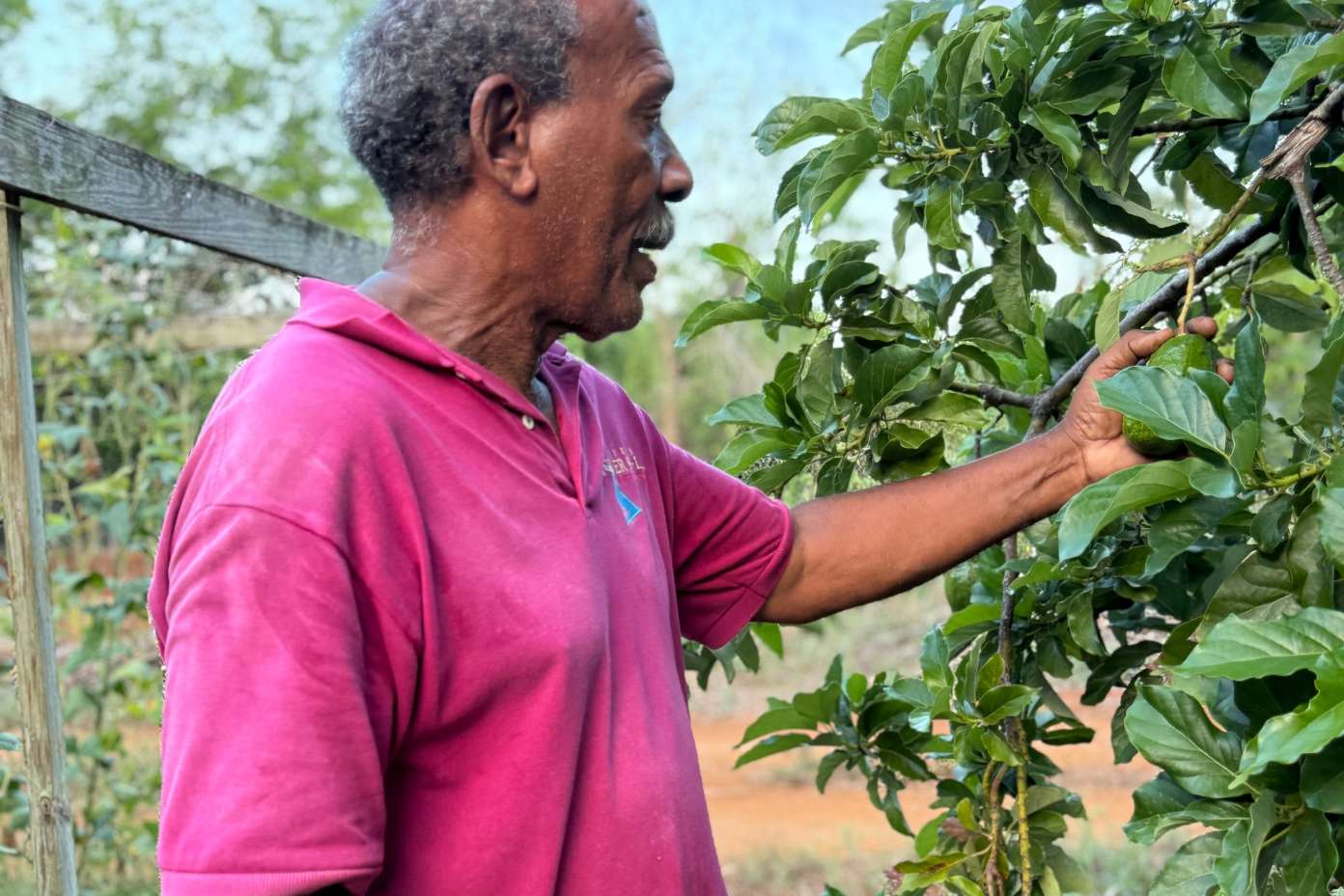
Clarence McLaughlin didn’t start out in farming or being overly concerned about food security. Born and raised in Cayman Brac, he moved to New York at age 11, earned a business degree from Baruch College, and spent decades in investment banking. By most standards, he had ‘the good life’ – but it didn’t feel that way.
“I was on a train going nowhere fast,” he told the Compass.
So, he got off.
He came home, bought 20 acres in Bodden Town, and traded suits for soil. Today, McLaughlin runs one of the islands’ most productive farms, growing spinach, arugula, scallion, bok choy, callaloo, long squash, mustard greens, Japanese eggplant and many other local and exotic food crops. His customers include chefs, hotel kitchens, market shoppers and residents from across the globe – many seeking the familiar flavours of home.
McLaughlin is part of a quiet but urgent push to improve food security – an ethos he and fellow farmers live by, even if they don’t name it as such. Cayman imports over 90% of its food – more than 80% from the US – leaving it vulnerable to supply chain shocks and tariffs.
As a result of its rapid population growth, Cayman is now one of the fastest-growing destinations for US food exports, with imports climbing an average of 8.1% annually over the past decade – nearly double the Caribbean average. Between 2023 and 2024 alone, food import costs jumped 8.5% to US$286.3 million, with sharp increases across categories including fruits, vegetables, meat, cereals and spices.
With just 2% of land suitable for agriculture and an ageing farmer population, the sector is fragile. The COVID-19 pandemic exposed just how precarious that dependence is – and underscored the urgency of growing more food at home.
Recognising cottage industries
Department of Agriculture data shared with the Compass shows that Grand Cayman is home to 40 registered poultry farmers, 59 livestock farmers, 182 crop growers and 137 mixed producers. Two farmers, seven schools and two companies operate hydroponic systems. Cayman Brac has 73 producers across crop, livestock and mixed farming, while Little Cayman has one crop farmer.
The 2023 Labour Force Survey recorded 814 skilled agriculture, forestry and fishery workers in the Cayman Islands – 171 of whom are Caymanian – but the true scale of the sector remains unclear, as much of it operates informally.
According to Mitzi Watson-Jervis, deputy director at the Department of Commerce and Investment, some Caymanians legally operate outside this system under licensing exemptions for farming, fishing and cottage industry goods, like jams, sauces and heavy cakes. To better recognise these producers, the Department of Commerce and Investment is exploring a new ‘cottage industry’ classification.
The Department of Agriculture, meanwhile, is working to formalise the sector through its Farmers’ Identification and Registration Programme, which offers recognition and access to support services. Staffing is being expanded to speed up registration efforts.
“Supporting our local farmers and small agri-businesses is not just an economic priority, it’s a national imperative for food security and community resilience,” said Agriculture Minister Jay Ebanks in an email to the Compass.
“The Ministry remains committed to empowering small-scale producers across the Cayman Islands, whether they are raising livestock, growing crops, or exploring innovative systems like hydroponics. These businesses form the backbone of a more self-sufficient Cayman, and we are proud to back their growth and sustainability.”
Plans to grow egg production
Deputy Director of Agriculture Demoy Nash noted that crops such as cassava, sweet potato, mangoes and avocados hold strong potential for local production. Breadfruit, in particular, is considered a high-yield, climate-resilient crop well-suited to Cayman’s conditions. Tomatoes and seasoning peppers are also under review for expansion. And, of course, there are eggs.
McLaughlin is among a cohort of Caymanian farmers participating in the National Egg Strategy or NEST programme, a government initiative led by Minister Ebanks aimed at doubling domestic egg production and capturing 40% of the market. The programme offers training, certification and equipment to raise safety standards, quality and consumer confidence.
Seventeen farmers are part of the NEST pilot. So far, four – including McLaughlin – have been certified. He currently manages 1,000 laying hens and 1,600 chicks, with plans to produce 300 dozen eggs per day at full capacity.
The largest current producer under NEST is Olson Anderson, whose certified egg farm, Old Man Bay Farms, supplies Hurley’s, Foster’s, The Ritz-Carlton, Grand Cayman and other hotels and retailers.
During cooler months, his hens lay as many as 1,000 dozen eggs per week, dropping to around 750–800 dozen in the summer heat. Anderson estimates weekly feed costs between $800 and $1,200 and noted that NEST’s requirement to use piped city water – though crucial for food safety – adds significantly to his overhead.
“I believe we can become achieve food security in eggs,” Anderson told the Compass. “But we need better infrastructure, financial support and more public awareness. People don’t always realise that local eggs are often laid the day before they hit the shelves – they’re fresher and more nutritious than anything imported.”
Strategic crops, market gluts and the promise of innovation
If there’s any proof that Cayman could move closer to food security, it’s the occasional gluts of local produce that go unsold.
Just down the road from McLaughlin’s farm, Tevin Jones runs Island Fresh Produce, a commercial hydroponic operation that grows plants using nutrient-rich water instead of soil. In recent weeks, the 40,000-square-foot farm produced more cucumbers than local supermarkets could take.
According to World Bank data, Cayman imported approximately US$317,480 of fresh or chilled cucumbers and gherkins from the United States in 2023 – underscoring an information gap between local production and market demand.
Woody Foster, managing director of Foster’s supermarkets, acknowledged the challenge.
“Foster’s has always supported local farmers and local products and will continue to do so,” he said.
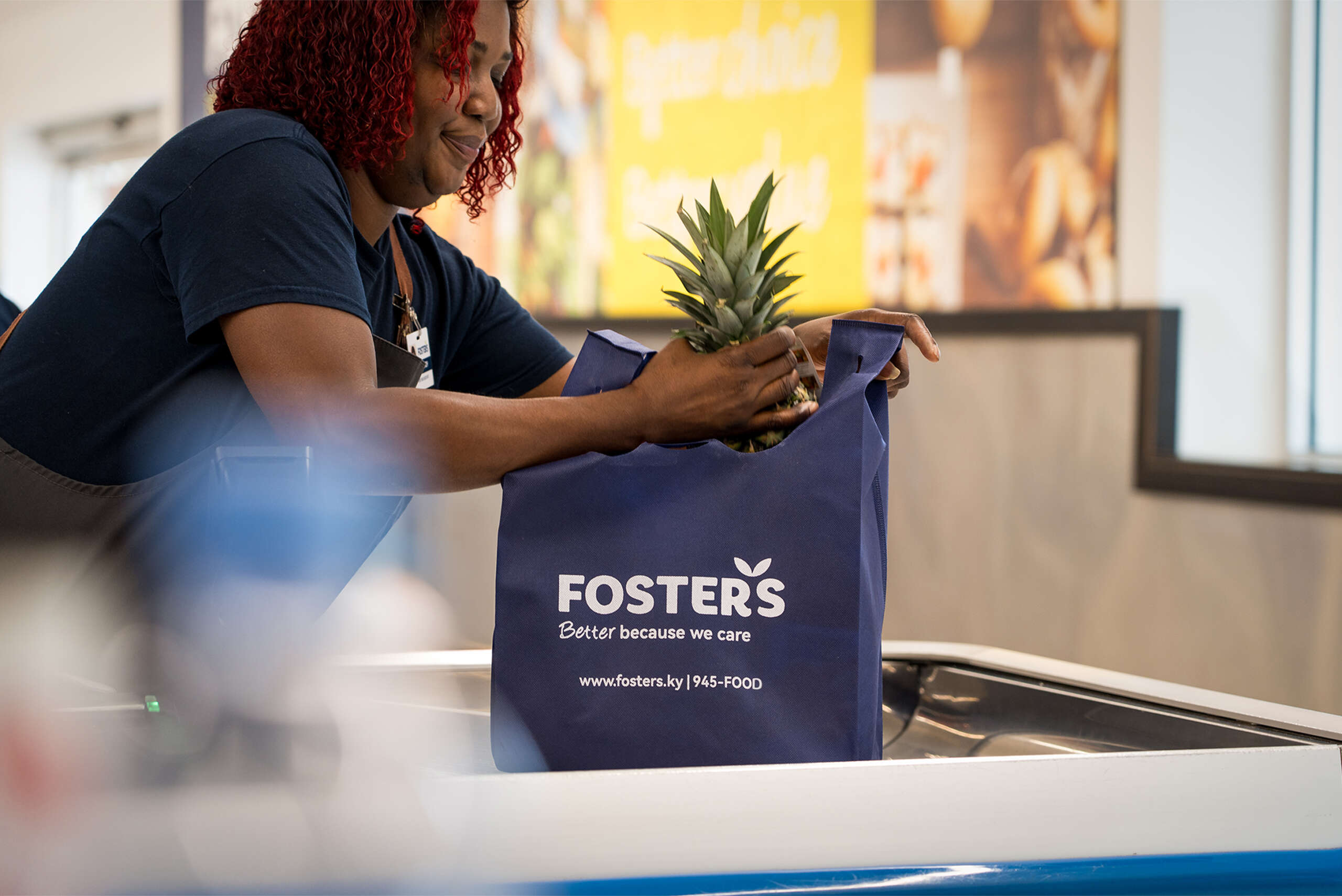
“However, the system as it stands now is not very robust in its ability to inform the industry on what is currently out in the fields ahead of when we order products from the US. While this is not necessarily a big problem due to the small quantities of local produce relative to the country’s needs, it does present some problems in terms of how much we can take at any given time when there is a glut of product say during hot/seasoning pepper season for instance.”
An online system similar to Jamaica’s Agri-Linkages Exchange, known as ALEX, which connects farmers with buyers in real time, could help reduce waste and improve planning.
In addition to cucumbers, Island Fresh grows tomatoes, sweet peppers, eggplants and herbs such as basil and cilantro. Jones says the farm produces about 1,200 mini cucumber packs, 500 long English cucumbers and 500-800 pounds of field cucumbers each week, supplying hotels and local retailers.
“Our plants grow three to four times faster than traditional farming,” Jones explained, describing how hydroponic systems allow nutrients to go straight to the roots, rather than being pulled from the soil.
But climate risks, especially hurricanes, pose major challenges, with extreme weather delaying production for weeks, and securing insurance remains difficult.
Jones believes self-sufficiency is possible for some crops, but only with investment in infrastructure.
Innovation is allowing Cayman to scale agriculture in spite of climate and size-related limitations.
Occupying 34 acres in North Side, Beacon Farms is taking a unique approach to food security through farming services by transforming rocky land into fertile soil using rock-crushing technology. The farm also produces nutrient-rich compost from supermarket and landscaping waste and grows animal fodder.
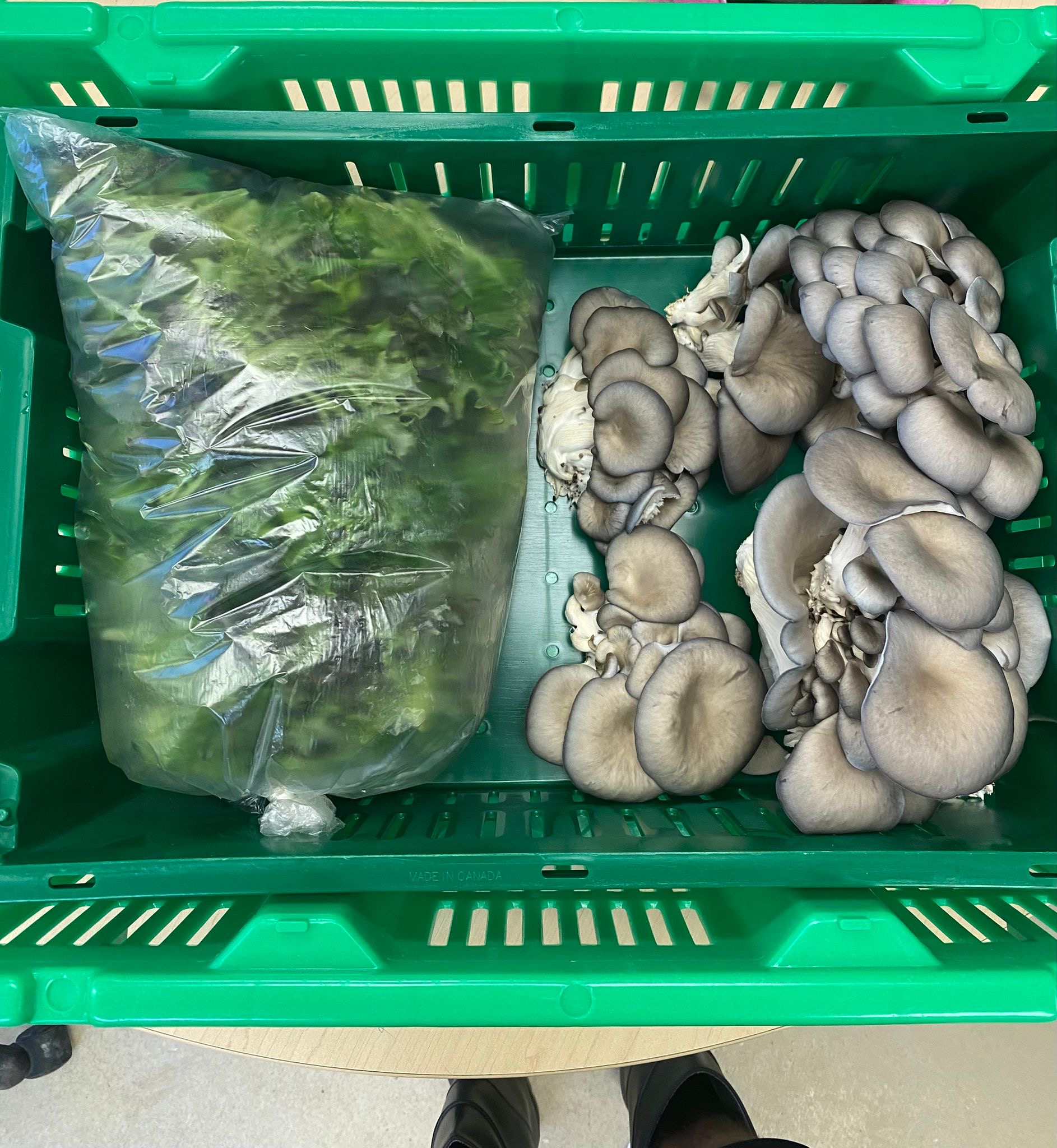
Primitive Greens, a vertical farm co-founded by Codi Whittaker, grows leafy greens, herbs and blue oyster mushrooms in climate-controlled, 40-foot containers. Using just 320 square feet, the system replicates the output of 2-3 acres while consuming only five gallons of recycled water per day in a pesticide-free, enclosed environment.
“In traditional farming, you’re using thousands of gallons a day,” Whittaker said.
“Here, it’s five. We’re pesticide-free, herbicide-free, and can precisely control light, nutrients and water. It makes farming incredibly efficient.”
Primitive Greens supplies 100-220 pounds of mushrooms weekly, peaking at 400 pounds, to local markets and hotels. Its mushrooms, harvested at peak maturity, are fresher and larger than imported varieties, yet cost half as much. The farm also produces 200 pounds of lettuce weekly and has room to scale.
With government support and lower energy costs, Whittaker believes Cayman could reduce reliance on imports and build a more sustainable, tech-driven agricultural future.
Fishing for food security
Without a formally organised commercial fishing industry, Cayman relies heavily on imports to meet local demand. In 2022, more than 2,300 tonnes of fish and fishery products were imported and the cost has soared, from US$12 million in 2020 to $19 million in 2024. Local capture production, by contrast, is just 125 tonnes, according to the Food and Agriculture Organization.
But fisherman Mario Antunez, owner of M M Seafood, believes Cayman could supply much more of its own seafood with greater support and coordination.
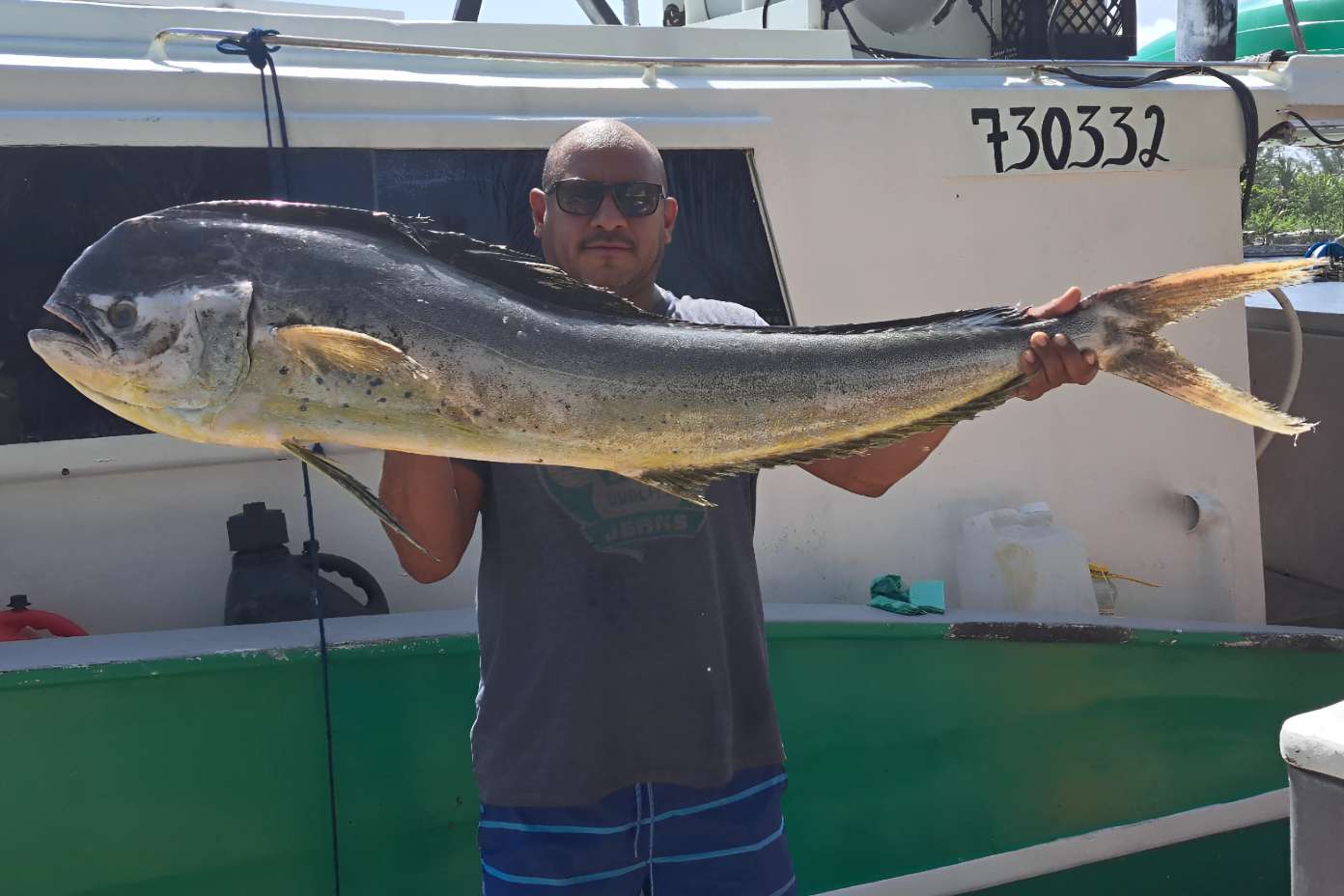
A resident for over 40 years and part of a Honduran fishing family, Antunez regularly embarks on deep-sea trips lasting up to 11 days and covering 240 miles offshore in search of snapper, wahoo, tuna and mahi-mahi.
On a good day, his crew might haul in 1,500 pounds of fish, but the cost is steep.
“Thousands of dollars in fuel, ice, groceries … it’s a lot of risk,” he told the Compass. “You can spend all that money but it doesn’t mean you’re going to catch that amount of fish.”
Once landed, the catch must meet strict safety and quality standards before being sold to buyers like Foster’s, Hurley’s, Luca, Cayman Cabana and The Ritz-Carlton.
“Imported fish can be a little cheaper, but ours is fresher, and people can taste the difference. Our catch comes straight from Cayman’s waters. … People still prefer our product because it’s local and fresh,” he said.
Still, Antunez sees room for improvement.
“The problem is infrastructure and coordination,” he said. “If we had a proper fishing dock in the North Sound, with fuel pumps, an ice machine and a supply shop, it would make a big difference.”
He also called for better planning among fishers.
“When 12 boats go out in the low season, we flood the market and can’t sell. But if six go and six stay, we all benefit,” he said.
For Antunez, building a more food-secure Cayman means passing down knowledge to the next generation.
“Cayman is small. We don’t produce much food locally, but whatever we can contribute, we should,” he said.
“We have to do it for the next generation. If you know how to fish, teach the younger ones. That’s our heritage. It needs to be passed down from the elders to the youth so the tradition continues. When visitors come here, we should be proud to say, ‘Yes, this came from here. This is Cayman.’”
Food security from farm to fork
One of the critical links in Cayman’s farm-to-fork chain is its chefs. Restaurants such as the Brasserie, Cayman Cabana and others, as well as major hotels, understand the value of local agriculture and have forged strong relationships with farmers.
Cayman Cabana on George Town’s waterfront has long-standing commitment to sourcing locally and its CEO Luigi Moxam said the availability and consistency of local ingredients have improved significantly over the past decade.
“We’ve seen first-hand how availability was minimal about a decade ago and how challenging the volume and supply was to be consistent enough to offer on a menu,” he said.
“The support from the community, the restaurants, grocery stores and markets has had such a noticeable positive impact on farmers’ and fishers’ ability to overcome their challenges, increase the variety and volume to expand their business and offerings to be more consistent.”

The restaurant sees its role not only in serving local food, but also in educating the public about the importance of supporting Cayman’s food producers.
“There’s a direct link between food security and how we support our agricultural and fishing communities,” Moxam said.
It’s a philosophy McLaughlin shares. He traded Wall Street for farmland and has no regrets. He said he’s proud of what Cayman’s farmers are building and credits Agriculture Minister Ebanks for leading the charge.
“He understands farming. He launched the egg programme, subsidised feed and fertiliser, gave us seed money. But we still need our own hatchery. If the US stops exporting chicks, what will we do?” he said.
Cayman’s Food and Nutrition Security Policy lays out a path to 2036, with a focus on reducing import dependence and building local resilience. But as Deputy Agriculture Director Nash warned, “We must be clear about what we want.”
“The Department of Agriculture recognises the vital role that small businesses and individual farmers play in strengthening our local food systems,” said Agriculture Director Wilbur Welcome in an email to the Compass.
“From traditional livestock producers to crop and egg farmers and hydroponic innovators, their efforts directly contribute to food availability, safety, and stability in the Cayman Islands. We continue to work closely with these producers to provide technical support, training and programs that build capacity and long-term food security.”