


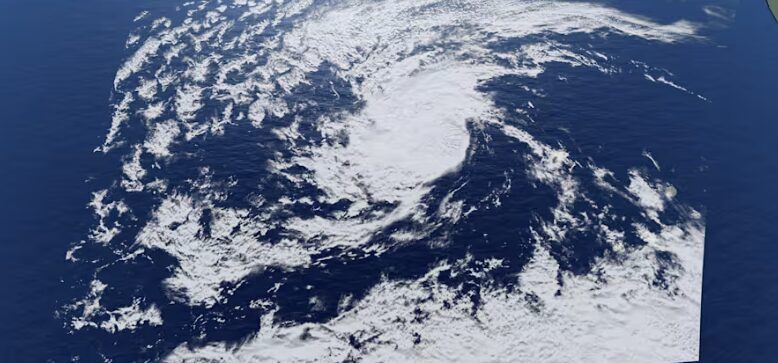

A tropical rainstorm that formed near the Cabo Verde Islands over the weekend has strengthened into Tropical Storm Erin, according to AccuWeather huricane experts. The system is forecast to intensify rapidly and become the first major hurricane of the 2025 Atlantic season.
“Erin will enter an area with conducive atmospheric conditions that will allow it to quickly strengthen north of the Lesser Antilles,” said AccuWeather® Lead Hurricane Expert Alex DaSilva. “This storm will likely intensify into a major hurricane this weekend over an area with exceptionally warm waters and little disruptive wind shear.”
According to AccuWeather®, ocean temperatures across much of the Atlantic’s main development region are currently above historical averages, both at the surface and at depth. These conditions, typical for mid-August through mid-October, are expected to support tropical development and possible rapid intensification.
DaSilva noted that Erin is expected to avoid most of the dry air and Saharan dust that preceded its formation, allowing the storm to continue organizing and strengthening. “Once a storm has a core, it can typically fend off much of the dry air as it continues to strengthen,” he said.
Erin is currently being guided westward by the Bermuda high. AccuWeather® experts say two key atmospheric factors will influence its path later this week: the positioning of the Bermuda high and the strength of a cold front moving off the U.S. East Coast.
“If the trough is stronger and faster, it will help steer Erin away from the East Coast and out to sea,” DaSilva explained. “If the trough is slower, the storm will be able to advance farther westward toward the coast of the Carolinas.”
A dip in the jet stream over the eastern U.S. may also play a role in determining Erin’s trajectory. AccuWeather® advises residents along the East Coast, particularly in the Outer Banks and eastern Canada, to monitor updates closely.
As Erin intensifies, AccuWeather® warns of rough surf and dangerous rip currents along Atlantic beaches from Florida to New England later this week and into next week. Beachgoers are advised to swim only in areas with lifeguards and to be aware of rip current warning signs.
“Families heading to Atlantic beaches before heading back to school should be cautious,” DaSilva said.
AccuWeather® meteorologists are monitoring three additional areas in the Atlantic basin with low potential for tropical development:
- A system in the central Atlantic from Aug. 12–13, with no expected land impacts.
- A disturbance south of Nova Scotia from Aug. 12–13, which may track toward Newfoundland.
- A tropical wave forecast to move across the eastern and central Atlantic from Aug. 15–19, which could impact the eastern Caribbean.
AccuWeather® forecasts three to five named storms to develop in the Atlantic basin during August.