


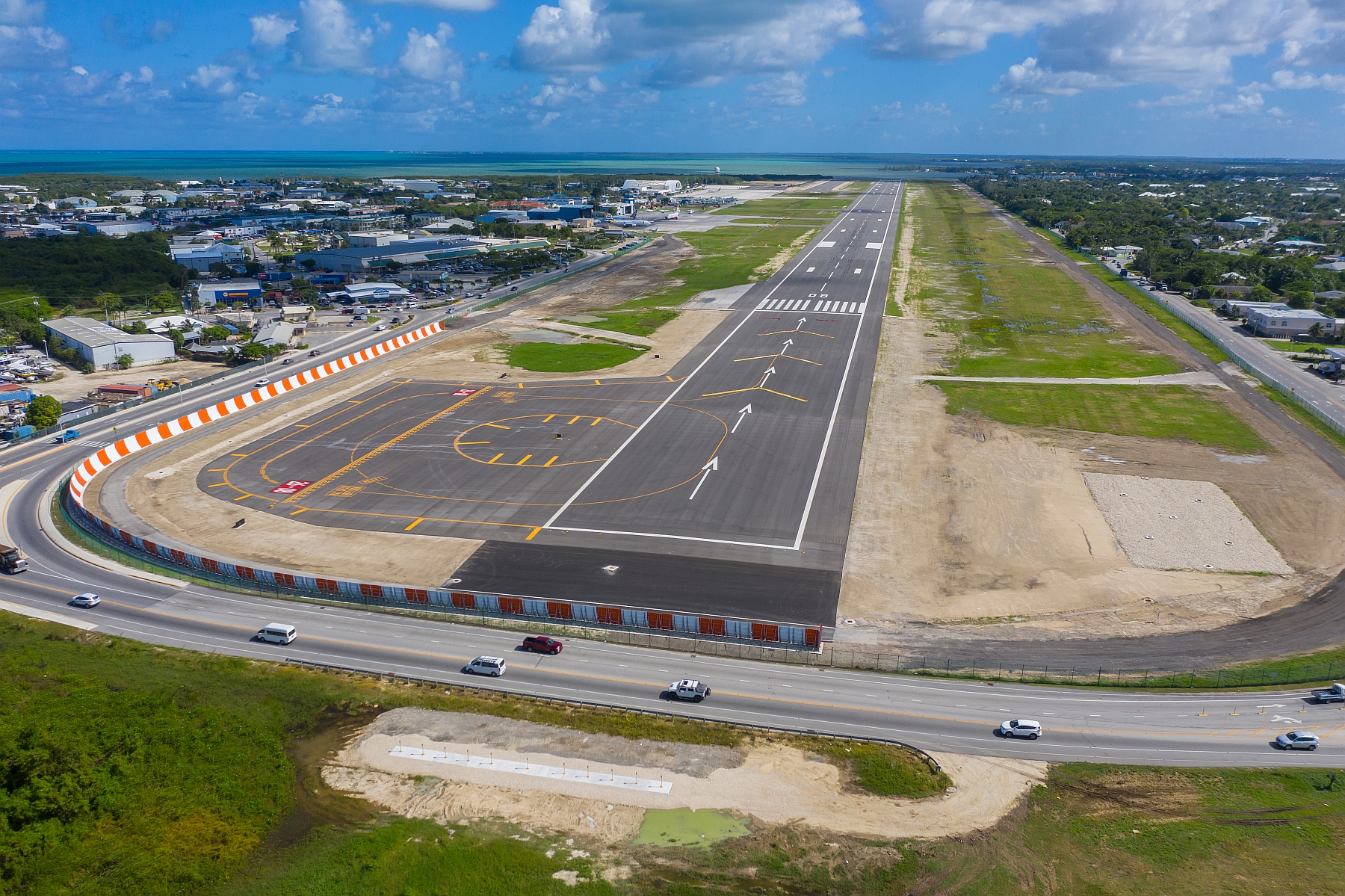
The possibility of extending the runway at Grand Cayman’s main airport to help improve airlift between the islands and Europe has come into focus once again amid recent challenges with the British Airways flight through Nassau.
Government talks with major airlines suggest an extended runway would bring with it the possibility of longer-haul flights. There are no guarantees and significant questions remain over whether a $30 million gamble to attract European tourists would pay off.
Tourism Minister Gary Rutty said that his ministry is investigating increasing airlift from all regions, but the new government has not yet revealed its position on proposed airport upgrades that could facilitate new options from Europe.
The investigation, however, should start with British Airways.
The British Airways non-stop option
It is technically possible for British Airways to fly non-stop to Cayman. The airline did so on multiple occasions during the COVID-19 lockdown.
Kenneth Bryan, the former tourism minister, said those flights were commercially successful for the airline. He acknowledged that British Airways’ decision to fly via Nassau, in normal circumstances, was primarily for commercial reasons.
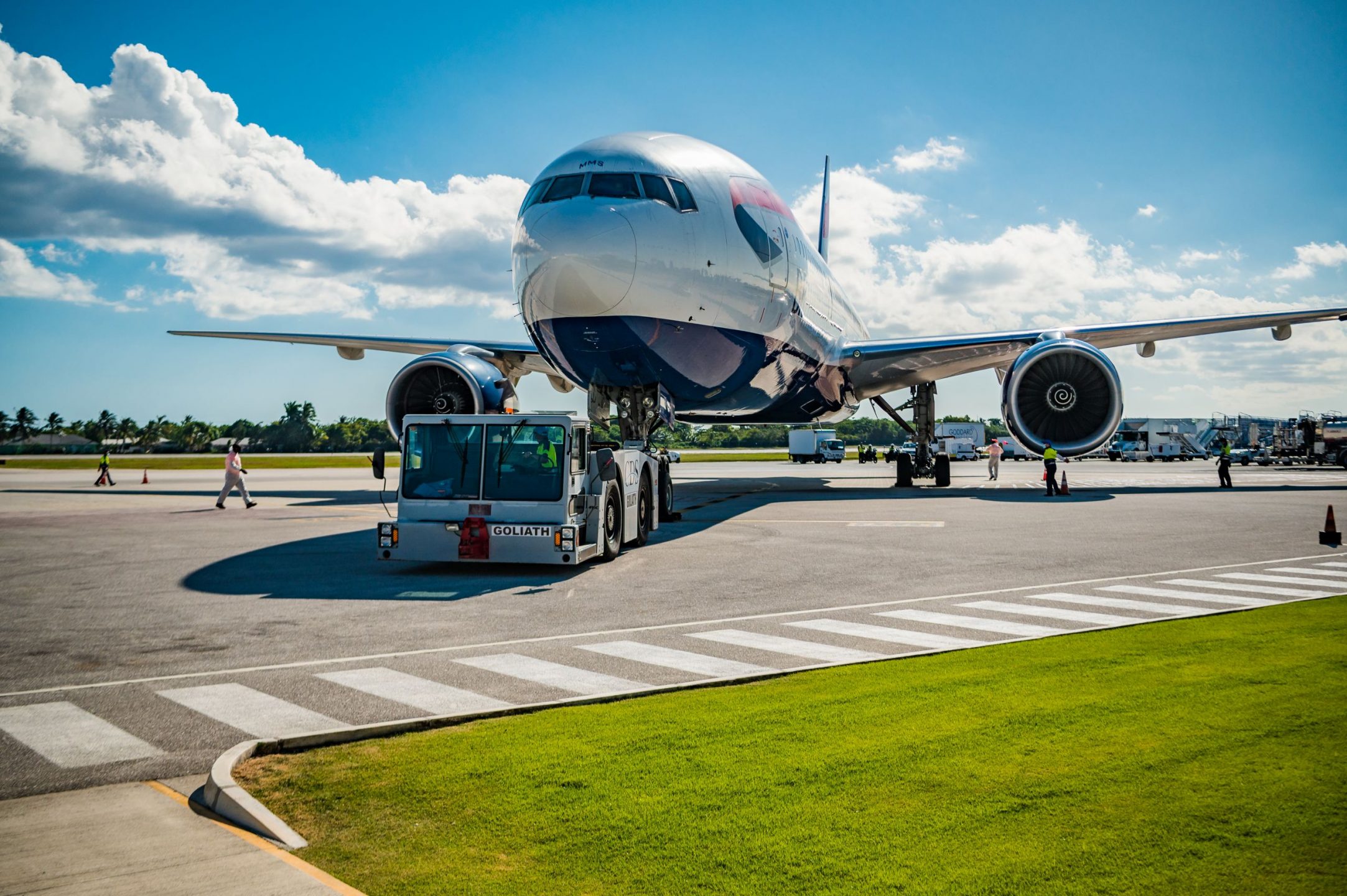
However, the length of the runway does limit the type of aircraft that the airline can deploy on this route. Even with the current Boeing 777 aircraft it operates on the Cayman route, flying non-stop would push British Airways closer to the limit in terms of its fuel safety margins.
A 2023 Airports Masterplan, which discussed the possibility of increasing the length of the runway, noted that the repatriation flights during the COVID-19 pandemic had slightly different parameters in terms of the weight of passengers and cargo they were carrying.
“During the COVID-19 pandemic, British Airways operated direct non-stop flights between London Heathrow and Grand Cayman using Boeing 777 aircraft. These services were enabled by the reduced payload requirements associated with repatriation missions and lower passenger loads,” it states.
The ability to refuel in the Bahamas is considered a key aspect to keeping the weight of the plane within acceptable limits to take off from Cayman. Fuelling in Nassau is also less expensive than doing so in Cayman.
The same report goes on to make the case for extending the runway to increase the possibilities of different airlines and aircraft coming into Cayman.
The commercial case for BA
Even if it were possible for a fully loaded British Airways flight to land and take off from Cayman – and there is some ambiguity on this point, given the slightly differing interpretations of the lockdown flights – it doesn’t necessarily make it a sensible financial move for the airline.
A large share of the passengers on the Cayman-London route gets on and off at Nassau, suggesting the partnership with the Bahamas provides the critical mass of passengers to support five-times-weekly flights.
Currently, it is not clear that the demand for flights between London and Cayman supports a non-stop route. It is potentially feasible that British Airways could do that once or twice a week. A lack of competition on the route means there is little incentive, though, and there would possibly be knock-on implications for onward travel to Europe and Asia if that service were to be introduced at the expense of the less-convenient but more-frequent route via the Bahamas.
A travel industry expert, who asked not to be named, said a non-stop flight from London to Cayman might be technically viable, but would come with a risk of higher ticket prices and less-frequent travel.
Kerith McCoy, the former acting CEO of Cayman Islands Airports Authority, said discussions on the issue of non-stop flights had been going on for decades. In his view, it is primarily a commercial, rather than a technical, issue.
Why an extended runway matters
The Owen Roberts International Airport runway is currently 7,867 feet. The 2023 Airports Masterplan discusses extending that up to 9,000 feet in order to accommodate wide-body long-haul aircraft. As well as the safety specifications, it indicates the runway extension could allow more fuel-efficient aircraft to operate on the route, making it more commercially viable.
It would also open up the possibility of other airlines – like Virgin Atlantic – considering the route.
Bryan said there had been clear indications of interest from multiple airlines in a non-stop route from the UK or even possibly from Germany to the Cayman Islands. Bryan said there had been discussions with Virgin Atlantic dating back for years and the airline was interested in Cayman, but could not safely land its transatlantic planes on the runway.
He said other airlines were in the same position.
“Several airlines have indicated that they would be interested in the Cayman Islands if there was a longer runway. That’s the whole purpose of doing it,” he said.
The business case for the airport runway extension noted, “The current runway length and other airside infrastructure limit the airport’s ability to accommodate long-haul wide-body aircraft at maximum take-off weight, which affects the potential for direct services to Europe and other distant markets.”
The introduction of competition might serve to improve options on the route and, in the eyes of frustrated passengers, could inspire British Airways to improve its much-critiqued customer service.
No guarantees
There is a risk that extending the runway won’t necessarily lead to even one non-stop flight from Europe.
Airlines have indicated interest in flying non-stop to Cayman, but they have not made any guarantees. There is scepticism in some quarters as to whether the current demand really supports non-stop service to and from Europe.
For Bryan, it is a judgment call that requires serious thought. He views it as a ‘chicken and egg’ situation. If Cayman did have capacity to accommodate a non-stop flight, the demand from the UK and Europe might be greater and the ability to attract airlines and increase tourism market share from that region would rise.
He acknowledges, “The theory of ‘Build it and they will come’ is a very risky one, but it is one that all of the information and data analysis points to.”
McCoy argues that while there are technical challenges for a number of long-haul aircraft in landing and taking off on the current runway, the bigger issue is the commercial viability of the route.
From his past knowledge working at the Cayman Islands Airport Authority, he said British Airways’ choice not to fly a direct non-stop route to Cayman was “strictly a fiscal decision”.
While he accepts that other airlines and other gateway cities in mainland Europe could come into the picture with a longer runway, he questions whether the demand is there for the route and if the investment makes sense, given the challenges of making those kinds of upgrades in the existing space.
He questioned if the market research had been done to show that European travellers wanted to fly to Cayman in sufficient numbers to justify the expense.
The costs
The 2023 Airports Masterplan listed likely costs of up to $28 million to extend the runway – though those costs have likely inflated since then.
The estimate was for extending into the North Sound and included taxiway and lighting realignments, engineering and marine works, and the runway end safety area.
It did not factor in any environmental mitigation required, land acquisition and any inflation or supply chain issues post-2023.
Other implications
There are huge environmental concerns around going into the North Sound.
Albert Anderson, managing director of the Cayman Islands Airports Authority, said the project its currently going through the terms of reference on an environmental impact assessment for the runway extension. He expects the assessment itself to begin in around two years.
The masterplan ruled out extending the runway westward through the cricket pitch because of proximity to residential areas and the impact on traffic. The National Roads Authority has previously produced data modelling that shows the enormous impact of closing the small section of Crewe Road that skirts the perimeter of the airport.
Bryan said his belief is that the project could be beneficial for tourism, but all these factors – including the impact on residents in the area – would have to be considered before any final decision was made. That view is largely in line with the 2023 masterplan, which recommends the runway extension as a strategic long-term investment, but emphasises that the expense is justifiable only if the infrastructure enables new long-haul route.
Is there demand for the route?
A key issue for non-stop flights from Europe is the size and weight of aircraft that can land here. That limits the number of airlines that can consider Cayman as an option.
McCoy believes that both the British Airways 777 and the 787 Dreamliner could fly non-stop to Cayman if they considered it commercially viable to do so. He said flying between mainland European destinations – such as Lisbon or Frankfurt – would likely require a longer runway.
But he suggested the biggest barrier to any non-stop route from Europe was lack of demand in that market for Cayman’s product.
It is dangerous to just do it on an airlines’ say-so – the technical information is critically important, but has to be validated and the airlines are certainly not beholden to run the route.
“It has always been about the commercial viability of the route and what has been lacking is any kind of marketing in Europe,” McCoy said.
“Since British Caledonian first started flying to Cayman, it has always been an option for European tourists to come visit. Where are they?
“Personally, I am not against if it is needed, but it is a lot of money to commit without knowing if there is a real market.”
Earlier this month, the Department of Tourism suggested that process was starting as it announced plans to hire Swiss firm, the Kleber Group, to market the islands in Central Europe, particularly Germany, where officials believe there is interest in Cayman vacations.
Rosa Harris, director of the department, said, “We are looking ahead to the Owen Roberts Airport master plan improvements, including the runway extension to allow for non-stop routes from Europe.
“Our work with Kleber Group plays an integral role in our aviation strategy as we engage with European airlines to show the demand for the Cayman Islands from these markets.”
Other options from Europe
It is already an option to fly through the US to the UK – as well as to various mainland European cities – with a same-day connection.
However, flying on some airlines or to some European destinations when connecting through the US requires an overnight stop. With regard to flights to London, some readers who commented on Cayman Compass stories about British Airways delays in Nassau when flying to the UK said they chose connecting through the US because of the relative ease of overnighting in the US compared with the Bahamas.
Connecting through the US does present challenges for some people because of US visa or Electronic System for Travel Authorisation, or ESTA, requirements and the need to clear US immigration and customs – which makes connecting through the US a less-convenient route than the British Airways ‘direct’ flight.
Fiona Brander, of Cayman-based TravelPros, said there were a number of ways to get from Cayman to the UK – all of which had strengths and weaknesses.
She highlights five main options that do not require overnight stays in Miami:
- British Airways via Nassau. This flight operates five days a weeks.
- Cayman Airways and British Airways via Miami. This flight doesn’t operate every day for the same-day return – only when Cayman Airways flies late from Miami to Cayman.
- Cayman Airways and Virgin Atlantic via Miami. This flight doesn’t operate every day for the same-day return – only when Cayman Airways flies late from Miami to Cayman.
- American Airlines via Miami. This option is only available from mid-October in the high season.
- Cayman Airways and British Airways via Kingston. This option is not always available.
A possible Cayman Airways option
It is theoretically feasible that government could invest in aircraft and staff to allow Cayman Airways to operate a non-stop route to the UK. However, this would likely be extremely expensive, requiring at least two long-haul jets to ensure redundancy on the route. And while that kind of investment could bring competition for British Airways, it may similarly impact the viability of the BA route, leading to a net reduction in flights from the UK.
In comparison to similarly sized islands, one travel expert said that Cayman’s airlift is quite good. British Airways could do better, at times, with customer service and communications around delays – and there is a need for better passenger support on unscheduled overnight stops in the Bahamas – but five flights a week overall to the UK is considered a reasonably good airlift in comparison to similarly sized destinations.
How government could help
It is open to government to offer a minimum-seat guarantee to encourage British Airways or another airline to fly non-stop to Cayman – using public funds to cover any shortfall if the route is not commercially viable. That is common practice for small islands to shore up their airlift. In fact, Cayman Airways was the recipient of that type of guarantee when it briefly operated a route to Barbados.
There might be logistical implications for British Airways that impact the Bahamas route that could make this unworkable, however.
Another option is simply for government to work with British Airways or with the Bahamas Airport Authority to ensure better communication and customer service when flights are delayed, or to encourage a partnership with Cayman Airways to provide reserve air support out of Nassau.