


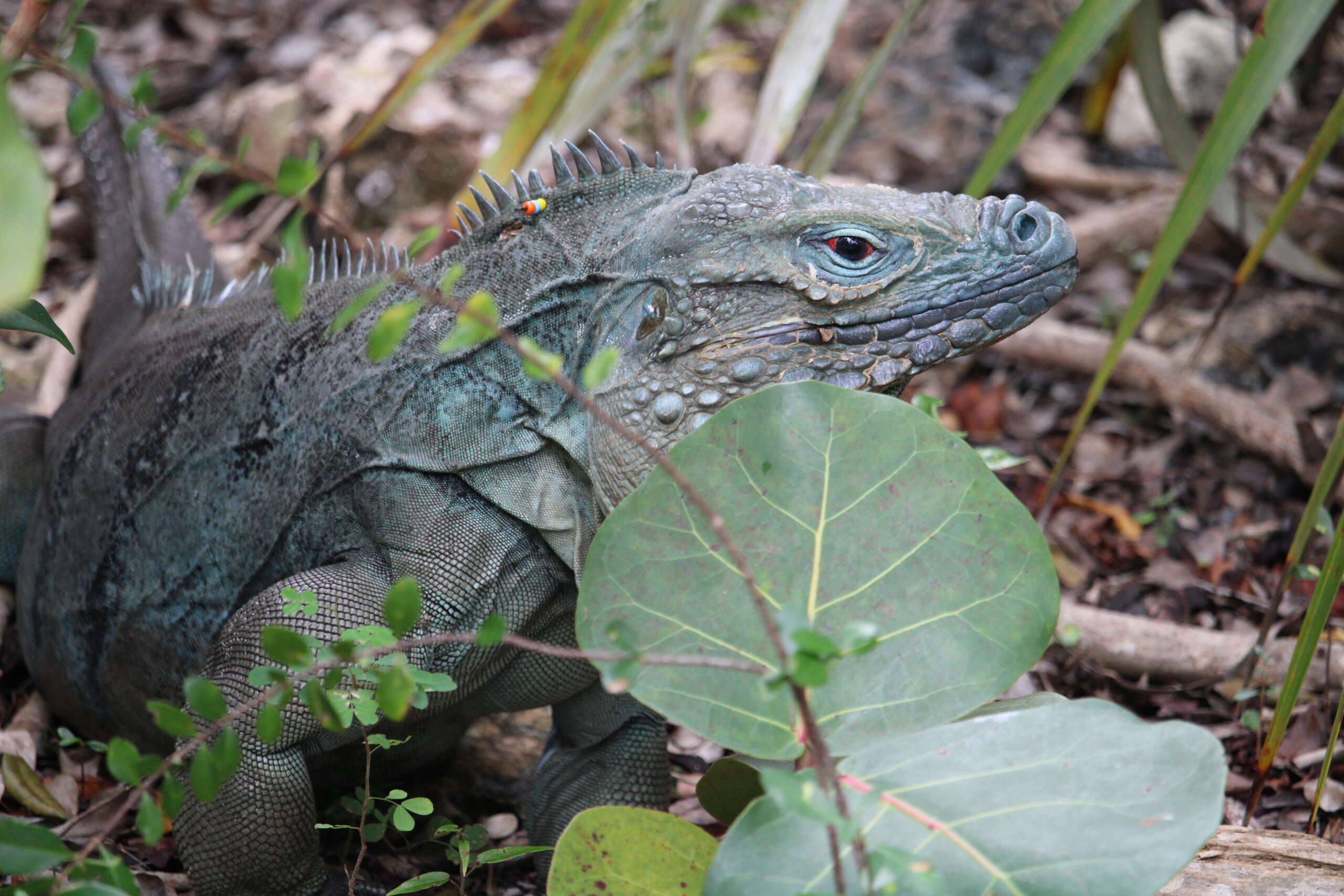
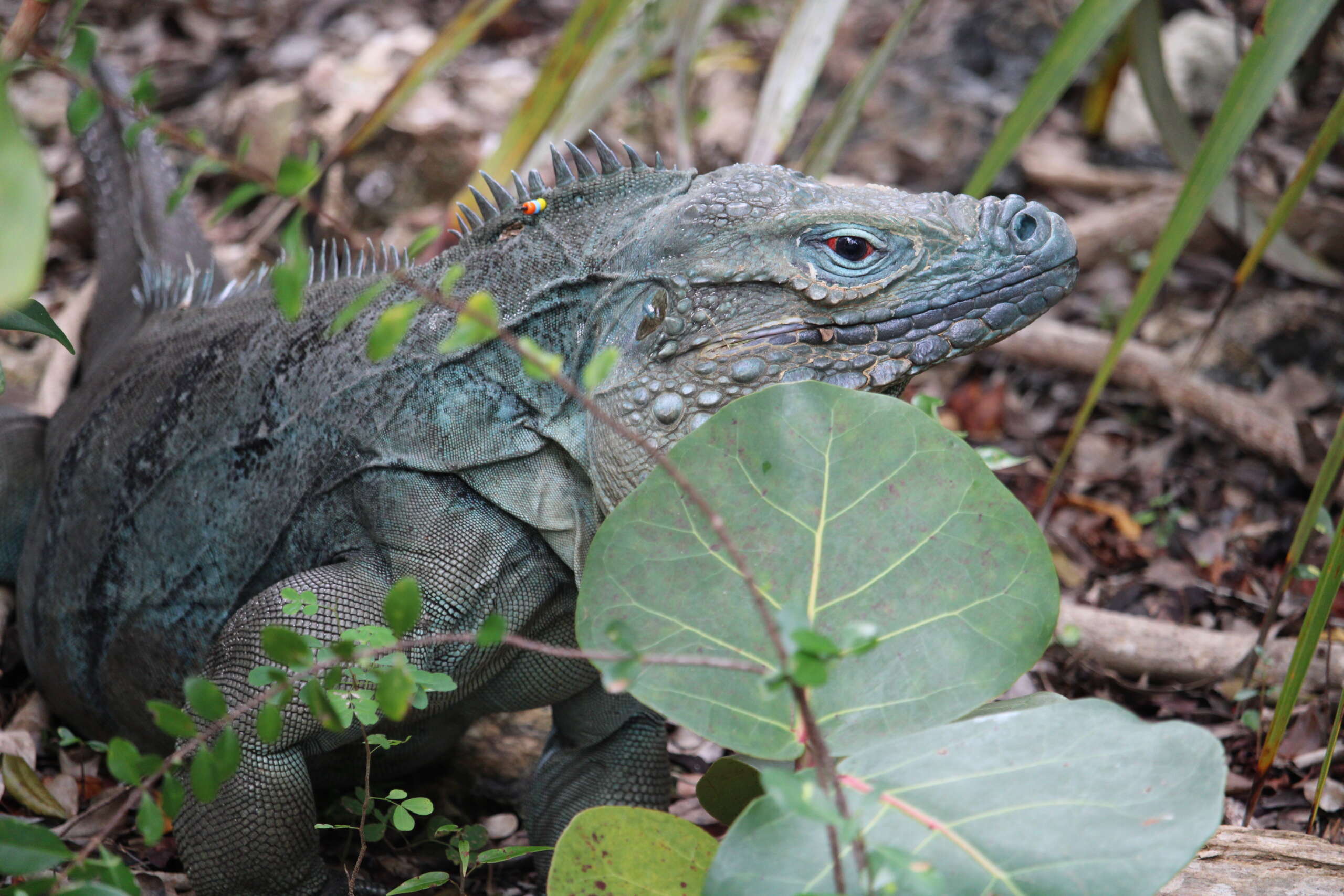
Cabinet has lifted an interim order restricting activity on East End land to protect blue iguanas, citing constitutional requirements to follow due process, as well as balance property owners’ rights and species protection.
Premier Andre Ebanks announced the decision in a press release Wednesday. The directive, in place since February 2023, allowed the National Conservation Council to have final say over planning applications on a vast swathe of land in the eastern districts.
Landowners will now return to the standard process of applying to the Central Planning Authority, which is still legally required to consult the council before approving projects. However, it is no longer mandated to follow the council’s advice.
The move followed property owners’ concerns that the measure impacted their land rights.
The directive protecting blue iguanas, which included speed controls and restrictions on domestic pets, was meant as a temporary measure while a longer-term conservation plan for the iconic Cayman species was considered.
The press release indicated Cabinet’s decision to lift the restrictions hinged on whether the National Conservation Council’s 2023 order could still be called an “interim” directive after nearly three years. It added that government may consider further clarifications to the National Conservation Act as it relates to the meaning of the term ‘interim’, as well as setting reasonable time limits once such directives are issued and establishing timeframes “within which the Cabinet should be informed about the issuing of such directives”.
Seeking balance
The press release stressed that government is committed to protecting the endangered species, but said the Constitution requires Cabinet to balance environmental protection with due process and property rights.
The ruling means future protections must come through a formal conservation plan developed with landowner input.
“Our responsibility was to balance the rights of our people to a fair and reasonable process while considering the protection of our blue iguanas,” Ebanks said. “The decision needed to be lawful, reasonable, proportionate and procedurally fair.”
The decision affects multiple parcels, including land privately held, as well as areas owned by the Crown and the National Trust.
Victory for landowners
The move is seen as a win for landowners who argued that the interim directive amounted to a de facto conservation plan that restricted their opportunity to enjoy land they had owned for years and was zoned for development. Lawyer and landowner James Bergstrom, whose 300-acre property was directly affected, welcomed the ruling.
“The decision by Cabinet is a welcome confirmation of the rule of law in the Cayman Islands,” Bergstrom said in a statement to the Compass.
He argued that the National Conservation Act was designed to prevent conservation plans from being imposed without landowners’ consent, especially in eastern districts where much property remains in Caymanian hands.
“After an almost three-year delay, I can now move forward with longstanding plans to use my property for farming, personal recreation and as a private retreat for my family,” he said.
Bergstrom said he supports the blue iguana programme but noted that more than 850 acres of reserves are already set aside for the species.
The blue iguana, once on the brink of extinction, is listed under Schedule 1 of the National Conservation Act as a protected species.
Species Conservation Plan
Government officials said Cabinet expects to consider a formal Species Conservation Plan in early 2026, backed by UK funding and subject to public consultation. Unlike the interim directive, such a plan would be drafted with full input from landowners and stakeholders, the press release stated.
“The plan will reflect comprehensive data and research on the blue iguana population, for which the Cayman Islands has received UK funding. As required under the Act, the plan will be open to the public for consultation with the aim of properly protecting our endemic blue iguana species,” said Premier Ebanks.
Department of Environment Director Gina Ebanks-Petrie previously told the Compass that the department is working on a long-term species plan but believes the interim directive – which covers land sandwiched between the Colliers and Salinas reserves – should stay in place until that process was complete.
Asked for comment, Wednesday, she said the department and conservation council had now lost the ability, at least temporarily, to direct conditions of approval on development, such as traffic calming measures. The interim directive also gave the department ability to put restrictions on domestic pets that can prey on blue iguanas and control invasive species that impact their habitat.