


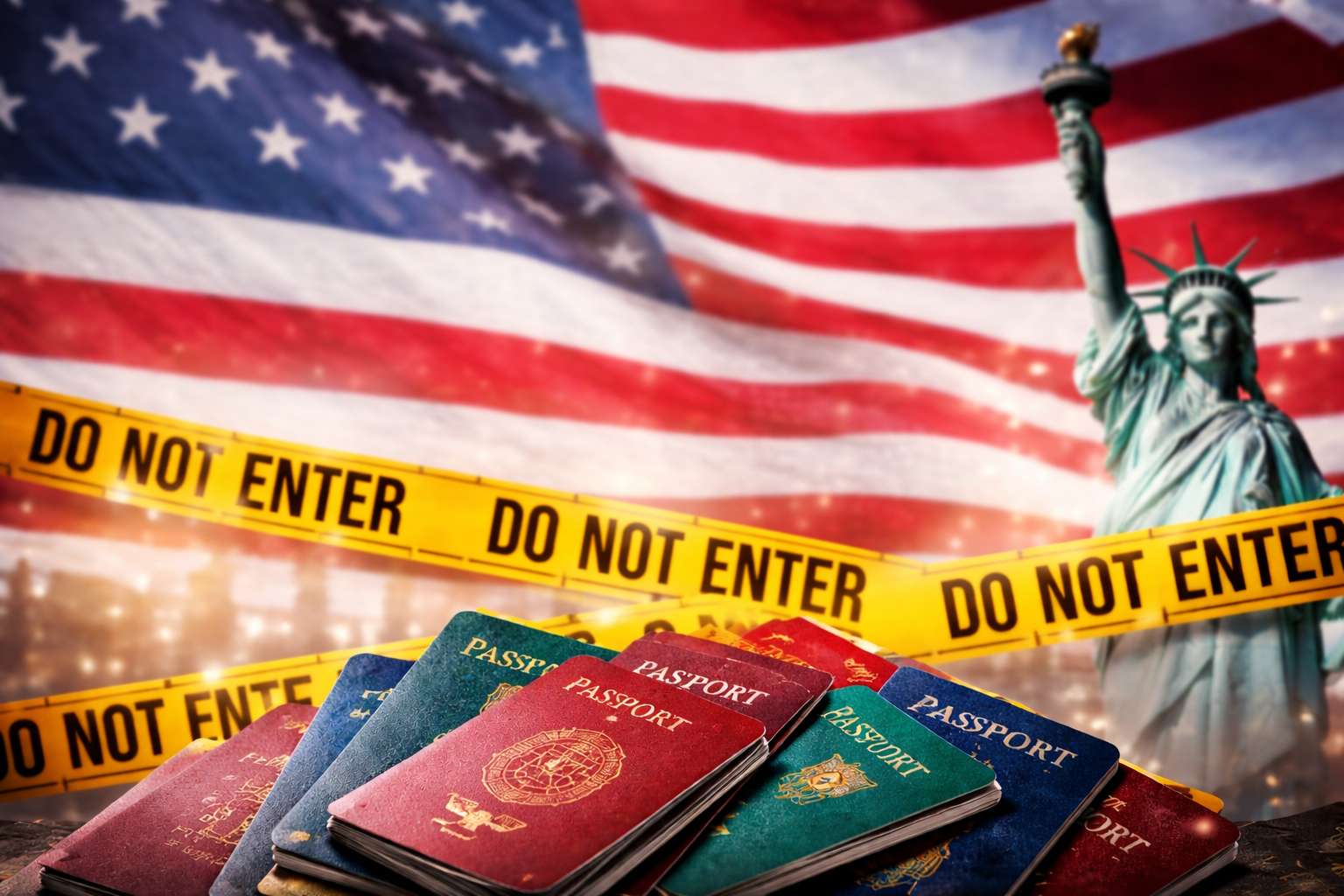
The United States has tightened its travel and visa regime for parts of the Caribbean, adding Antigua and Barbuda and Dominica to a list of countries facing new entry restrictions from 1 Jan. 2026, under a presidential proclamation issued on 16 Dec.
The move does not amount to a blanket travel ban, but places both countries under what US authorities describe as partial restrictions, subjecting their nationals to heightened scrutiny when applying for US visas and potentially narrowing access to certain visa categories. Existing visas will generally remain valid, but new applications are expected to face tougher checks.
In explaining the policy, the White House said the measures were designed to prevent the entry of foreign nationals “about whom the United States lacks sufficient information to assess the risks they pose”, citing national security, immigration enforcement and counter-terrorism concerns.
The White House cited citizenship by investment programmes that allow individuals to acquire passports without a residency requirement as the reason it added both Antigua and Barbuda and Dominica to its list of countries with “partial restrictions”.
A leaked United States Department of State memo, dated 14 June and signed by Secretary of State Marco Rubio, and previously reported by the Compass, warned that Antigua and Barbuda, Dominica, Saint Lucia, and Saint Kitts and Nevis could face expanded US travel restrictions if they failed to meet new security benchmarks within 60 days.
The memo flagged weaknesses in passport security, data-sharing arrangements, visa overstays and the availability of citizenship by investment without residency.
Research from the London School of Economics has previously raised concerns that such programmes can create loopholes, allowing individuals from countries facing US travel bans to gain entry using secondary passports.
Between January and June 2024, Chinese nationals accounted for the majority of Antigua and Barbuda’s 739 citizenship-by-investment applications, followed by Nigerians.
Officials in both countries have pushed back against the US characterisation.
Antigua and Barbuda’s ambassador to Washington, Sir Ronald Sanders, said following discussions with senior State Department officials that all valid US visas held by Antiguan and Barbudan passport holders would continue to be honoured, with no revocations of visas issued before 31 Dec., 2025. Any changes would apply only to new applications and would largely relate to updated biometric data collection, which he said would not materially alter the process.
The talks, he added, were held at the direction of Prime Minister Gaston Browne and reaffirmed Antigua’s commitment to working with the US to protect security while preserving legitimate travel.
Dominica’s Prime Minister Roosevelt Skerrit struck a similar note, telling state-owned DBS Radio that his government had held productive talks with US officials over its citizenship-by-investment programme. He suggested the restrictions could stem from miscommunication between different arms of the US government, noting that American officials had previously been supportive during reviews of Dominica’s legislation.
Skerrit said his government would formally seek clarification and urge Washington to revisit the decision, adding that concerns about residency requirements had already been addressed with US backing.
For the Cayman Islands, the heightened restrictions do not pose a threat. Cayman does not offer citizenship by investment, nor does it provide a non-resident pathway to citizenship under its Residency by Investment programme. As a result, it is unlikely to be affected by the current or proposed US restrictions.
While local residents who hold Antiguan or Dominican passports could face more hurdles when travelling to the US, Cayman itself is largely insulated. The 2024 Compendium of Statistics lists no work permit holders from Antigua or Dominica in Cayman, limiting any direct labour market impact.