


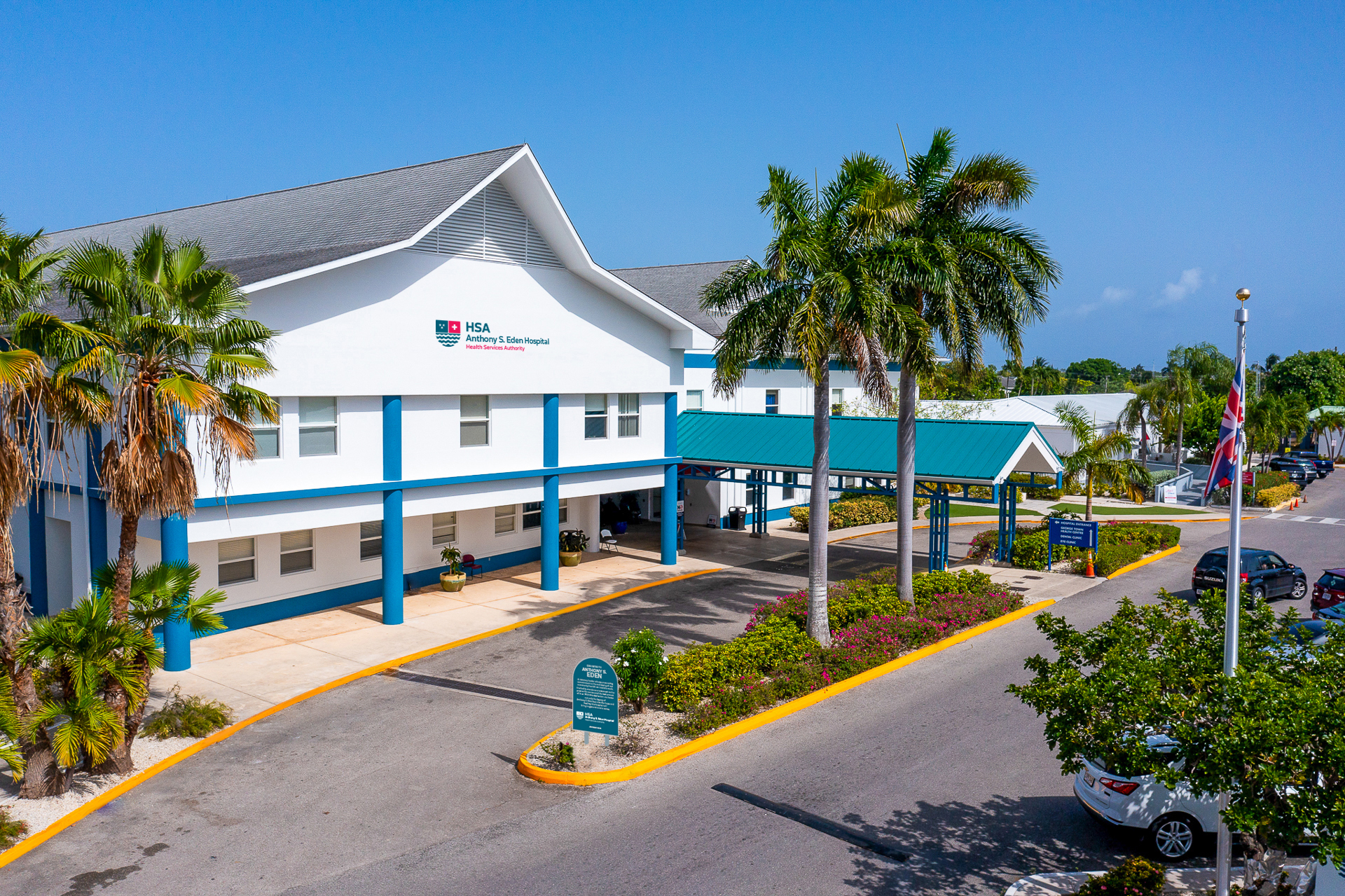
Health Services Authority board members should be asked to repay stipends claimed for some meetings, an internal government investigation has recommended.
The Internal Audit Service found weaknesses in governance at the HSA board, including the absence of approved agendas and minutes for many meetings, and an unclear approval process governing the payment of board remuneration.
Previous Compass reporting showed the lay board – made up of six to eight members – met 190 times in the 18 months to June 2025, collectively claiming almost $500,000 in stipends.
The Internal Audit Service report, released to the Compass following a Freedom of Information request, examined board practices during 2022 and 2023 and identified a similar pattern of frequent meetings.
It recommended that the board improve efficiency and reduce the number of meetings held.
While the report found that stipends were paid in line with remuneration approved by Cabinet for attendance at meetings, it noted that Cabinet’s approval letter did not set out any criteria defining what qualified as a payable meeting.
“It is our opinion that remuneration should only be paid to the HSA Board for actual meetings,” the report states, adding that qualifying meetings should include “an approved agenda which is circulated and agreed ahead of a meeting” and minutes or notes that accurately record the date, attendees, location, discussions and decisions.
The audit found those criteria were not met for many meetings during the period under review.
“We recommend the recovery of money claimed for 2022 and 2023 where non-meeting events were claimed for by board members,” the report states.
The bulk of the report was withheld from disclosure after the Office of the Deputy Governor decided it should not be released. Internal Audit Service reports are generally withheld, the office’s information manager wrote, to help preserve its function as an internal investigatory body and preserve a “safe space” for future deliberations of this nature.
However, the written ruling acknowledged legitimate public interest in promoting accountability within government, particularly around public spending and sanctioned the release of the key findings and management action report
Seven recommendations
The audit includes seven recommendations. One, rated high priority, was redacted in full.
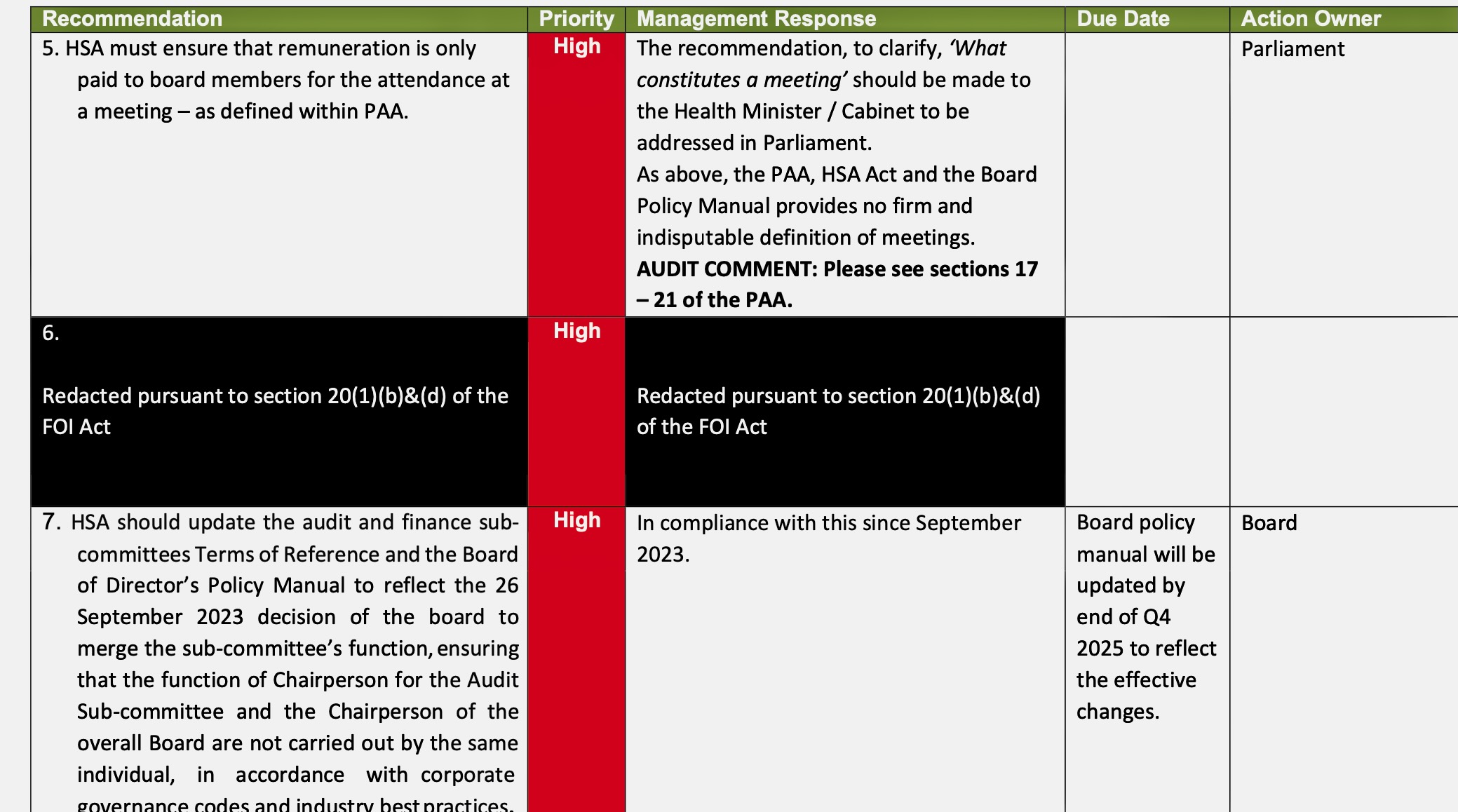
Since the audit was circulated internally within government, further work has been undertaken by the Office of the Auditor General, and Cabinet last month announced a change to the board’s remuneration structure, replacing per-meeting payments with a fixed monthly stipend regardless of the number of meetings held.
The audit also raised concerns about record-keeping practices, finding that board minutes and agendas were not readily available and that numerous documents lacked required approval signatures.
“Board minutes are a crucial part of historical records,” the report states. “However, the minutes of the meetings provided by the HSA Board were not readily available upon request, resulting in delays in efficiently carrying out the investigation and a significant number of the documents lacked the required approval signatures, which results in the HSA being in contravention of the Public Authorities Act.”
The Compass submitted a separate FOI request in July seeking copies of HSA board minutes from the previous two years. No substantive response has been received, and the matter is currently under appeal with the Ombudsman.
The lay board has an oversight role and no responsibility for the day-to-day operation of Cayman’s healthcare system. Data shared with the Compass and with MP Chris Saunders, who has campaigned for reform in Parliament, showed some board members earned more in stipends than senior medical staff.
Speaking in Finance Committee in June last year, Saunders highlighted that the board held 18 meetings in a single month, with one member earning more than $10,000 in stipends.
The internal audit further found that the board had strayed into operational matters that fall within the remit of salaried executives and medical leadership, rather than governance and oversight.
In its written responses included in the report, the board disputed those findings, rejecting suggestions that it misinterpreted what constituted a meeting or overstepped its role.
“While we appreciate that some meetings may appear operational in nature, we respectfully disagree with the assertion that there is a need to improve their effectiveness,” the board said.
“In order to facilitate and allow the Board to make informed strategic decisions, it is necessary to have information and oversight of operational matters.”