


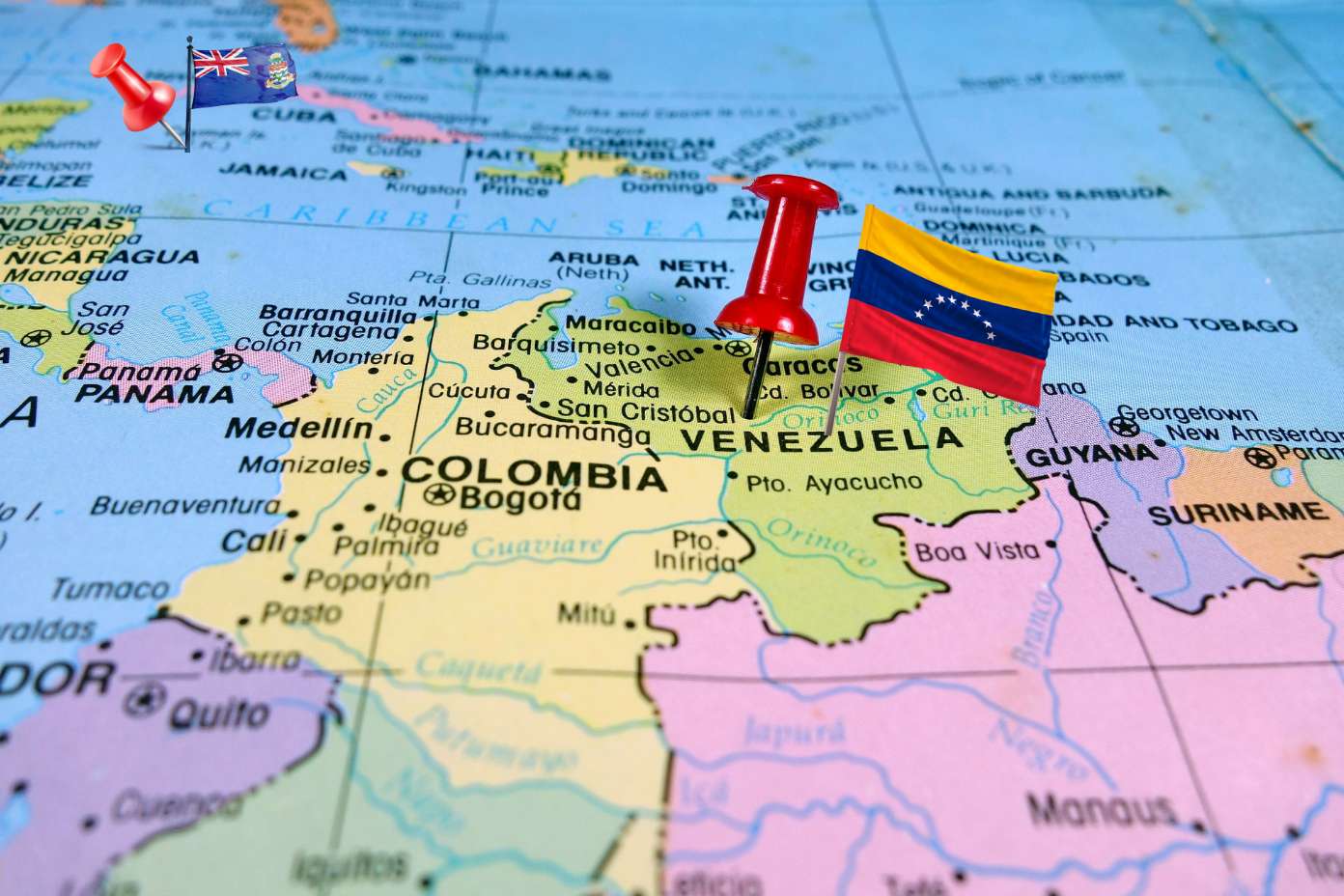
When the news broke in the early hours of 3 Jan., Venezuelan Lucia Seijas was asleep in her home in the Cayman Islands. Her mother, still in Venezuela, had called the night before with a cryptic warning: “Sleep well, because it’s happening.”
By 5am, Seijas’s phone was ringing non-stop. By dawn, she was standing in her kitchen, scrolling through social media and exchanging messages in a WhatsApp group of around 60 Venezuelans who call Cayman home, trying to process what had once seemed impossible: Nicolás Maduro was no longer in power.
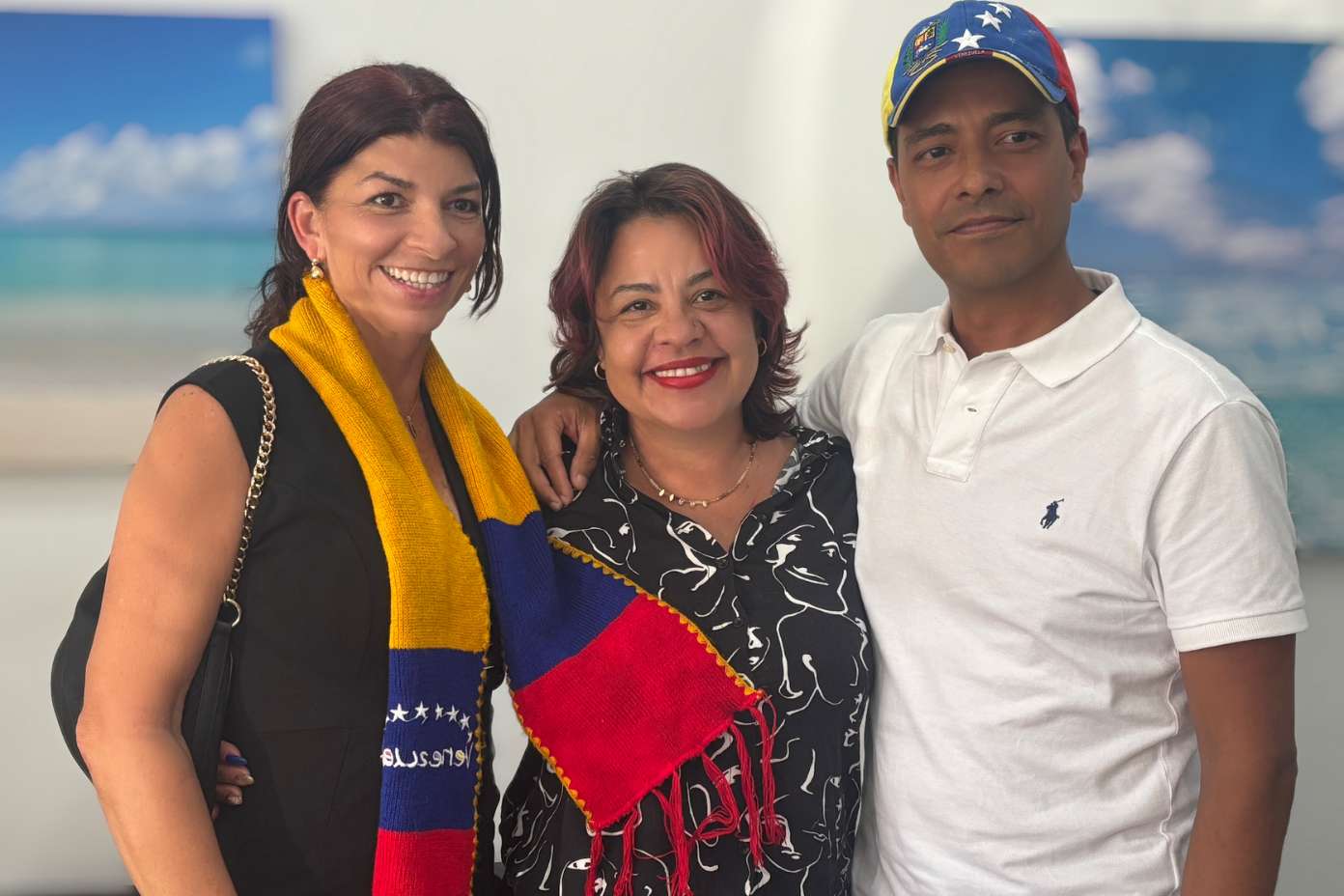
For many in the community, the moment felt unreal. “We have Venezuelans who’ve been here for more than 20 years,” said Karina McDermot, a local realtor originally from Venezuela who has lived in Cayman for nearly three decades. “We’re all friends. On Saturday, we got together, celebrated and took a photo. We finally have hope.”
The Venezuelan community in Cayman is long established and closely woven into local life and has at times spoken out about events back home. In 2024, they joined millions across the global diaspora, gathering at Heroes Square in George Town to protest elections widely criticised as fraudulent, in which Maduro claimed victory despite evidence of a decisive opposition win.
“Venezuela is facing a political and humanitarian crisis,” a statement from Cayman’s Venezuelan community said at the time.
That context gave added weight to what unfolded early Saturday morning, when the United States launched a rapid military operation that captured Maduro and his wife, Cilia Flores, and transferred them to New York. There, they appeared in federal court on 5 Jan. to face various charges, including conspiracy to import cocaine and possession of machineguns and destructive devices. The Venezuelan leader is additionally charged with narco-terrorism conspiracy.
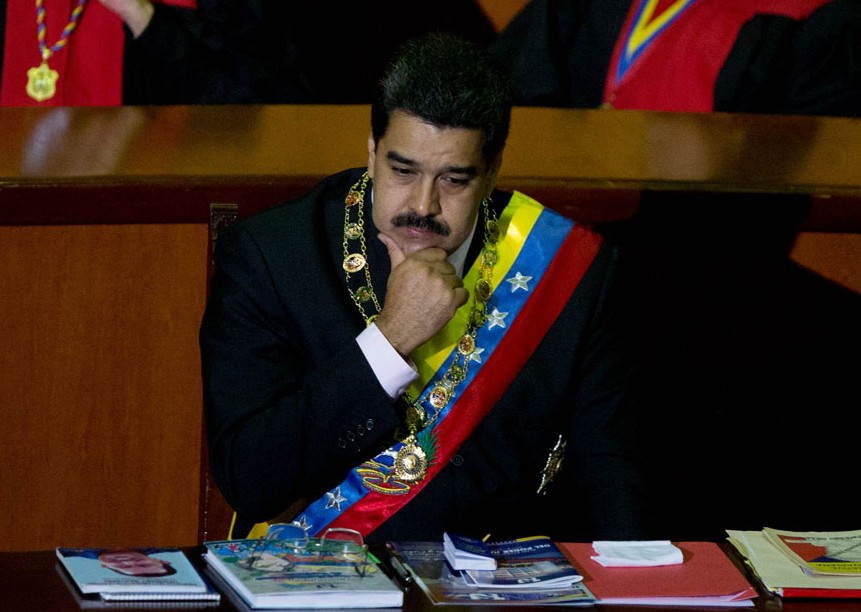
Lasting less than 30 minutes, the military operation marked the culmination of months of escalating pressure and abruptly reshaped a crisis that many in Cayman had been watching unfold from afar.
On the same day that her predecessor appeared in court, Delcy Rodríguez, Venezuela’s former vice president, was formally sworn in as the country’s leader, even as she faced a strong warning from US President Donald Trump that she could “pay a very big price, probably bigger than Maduro” if she “doesn’t do what’s right”.
For many Venezuelans watching from Cayman, it felt nothing short of miraculous. Over the past 13 years, Venezuela’s economy had collapsed under Maduro’s rule, with output plunging, hyperinflation soaring, and food and medicine becoming scarce. Years of mismanagement, compounded by US sanctions, sent oil production into steep decline and left the sector chronically under-invested.
Human rights groups documented widespread abuses, including the violent suppression of protests, arbitrary detentions and the targeting of political opponents and civil society.
“Venezuela has been living under a dictatorship for the past 25 years, with poverty increasing every day, and lack of food and resources,” read last year’s press statement from Cayman’s Venezuelan community. “Due to this situation, millions have fled the country.”
Measured response from the UK
The United Kingdom’s response to the US strikes in Venezuela and the removal of Maduro has been notably measured, with Prime Minister Keir Starmer waiting roughly 16 hours after the raid before issuing a public response.
In a video posted to X, he was careful to distance Britain from the action, stressing that the UK “was not involved in any way in this operation”.
While reiterating that London regarded Maduro as illegitimate and supported a transition of power in Venezuela, Starmer underlined the UK’s commitment to international law and signalled that discussions with Washington would follow.
That restrained tone has extended to Britain’s Caribbean territories, six of which sit within the region. Montserrat, Anguilla and the British Virgin Islands lie less than 600 miles from Venezuela, while the Cayman Islands is just over 1,000 miles away.
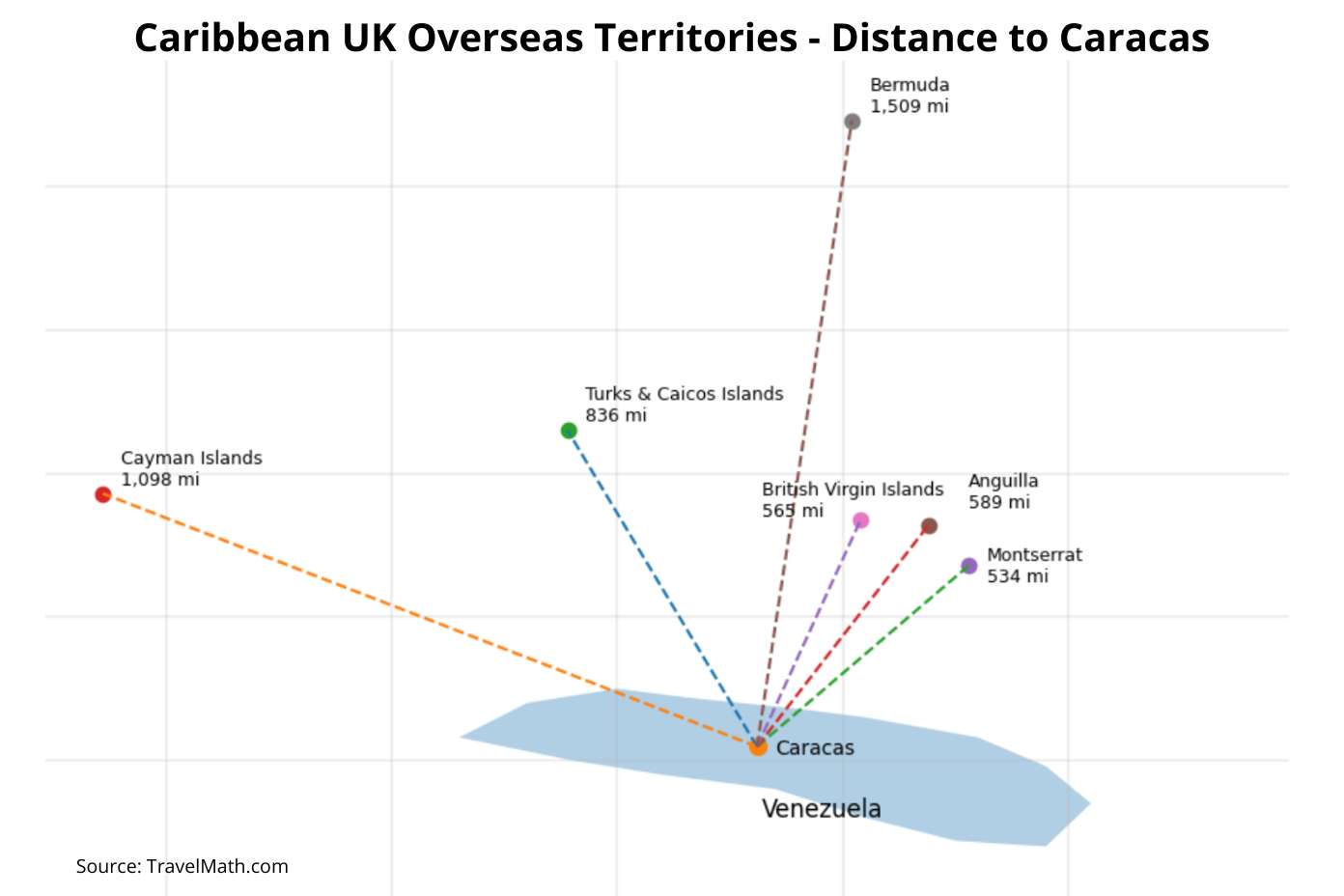 In Cayman, the focus has remained on maritime safety and regional stability.
Late last year, amid concerns voiced by the opposition over Operation Southern Spear and the largest US naval concentration in the Caribbean since the 1960s, Cayman Governor Jane Owen told Deputy Opposition Leader Kenneth Bryan that the UK was being “vigilant” in relation to US targeting of Venezuelan shipping. She emphasised that steps were being taken to protect Caymanian seafarers and vessels operating in the region.
Foreign Secretary Yvette Cooper reinforced that message in a 5 Jan. address to the House of Commons, saying the UK’s first duty was the safety of its citizens and overseas nationals, while again stressing Britain’s adherence to international law and its refusal to participate in blockades or strikes.
“We have continued to directly promote the interests of the British Overseas Territories who need to see stability in the region, and, of course, throughout we have promoted and maintained support for international law,” she said.
Locally, Owen sought to calm nerves, assuring residents and visitors that the Cayman Islands remained safe and secure following the 3 Jan. strike. She confirmed she had briefed Premier André Ebanks and Cabinet, reiterating security assurances and confirming that the UK works with regional partners to curb crime, drugs and instability spilling across the Caribbean.
“Security remains a paramount priority within the United Kingdom’s relationship with its Overseas Territories,” she said.
Regional concerns
That shift in the regional security landscape is unfolding on Cayman’s doorstep, even as UK officials have said that there is no immediate risk.
“I wish to reassure residents and visitors that the Cayman Islands continue to be safe and secure,” Governor Owen said in response to growing concern following the US strike in Caracas.
“Our concerns are if this escalates throughout the rest of the Caribbean,” said Cayman’s opposition leader, Joey Hew in response to President Trump’s and other US officials’ comments indicating that the US could intervene in Cuba and Colombia next. “Cuba is more our focus than anywhere else at the moment, but even if you take Colombia … that could impact us tremendously.”
Cuba, Venezuela’s closest regional ally, lies less than 200 miles from the Cayman Islands. There are 272 Cuban nationals on work permits in the Cayman Island and numerous permanent residents and citizens with Cuban ties, which heightens local implications of a US action against the communist nation.
An immediate source of anxiety has been the rhetoric from US political figures in the aftermath of the operation. Republican Senator Lindsey Graham suggested Cuba’s communist government’s “days are numbered” following the fall of Venezuela’s leadership.
Trump echoed that view, saying, “Cuba looks like it’s ready to fall,” and adding, “Cuba only survives because of Venezuela.”
Cuba is widely seen as facing a potentially catastrophic economic outlook without Venezuelan support, having long depended on subsidised Venezuelan oil to sustain its economy and energy system. The loss of that lifeline threatens to deepen fuel shortages and economic hardship.
Even so, some analysts believe Cuba’s limited resources and close proximity to the United States may ultimately shield it from direct military intervention. Others stress the fact that “A freer Venezuela does not guarantee a democratic Cuba, but it makes it more likely.”
Tourism, regional travel and shipping zones
Beyond Cuba, any instability in the region has immediate implications for Cayman’s outwardly dependent economy. The impact of the US strikes and interventions is twofold: operational disruption coupled with the more difficult challenge of sustaining traveller confidence and perceptions of regional safety.
“[Regional instability could] delay air traffic and cause strain on our tourism industry,” said Hew. “If we have shipping channels shut down or if we have airspace shut down within the region, this could create a huge challenge for us, not just economically from a reduction in tourism, but it could also impact food security.”
Cayman imports the vast majority of what it consumes, making it highly sensitive to disruptions in regional shipping lanes and port access. Any prolonged instability affecting Caribbean sea routes could be felt on supermarket shelves and in freight costs.
Energy markets are another area of potential exposure, though analysts say any impact of the events in Venezuela on gas prices is likely to unfold gradually rather than immediately, despite Venezuela holding the world’s largest proven oil reserves.
“Venezuela’s oil infrastructure … has been decaying for many years and will take time to rebuild,” said Patrick De Haan, lead petroleum analyst at gasoline price tracker GasBuddy.
With sustained investment, output could eventually rise, a shift that Phil Flynn, a senior market analyst at Price Futures Group, said could “cement lower prices for the longer term”.
By contrast, the travel impact of this weekend’s strike was immediate. The operation unfolded during one of the busiest periods of the year for Caribbean travel, when US Federal Aviation Administration-mandated airspace closures triggered widespread, though temporary, flight cancellations. Travel was disrupted across the region.
The effects were quickly felt in Cayman. Reshma Ragoonath, Compass TV’s news assignment editor, was transiting Trinidad and Tobago’s Piarco International Airport on her return home to Cayman when the disruptions began, leaving passengers facing abrupt cancellations and scrambling for information.
“There was a bit of confusion as American-based airlines were cancelling flights,” Ragoonath said, noting that some flights departing JFK in New York for Trinidad were forced to turn back mid-journey.
The Venezuela-Cayman connection
For the Caribbean countries and for British Overseas Territories in the region such as the Cayman Islands that share maritime space with Venezuela, the unfolding events have not been a distant geopolitical event, but a regional shift with immediate and tangible local consequences.
Every Venezuelan family living in Cayman remains financially and emotionally bound to relatives back home. Remittances sent from Cayman help keep parents fed and children in school, and provide care for the sick in a country where monthly salaries can amount to just a few dollars.
For Venezuelans in Cayman, the sentiment has been largely positive. Like Seijas, McDermot described an immediate rush of relief and joy, mixed with vindication after years of watching what she described as rigged elections and violently-suppressed protests.
“We’ve been waiting for this for so long,” she said. “At this point, I don’t care how it happened. He’s gone.”
For Daniel Garrido, a marketing professional who has lived in the Cayman Islands for the past seven years, the moment carried more ambivalence. Having returned to Venezuela just weeks before the strikes, the news stirred a mix of relief and fear.
“No invasion by a foreign country ever ends well,” he said.
His thoughts drifted to the removal of Manuel Noriega from power in Panama in 1989, to the 1973 coup that ousted President Salvador Allende in Chile, to the civilians who were killed in their sleep when US bombs fell in Caracas, and to friends and family still inside Venezuela.
“’Whatever it takes’ – I don’t know. I don’t agree with that approach … But the truth is, there was no other way to get rid of Maduro. Every dictatorship in history has ended by force,” he said.
Holding space for nuance
The aftermath of the strikes has left Venezuela, the Caribbean region and much of the world suspended between relief and unease.
For millions of Venezuelans, the removal of Maduro marks a welcome change after decades of decline. Roughly eight million people, more than a quarter of the country’s pre-crisis population, now live abroad. If Venezuela stabilises, many could return with skills, savings and hard-earned experience, injecting capital and capacity into a country hollowed out by years of collapse. For the first time in a generation, that door could be open.
At the same time, the international implications are profound. The United Nations Human Rights Office has warned that the US intervention violates international law, undermining the prohibition on the use of force and the principle of state sovereignty. Legal scholars and analysts have gone further, warning that the strike accelerates the erosion of the post-war, rules-based system.
Yet this is not a story that fits neatly into legal doctrine.
For a majority of Venezuelans, the moral calculus is already settled. Opposition leader María Corina Machado described the operation as “the hour of freedom”, echoing a sentiment widely shared inside the country and across the diaspora.
In Cayman, Seijas said hearing of Maduro’s ouster “felt like the beginning of the end of 24 years of carrying a weight”, tracing that burden back to the political transformation launched under Hugo Chávez and deepened under Maduro after 2013. For her, after 26 years in Cayman, the moment brought release.
“I feel light,” she said. “I finally feel like I have a country to go back to.”
McDermot’s view is shaped by lived experience. She spoke of hunger, of a healthcare system where families bring their own supplies to surgery, of pensions worth barely a dollar. Elections, she said, were stolen. Protests led to prison cells or graves. In that context, she argued, the removal of Maduro, even at civilian cost, felt overdue.
“If we weren’t here helping from outside, they’d be dead,” she said.
Both women argue that Venezuelans exhausted peaceful options long ago.
Garrido shares the relief, but not the certainty. He does not dispute the brutality of the regime, recalling friends detained for speaking out, his own hour-and-a-half detention at the airport simply for arriving from Cayman. His fear lies in what follows.
“Everybody’s happy he’s not there,” he said. “But nobody knows what replaces him.”
He worries about precedent – what it means for international law, for small nations watching powerful ones redraw lines by force. “If this goes wrong,” he said, “it’s not just Venezuela.”
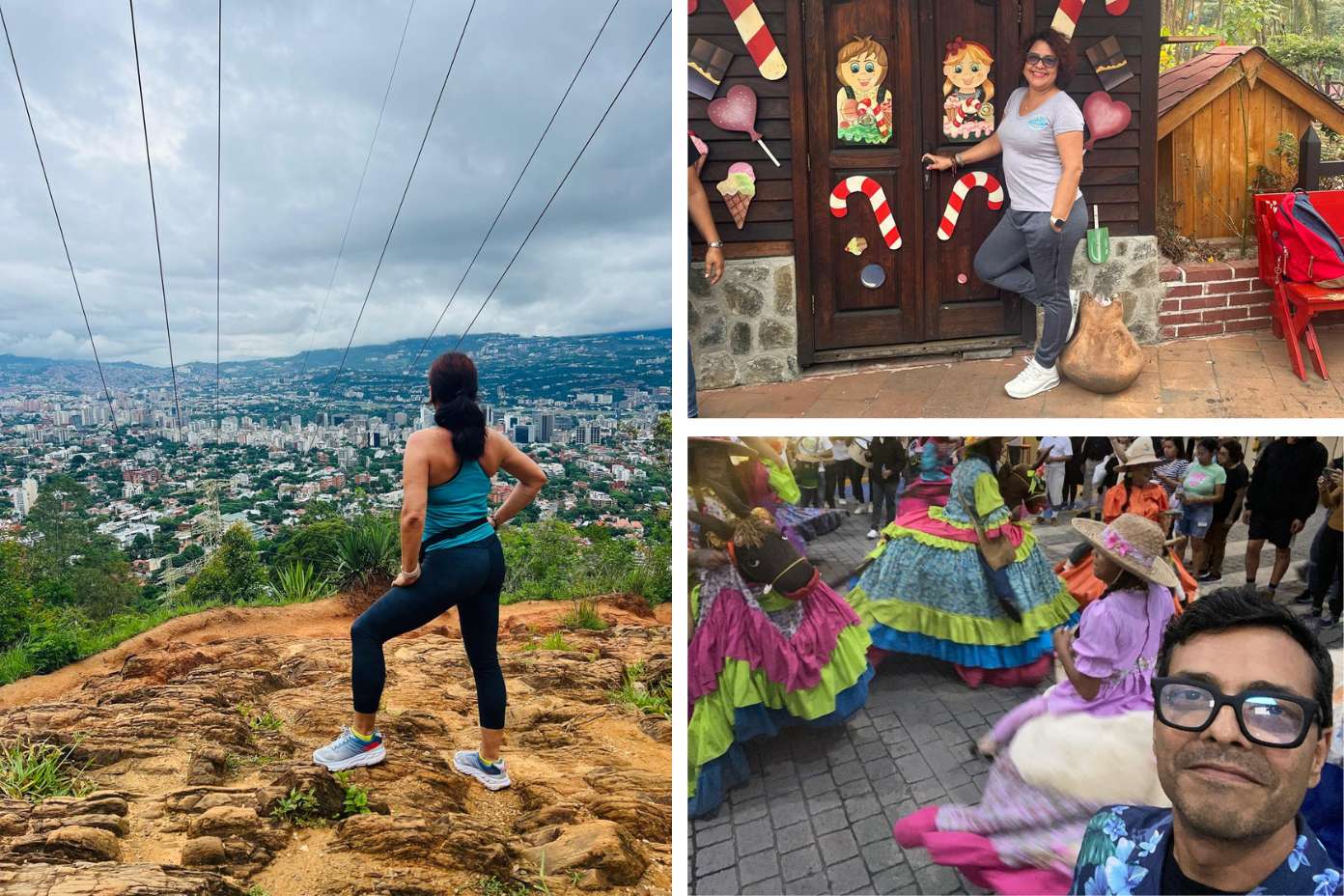
That uncertainty hangs over the region as well. Though geographically small, countries like the Cayman Islands sit close to Venezuelan waters, tied to any fallout through migration, security, economics and perception.
In Cayman, Venezuelans gathered over the weekend – some celebrating, others with phones in hand reading the news. WhatsApp groups filled with messages of relief and caution in equal measure. Shops reopened in Venezuela within days, relatives reported, but no one believes the story is finished.
What unites most people on both sides of a highly nuanced debate is hope that this moment marks not just an end, but a beginning – one that allows families to reunite, a country to rebuild and a region to breathe a little easier. Whether that hope survives the geopolitics now unfolding remains uncertain.
For Venezuelans at home, in Cayman and the wider diaspora, some weight has lifted – but it has not disappeared.