


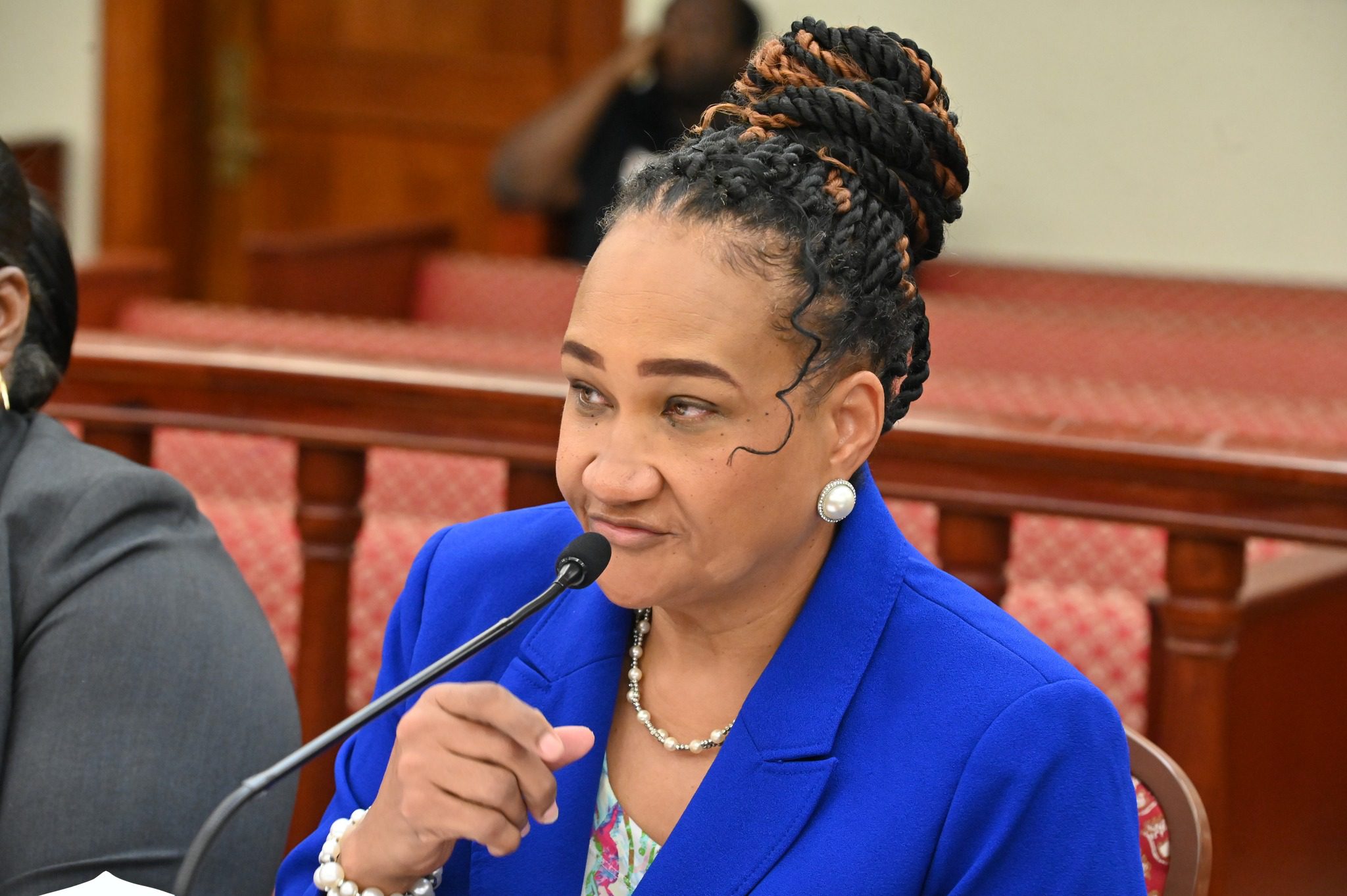

Virgin Islands Education Department officials warned lawmakers Thursday at the Senate Education and Workforce Committee hearing that public schools are facing chronic absenteeism as they struggle to keep aging buildings powered, connected to the internet, and safe for students and faculty.
Craig Benjamin, executive director of the Bureau of School Construction and Maintenance, said 90% of schools have air-conditioning issues that affect air quality. While most schools are impacted, Bertha C. Boschulte Middle School, long plagued by air quality complaints, now operates on a shortened instructional day from 7:20 a.m. to 12:30 p.m., which began Nov. 17, 2025.
“The school has faced significant instructional challenges due to ongoing infrastructure and resource constraints,” Education Commissioner Dionne Wells‑Hedrington said. Older HVAC units were replaced with split systems that fail to provide adequate air exchange. “I like to start out by saying, we don’t [just] have a mold problem. We have an air quality problem. Mold is just one of the results of poor air quality,” Benjamin said.
A full shift to virtual learning was considered but “ultimately proved not feasible,” said Wells-Hedrington, because many students lack reliable internet or devices at home. A parent survey found that 75% of respondents believed their children would be disadvantaged if instruction moved fully online. “Given these realities, the abbreviated in-person schedule was the most equitable and educationally sound option available,” she told senators.
Wells‑Hedrington also said the department is also contending with technology and connectivity problems that disrupt instruction.
“Since the start of this school year, the Virgin Islands Department of Education has faced ongoing network and internet connectivity challenges, primarily impacting schools on St. Thomas, where the department’s primary network operations center is located,” she said. “These disruptions have also affected St. Croix, resulting in territorywide interruptions.”
She cited “aging infrastructure, outdated equipment, and recurring system failures across both districts,” worsened by frequent power outages from the Water and Power Authority that have “damaged critical technology equipment, particularly battery backup systems needed to protect and maintain operations during power interruptions.”
To address the problem, the department is finalizing a contract to issue a request for proposals in March for “territorywide supply, installation, and maintenance of battery systems,” Wells‑Hedrington said. “Due to limited internal staffing capacity, these services will be outsourced to ensure a timely, efficient, and professional implementation.”
Wells‑Hedrington told senators that chronic absenteeism is rising even as the student population shrinks. The Virgin Islands Education Department now serves about 10,000 students, down from previous years, yet average daily absences have continued to climb in the 2025–26 school year. “We have a problem. We have a big problem,” she said.
Deputy Superintendent Symra-Dee Brown-Gumbs said the problem exists in both primary grades and high school. “In kindergarten and first grade, in most instances, parents really don’t take education seriously,” she said. “They think they can skip a day, and it wouldn’t affect their children. But we’re now seeing that high school students are making choices not to come.”
Brown-Gumbs highlighted past efforts to encourage attendance. In the 2024–25 school year, classrooms with perfect monthly attendance earned small rewards, such as baked goods, fostering healthy competition. “That helped increase attendance, but we’re seeing absenteeism rising again in the high schools,” she said. “We need to be more creative in how we address it,” she said.
Senators at the hearing expressed alarm at the trend and pressed for stronger enforcement and community involvement. Sen. Kurt A. Vialet, the committee’s chair, described the situation as “a sad commentary on this community,” emphasizing that incentives and innovative approaches are needed to get students back in classrooms.
Sen. Avery L. Lewis suggested linking public benefits to school attendance, calling on lawmakers to identify families with chronic absenteeism and make them aware of the consequences. “We may have to cut these benefits if these children don’t start coming to school,” he said.
Benjamin told lawmakers the scale of fixing and maintaining facilities across the territory will remain heavy even as new buildings come online. “This is a daunting task. The type of structures we are dealing with is not like a regular structure, so it requires more intense attention. Each one of these structures, spaces where your kids have to be housed until they return to you in the evenings, has to be safe for them. In order for us to achieve that, several things have to happen, and they all come with a cost,” he said.
