


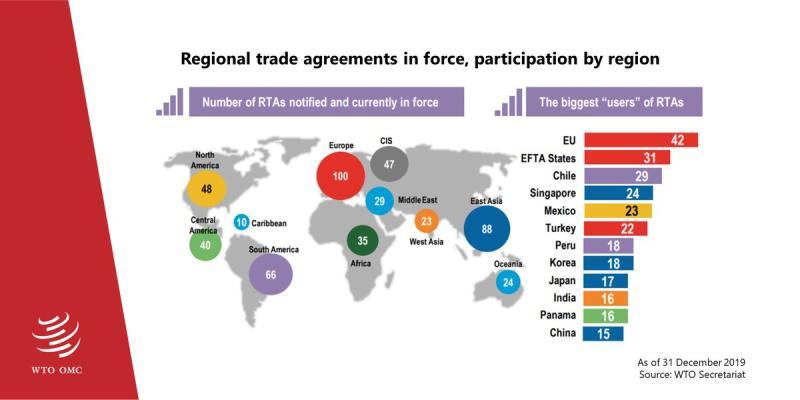
In a rapidly evolving global marketplace, the Caribbean region stands at a crossroads, where the interplay of regional trade agreements is reshaping its economic landscape. As island nations navigate the complexities of international trade, understanding the ramifications of agreements such as the Caribbean Community (CARICOM) and the Economic Partnership Agreement (EPA) with the European Union becomes increasingly vital. This article delves into the intricate dynamics of these trade pacts, evaluating their impacts on economic growth, trade diversification, and investment inflows across various Caribbean economies. By examining real-world examples and expert insights, we aim to provide a comprehensive overview of how these agreements are influencing the region’s economic trajectory and the potential challenges that lie ahead.
Table of Contents
- Evaluating Economic Growth: The Impact of Regional Trade Agreements on Caribbean Industries
- Analyzing Trade Diversification: Opportunities and Challenges for Caribbean Economies
- Assessing Social Development: The Role of Trade Agreements in Enhancing Human Capital
- Strategic Recommendations: Policy Approaches to Maximize Benefits from Regional Trade Agreements
- Insights and Conclusions
Evaluating Economic Growth: The Impact of Regional Trade Agreements on Caribbean Industries
The influence of regional trade agreements on Caribbean industries is manifold, shaping economic landscapes and driving growth in various sectors. These agreements often foster a more competitive market environment, allowing local businesses to access larger markets, reduce costs, and enhance innovation. As companies expand their reach beyond national borders, they can benefit from scale economies and improved production efficiency. This is particularly important for small to medium-sized enterprises in the Caribbean, which historically struggle with limited domestic markets. The following factors illustrate the impact of trade agreements on industry dynamics:
- Increased Market Access: Trade agreements open doors to new international markets, facilitating higher exports and income diversification.
- Regulatory Harmonization: Simplified regulatory frameworks can ease barriers for businesses, encouraging cross-border trade and investment.
- Building Competitiveness: Exposure to foreign competition pushes local industries to innovate and improve quality, leading to more resilient businesses.
However, the success of these agreements is not uniform across all industries. While sectors like tourism and agriculture may flourish due to expanded trade routes, others could be adversely affected if not adequately supported. For example, local manufacturers may struggle to compete with influxes of cheaper imports, risking job losses and market share erosion. A comparative analysis of selected industries demonstrates the varying outcomes resulting from regional trade agreements, as seen in the table below:
| Industry | Positive Effects | Challenges |
|---|---|---|
| Agriculture | Enhanced export potential | Increased competition from imports |
| Manufacturing | Access to larger markets | Pressure from cheaper foreign goods |
| Tourism | Growth in visitor numbers | Dependence on external markets |
Analyzing Trade Diversification: Opportunities and Challenges for Caribbean Economies
Trade diversification presents both promising opportunities and significant challenges for Caribbean economies, particularly in the context of evolving regional trade agreements. As Caribbean nations seek to reduce their dependency on a narrow range of export goods, they can explore numerous sectors, creating avenues for sustainable economic growth. With this shift, opportunities may arise in areas such as:
- Agriculture – Leveraging the region’s rich natural resources to cultivate a wider variety of crops.
- Tourism - Expanding offerings beyond traditional resorts to include eco-tourism and cultural experiences.
- Technology - Encouraging entrepreneurship and innovation in tech-related industries.
- Renewable Energy – Developing sustainable energy solutions to lessen dependence on imports.
However, these opportunities are accompanied by certain challenges, including disparities in resource allocation and the need for skilled labor. Additionally, regional trade agreements designed to facilitate cooperation can also complicate competition among member states. The potential for increased market access may not equally benefit all economies, leading to concerns such as:
- Market Saturation - Overwhelming local markets with similar goods from neighboring countries.
- Investment Disparities - Variances in infrastructure and investment that can hinder uniform economic development.
- Regulatory Challenges - Navigating differing regulatory frameworks across member nations.
| Opportunity | Challenge |
|---|---|
| Wider product range in exports | Overdependence on certain markets |
| Increased foreign investment | Potential for uneven economic benefits |
| Strengthened regional partnerships | Internal competition among nations |
Assessing Social Development: The Role of Trade Agreements in Enhancing Human Capital
Trade agreements in the Caribbean are increasingly viewed as pivotal instruments for fostering human capital development within the region. These accords not only facilitate the flow of goods and services but also lead to a significant exchange of knowledge and skills, which are essential components of social development. By promoting job creation and economic growth, trade agreements can enhance access to education, vocational training, and professional development opportunities. Specifically, investments in education are driven by the economic stability that trade agreements can provide, leading to increased literacy rates and a more skilled workforce.
Moreover, certain trade agreements include provisions that directly aim to improve labor standards and social protections. This focus can yield beneficial outcomes such as:
- Improved working conditions: Ensuring fair labor practices promotes health and productivity.
- Empowerment of marginalized groups: Trade agreements can include clauses to support gender equality and inclusion.
- Access to healthcare: An economically stable country can better support public health initiatives.
| Area of Impact | Expected Outcomes |
|---|---|
| Employment Growth | Increased job opportunities across sectors |
| Skill Enhancement | Access to training and certification programs |
| Social Welfare | Strengthened safety nets for vulnerable populations |
Strategic Recommendations: Policy Approaches to Maximize Benefits from Regional Trade Agreements
To enhance the positive impacts of regional trade agreements on Caribbean economies, policymakers should consider tailored strategies that leverage the unique strengths and challenges of the region. Prioritizing capacity-building initiatives for local industries will ensure that businesses can meet international standards and take full advantage of market access opportunities. Additionally, fostering public-private partnerships can facilitate innovation and competitiveness in key sectors such as tourism, agriculture, and manufacturing. The integration of digital technologies into traditional industries should also be promoted, as this can lead to greater efficiency and expansion into global markets.
Furthermore, harmonizing regulatory frameworks across member states can eliminate trade barriers and create a seamless market environment. Policymakers should invest in infrastructure development to improve logistics and connectivity, thereby reducing costs for businesses. A strategic focus on sustainability within trade policies will not only protect the environment but also cater to the growing demand for eco-friendly products. establishing robust feedback mechanisms to monitor the effectiveness of trade agreements will allow governments to adapt and respond to emerging challenges, ensuring that the region’s economies can thrive sustainably in an ever-evolving global trade landscape.
Insights and Conclusions
the assessment of regional trade agreements (RTAs) on Caribbean economies reveals a complex interplay of benefits and challenges. While these agreements aim to foster economic growth, enhance trade relations, and stimulate investment, their real-world impacts vary across the diverse nations of the region. As stakeholders—governments, businesses, and civil society—continue to navigate this intricate landscape, it is imperative to prioritize comprehensive and inclusive strategies that maximize the positive outcomes of RTAs while addressing inherent disparities. Policymakers must also remain vigilant in adapting to global economic shifts and trends, ensuring that Caribbean economies are resilient and positioned to thrive in an increasingly interconnected world. The ongoing evaluation of these trade agreements will be crucial for charting a sustainable economic future for the Caribbean, as it strives to harness the full potential of regional cooperation and integration.