


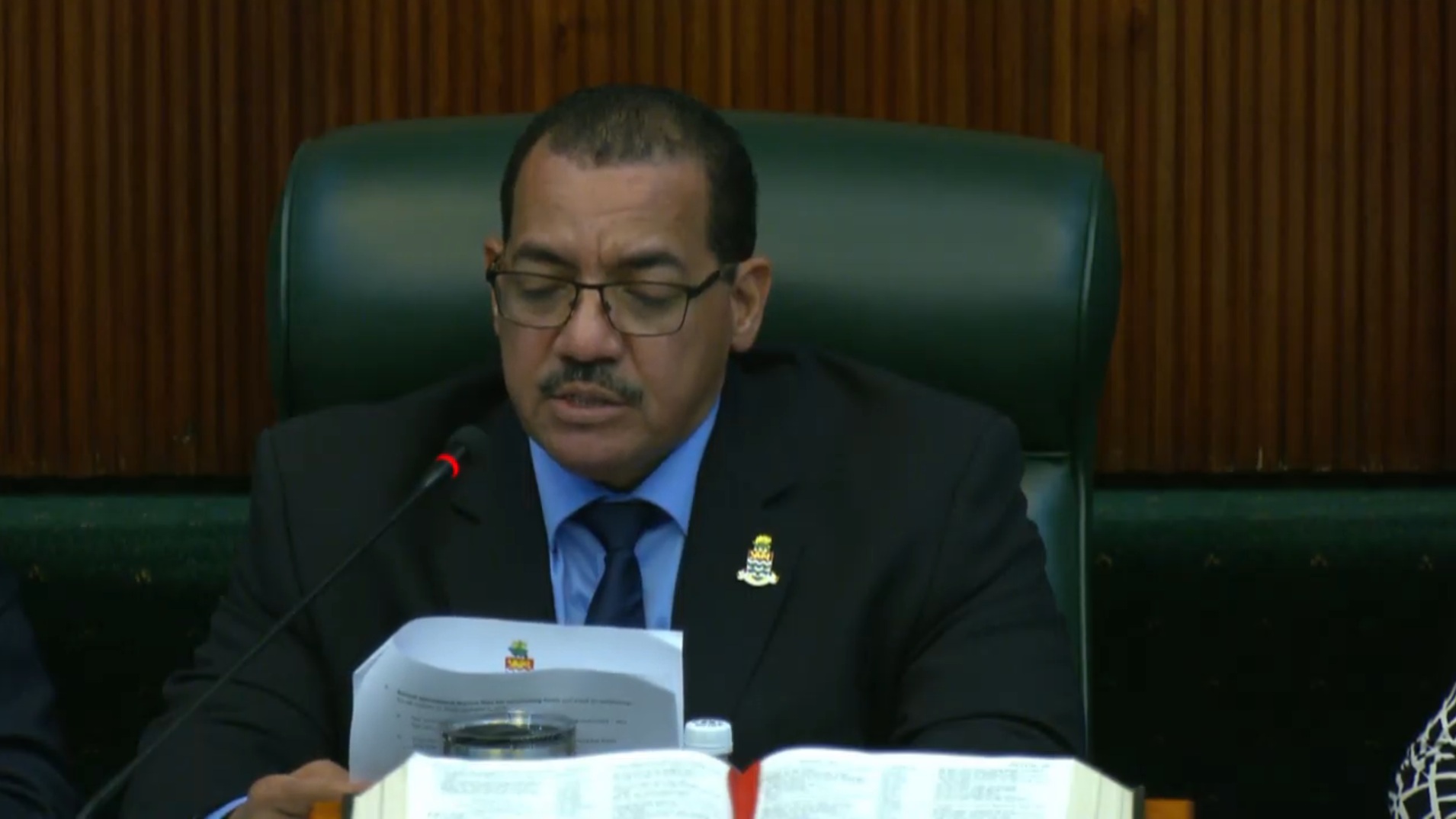
Minister of Finance and Economic Development, Rolston Anglin, revealed significant increases to a wide range of fees paid by foreign individuals and companies.
Anglin presented the details behind the government’s revenue raising measures, during the parliamentary finance committee meeting late on the afternoon of 14 Nov.
The comprehensive document outlined important increases to fees across broad swathes of the Caymanian economy. The new measures impact everything from driving licences to bank and trust licenses.
But one clear theme is an attempt by the government to target non-Caymanian individuals and companies.
Twenty-five different categories of fee increases were listed in Anglin’s plans to augment government revenues in 2026 and 2027. The Compass will have a more detailed analysis in the coming week, but we highlight some of the most notable below.
Non-Caymanians to pay more
The largest jump in fees relate to immigration with some categories increasing by 600%. There were big ticket increases at the top end with Residency Certificates (Independent Means) and Direct Investment Certificate, which will both increase to $50,000 from $20,000. Meanwhile Permanent Residence for Persons of Independent Means will increase to $200,000 from $100,000.
Lower down the immigration pecking order, the work permit admin fee increased to $500 from $100 while temporary work permits will increase by up to 200% depending on the income band. Anglin said that the immigration fees are expected to earn an extra $15.4 million in 2026 and around $17 million in 2027.
Non-Caymanians will also be targeted through driving licences. Three-year licences for both cars and motorcycles will jump to $600 from the current level of $75. Licences for heavy equipment, trucks and busses will now cost non-Caymanians $750, up from $120. Anglin projects the measures will raise $9.6 million in 2026 and the same amount in 2027.
Businesses being targeted
Non-Caymanian business interests are being targeted in a myriad of ways. Realtors with non-Caymanian agents will see their business licence increase to $10,000 from $750.
Businesses licences for property developers with more than 15 employees will jump to $20,000 from $750, while those with 15 employees or less see an increase to $10,000 from $750.
One of the biggest revenue earners is the increase in stamp duty, which will rise to 10% on properties worth $2 million and above. The government expects this measure to earn an additional $11.7 million in 2026 and $11.2 million in 2027.
Cayman’s legal profession is another big target for the new measures, with Anglin expecting to make an extra $10.2 million from lawyers in 2026 and $6.3 million in 2027. The fees are graded so that larger firms or those with non-Caymanian lawyers will pay more.