


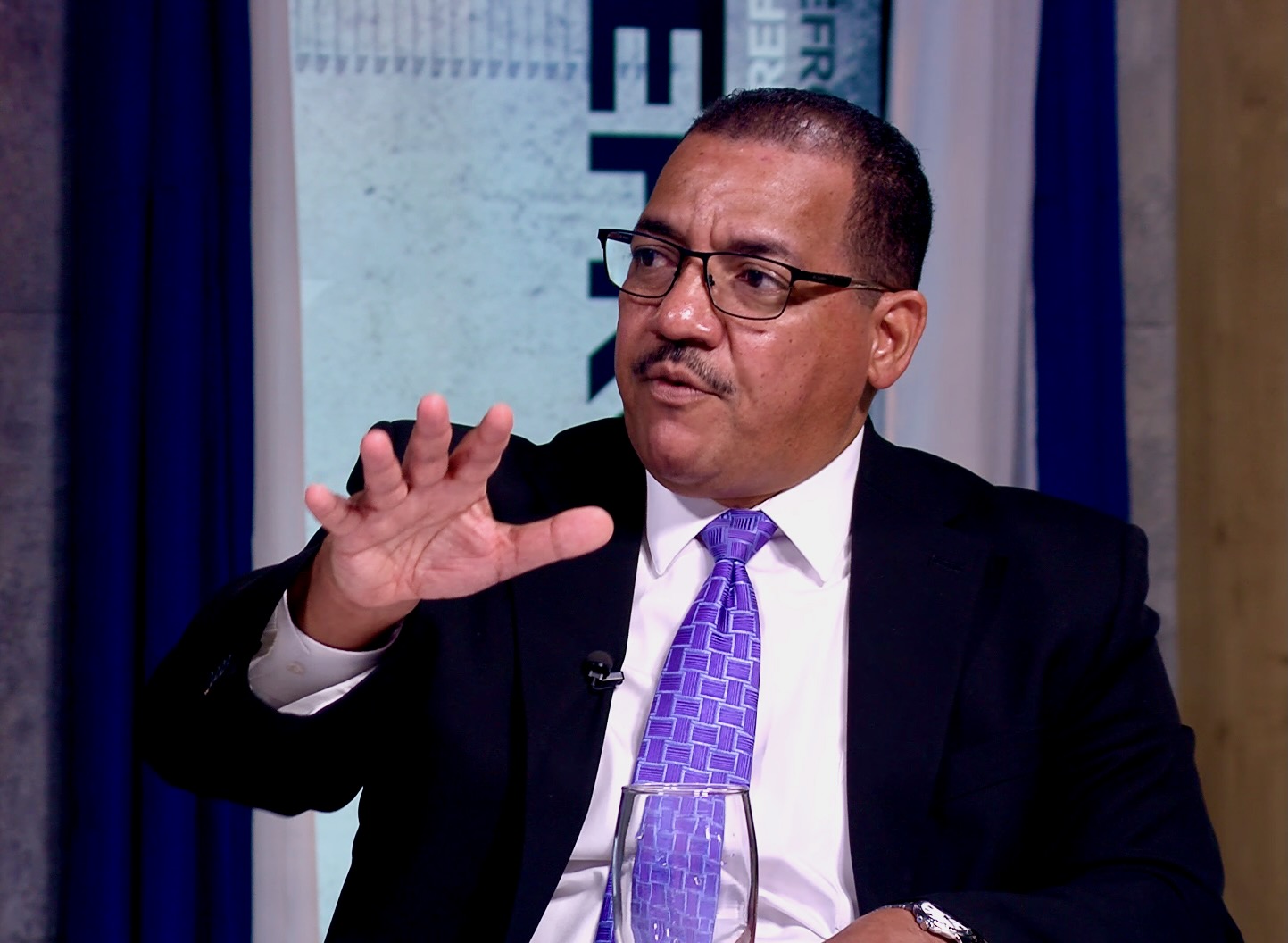
Cayman’s new education minister, Rolston Anglin, will seek to put a heavy focus on early years learning as he attempts to transform academic performance in the country’s schools.
Anglin, who has come back into the ministry after 12 years out of politics, said he was concerned at the lack of progress since he last held the post.
Two-thirds of primary school students and around half of Cayman’s high school graduates are currently not meeting expected standards in maths and English.
In a first interview with Compass TV’s Forefront talk show, Anglin said tough decisions would be needed and he was dedicated to making real change.
“I’m back, sleeves rolled up and ready to rock and roll and get the work done for the people,” he said.
And he made a plea to parents to work with schools and educators to help transform standards.
Anglin told Forefront host Tammi Sulliman that his core philosophy was to ensure the best future possible for every child.
“Every single student in our system matters,” he said. “I don’t care what their home life or their background is or what underlying issues we have to help them with. All students matter or no students matter. No student is going to be left behind for the next four years.”
Outlining his initial ideas for practical reforms Anglin discussed:
- Introducing specialist maths and literacy teachers for early years education
- Bringing in ‘summer school’ to help prevent struggling students falling further behind
- Expanding the Cayman Islands Further Education Centre to offer career-focused technical training
- Improving diagnosis and access to support for children with learning difficulties
- Abandoning plans to bring A-Levels back to public schools
- Renegotiating the contract for Cayman Brac high school to cut costs
The West Bay North MP, who is also finance minister in the new administration, said he was determined to balance the budget and would use the people’s money wisely in areas where he thinks can make the most difference.
Early learning the key
He said expert maths and literacy tuition was needed as early as possible in a child’s life and he will be looking at recruitment in that area.

“I’m going to be doubling down on early childhood care and education. You don’t need to go any further than the global research.
“You cannot start to try and address literacy and numeracy in year 4 and 5 or in high school. By then, it’s too late.”
He said he would also be looking at how to structure and fund summer school to ensure struggling students didn’t fall further behind during the eight-week break.
Making the most of CIFEC
At the other end of the age spectrum, he said revamping CIFEC – which just moved into a new campus at the old John Gray High School site – was a top priority.
The centre is for Year 12 students typically aged 16-17 to resit key exams as well as pursuing technical and vocational training.

CIFEC has been plagued with issues in recent years. The Compass reported last year that students and teachers were struggling in makeshift facilities at the Family Life Centre ahead of the long-delayed move.
Anglin said new energy would go into making CIFEC the best it can be. It is not currently meeting the full range of needs of students and employers and he aims to work with businesses to expand training options.
“The private sector has to have a voice and help us choose the right programme.
“Once the correct programmes are chosen, whether they’re delivered directly by CIFEC or a private institution is irrelevant. We just need to upskill and have our Caymanians ready for the workforce.”
He said CIFEC would become the licensing body for all ‘Technical Vocational Education and Training’ programmes and he hopes it will eventually become a centre for excellence in trade education that attracts students from both public and private schools.
The education minister also revealed plans for the centre to be open at night for adult learners to retrain or get certified for new careers.
A-Levels and tourism school review
Plans announced by the previous government to bring back A-Levels to public schools will likely be scrapped. All Caymanian students who meet the academic standards already had the automatic right to study for those qualifications at the high schools of Cayman Prep and St. Ignatius, with tuition covered by the government.
“We currently have two of the best A-level colleges in the world … so why would I take the amount of dollars available to me to spend on public education, and spend it on A-levels?
“Let’s get it straight. I don’t operate on good feelings. I don’t spend public monies and make decisions on good feelings.”
In a similar vein, he said the $400,000 annual funding for a hospitality school at the University College of the Cayman Islands would have to be examined given the scarcity of Caymanians in the industry.
“It’s great to tick boxes. I’m about effect and impact. What is the real impact?
“We can’t just continue to spend money as government without it having an impact on Caymanians lives.”