


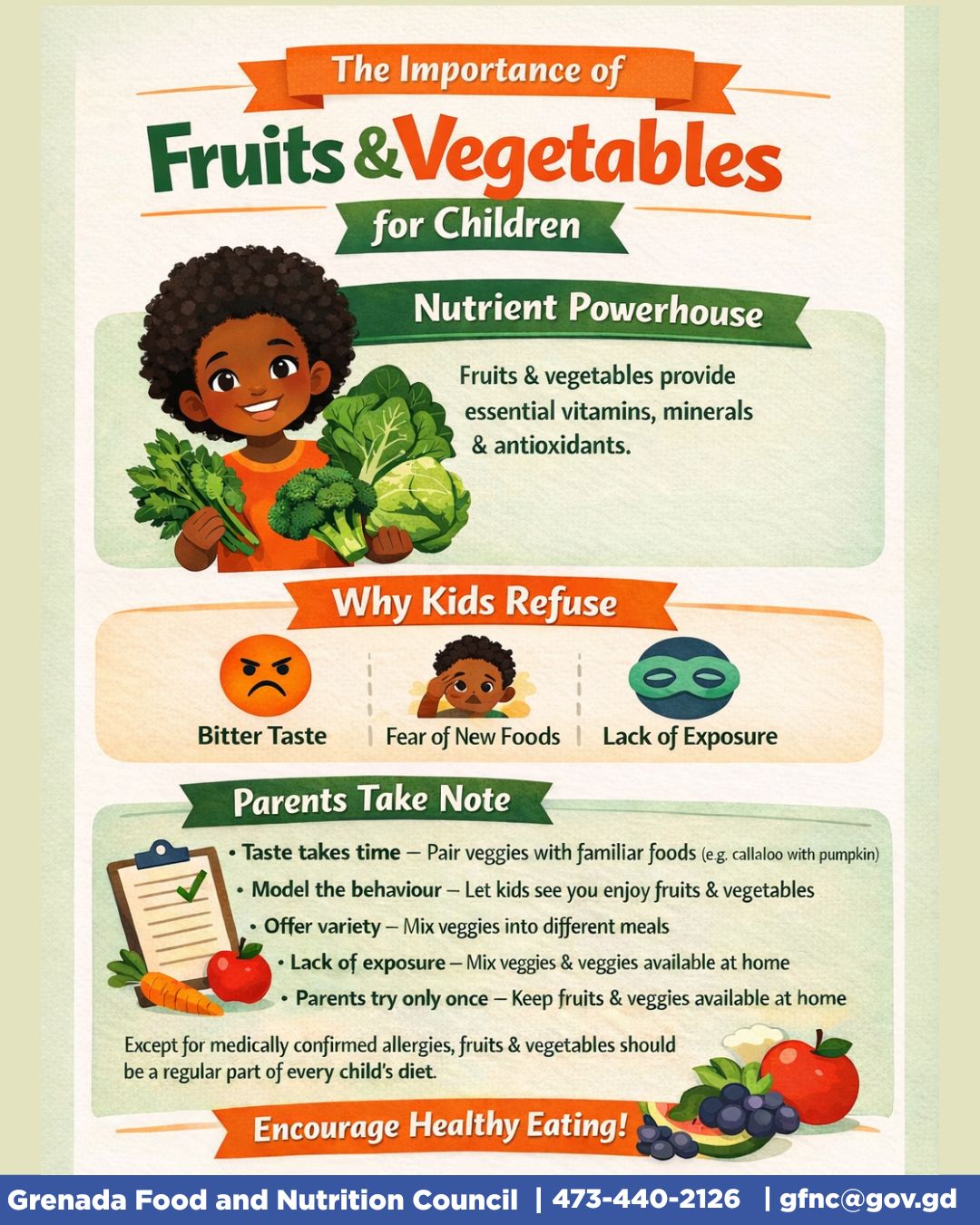
by Grenada Food and Nutrition Council
Beyond protein, growing children require a wide range of vitamins, minerals and protective compounds that are best obtained from fruits and vegetables.
Yet many parents admit that because their child dislikes certain fruits or vegetables, these foods are often left off the plate altogether. The Grenada Food and Nutrition Council (GFNC) recognises that children commonly refuse fruits and vegetables for several reasons. These include sensitivity to flavours, fear of trying unfamiliar foods, limited exposure, and discomfort with certain textures. While these challenges are real, the council’s position is clear. Unless a child has a medically confirmed allergy, fruits and vegetables should remain a regular and essential part of their diet.
Taste
Adults must remember that children are still new to the world; many everyday experiences, including eating different foods, are entirely unfamiliar to them. What may seem ordinary to an adult can feel overwhelming to a child. In addition, some children are biologically more sensitive to the bitter taste found in certain vegetables, which can influence early rejection. Rather than removing these foods, pairing them with items children already enjoy can encourage gradual acceptance. A study published in the Journal of the American Dietetic Association involving 152 pre-school children enrolled in the Head Start programme found that when broccoli was served with a dipping sauce during snack time over a 7-week period, 80% of the children ate it without complaint. The same principle can be applied to local vegetables: prepare eggplant with tomatoes or combine callaloo with pumpkin to make the vegetables hidden or appealing in taste.
But, you don’t eat it either
Children are sponges; they often imitate what they observe. When parents and guardians eat fruits and vegetables in front of their children, their behaviour would be seen as normal. An article in the Public Health Nutrition journal that focused on the rate of consumption of fruits and vegetables among 9-year-olds in a study found that children tended to eat fruits and vegetables more often when their parents ate them, encouraged children to eat them, provided them as a snack for school and made them available at home. This suggests that parenting modelling and consistent availability increase children’s consumption of this food group.
What is this?
Sometimes children reject fruits and vegetables because of texture. When this is combined with unusual taste and limited exposure, the eating experience can feel overwhelming. Crunchy foods may seem uncomfortably loud, while vegetables that are soggy or mushy can be equally off-putting, depending on how they are prepared. Research highlighted in the article Optimising Repeated Exposure: Determining Optimal Exposure Frequency for Introducing a Novel Vegetable among Children suggests that offering vegetables in a variety of forms can increase acceptance. Similarly, a tip sheet from York Region Community and Health Services Department recommends hiding vegetables in familiar meals by grating, blending, or mixing them into foods children already enjoy. While this approach requires creativity and patience, it is worthwhile, as it ensures children receive the essential nutrients found in vegetables even when they initially refuse to eat them on their own.
I am allergic
Some children are allergic to fruits and vegetables. When introducing a vegetable or fruit to your child for the first time, pay attention to allergy signs and immediately consult with your doctor:
- Skin reactions: itching, rash, or redness around mouth/lips
- Oral symptoms: itching/tingling in mouth/throat
- Swelling: lips/tongue
- Severe: Anaphylaxis with breathing issues or shock
- Other: Eye itching, rhinitis, abdominal pain, or vomiting
Except for medically confirmed allergies, GFNC’s position is that fruits and vegetables should never be optional for children because they are essential to healthy growth and the development of lifelong eating habits.
To learn more about the GFNC, visit https://gfnc.gov.gd/about-us/, and to follow us on social media, visit https://linktr.ee/473GFNC. To schedule a nutrition counselling session, call 473-440-2126 or send an email to [email protected]. Eat Local: Strengthen Food and Nutrition Security in Grenada.
GFNC