


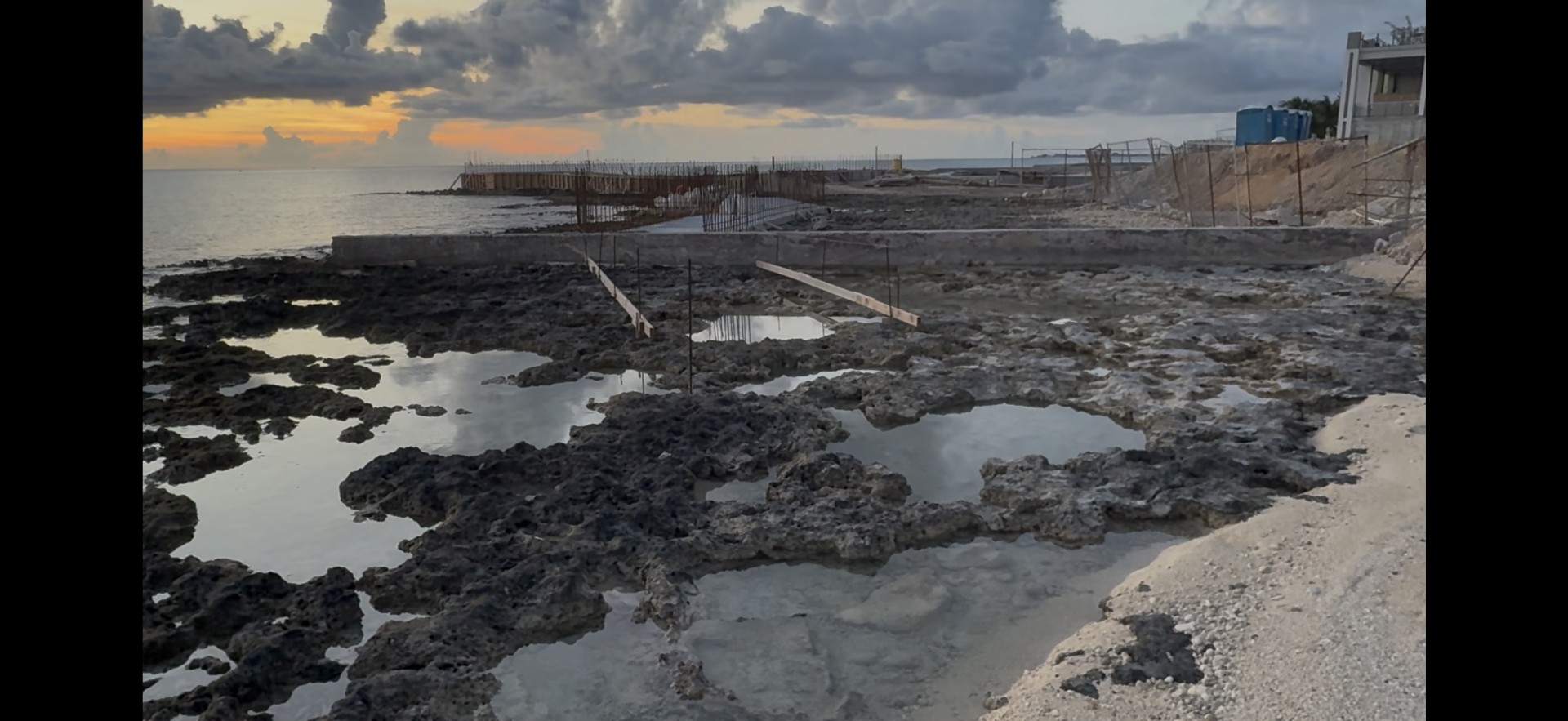
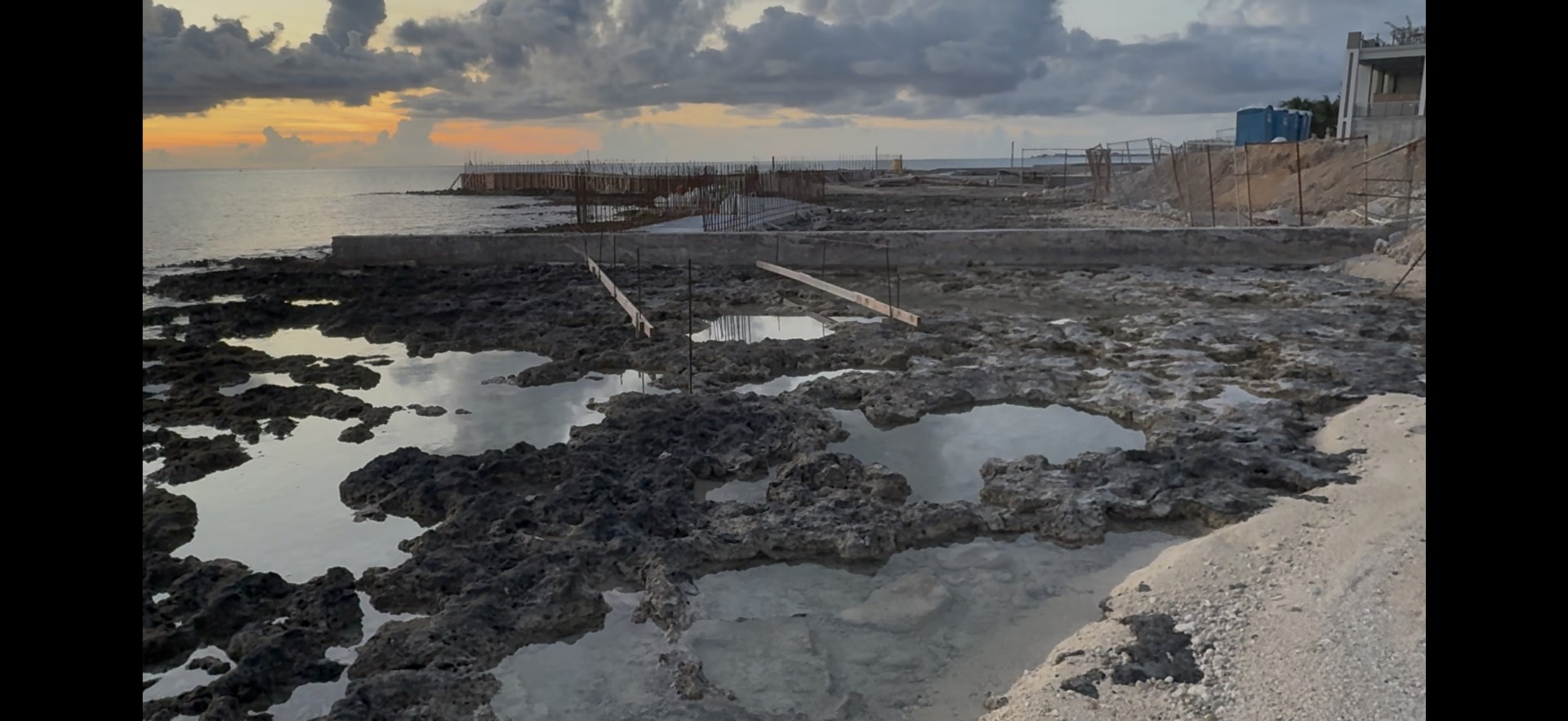
Ongoing construction on the ironshore at the site of the Grand Hyatt hotel project that has sparked outrage on social media and complaints to the Department of Environment in recent days were approved by the Central Planning Authority.
A spokesperson for Department of Environment (DoE) said, “Conservation officers recently responded to reports of construction activity occurring in the water at the new Hyatt hotel property (formerly Pageant Beach). Officers confirmed that the construction activity is taking place on the ironshore above the mean high-water mark and is being conducted within the approved planning permission for the site.”
Compass Media was then advised by the Department of Environment that further inquiries should be directed to the Department of Planning.
In the minutes of the Central Planning Authority (CPA) meeting held on 24 Jan. 2018, in which approval was granted, it is noted that “the proposed development does not comply with the minimum required setback from the high-water mark.”
In granting approval for the construction to proceed closer to the sea than the required set back of 130 feet, the CPA cited Regulation 8(11) of the Development and Planning Regulations (2017 Revision) which allows the authority to allow a lesser setback in certain circumstances.
Reasons for approval
The CPA granted the approval on the following grounds:
- The elevation of the property and its environs is high enough to assist in minimising storm surge, thus allowing the proposed development to be closer to the high-water mark.
- The geology of the property offers protection from storm surge and will not be altered along the shoreline.
- The storm/beach ridge appears sufficient to assist in minimising storm surge, thus allowing the portions of the proposed development to be closer to the high-water mark.
- There are existing developments on adjacent properties with similar or lesser setbacks from the high-water mark. Therefore, the setback of the proposed development is consistent with the established development character of the area and it will not detract from the ability of adjacent landowners from enjoying the amenity of their lands.
After citing these reasons, the minutes then stated that the CPA is “of the view that the main hotel structure generally complies with the required setback and it is some ancillary structures and features that do not. The Authority is of the view that the lesser setback will not detract from that protection.”
The minutes then conclude that “the Authority views these reasons as a material consideration that allows for the lesser setback.”
In the minutes for the Central Planning Authority meeting relating to the planning application, it states that, among other features, the 10-storey hotel will have 362 hotel rooms, six short-term rental villas, three restaurants, two pool area bars, retail tenant space, four pools and a boardwalk along the shore.
The minutes include a letter from the applicant seeking a variance to the required 130 coastal setback on various grounds, saying, “The unusual characteristics of the ironshore and sand beach, as it jogs in and out makes it difficult to create one continuous HWM (High Water Mark) setback. Most of our proposed building is setback 130 feet or more from the HWM, but, as the shoreline jogs in and out, some portions of the building do encroach into the required 130’ setback. It’s important to note that no portion of our proposed development is closer than 100 feet from the HWM.”
DoE advised against approval
Although the Department of Environment concluded that the current works were in keeping with the approved planning permission, it had recommended against the setback variance at the time of application.
In the CPA meeting held on 5 September 2018, where the developers were sought to modify their existing planning permission, the Department of Environment said that it did not support the request for high water mark setback variance.
They said, “Whilst a precedent for reduced setbacks appears to have been established by neighbouring developments, new development should be based upon extant conditions and presiding regulations at the time of the application. The applicant should adhere to minimum coastal setbacks to ensure that the development can respond to
climate change impacts such as sea level rise and severe inclement weather
especially given that site is not within a reef protected lagoon.”
The Grand Hyatt is a hotel development located on a 6.9 acre piece of land in George Town where the Pageant Beach Hotel previously existed until it burned down in 1975.
A website for the property indicates that the property is taking bookings for people to stay at the resort from 1 Dec. 2025.