


by Curlan Campbell
- Arthur Winner worked within the Government Information Service
- Ruggles Ferguson was former head of government’s media centre
- Images donation is foundation stone in country’s heritage infrastructure
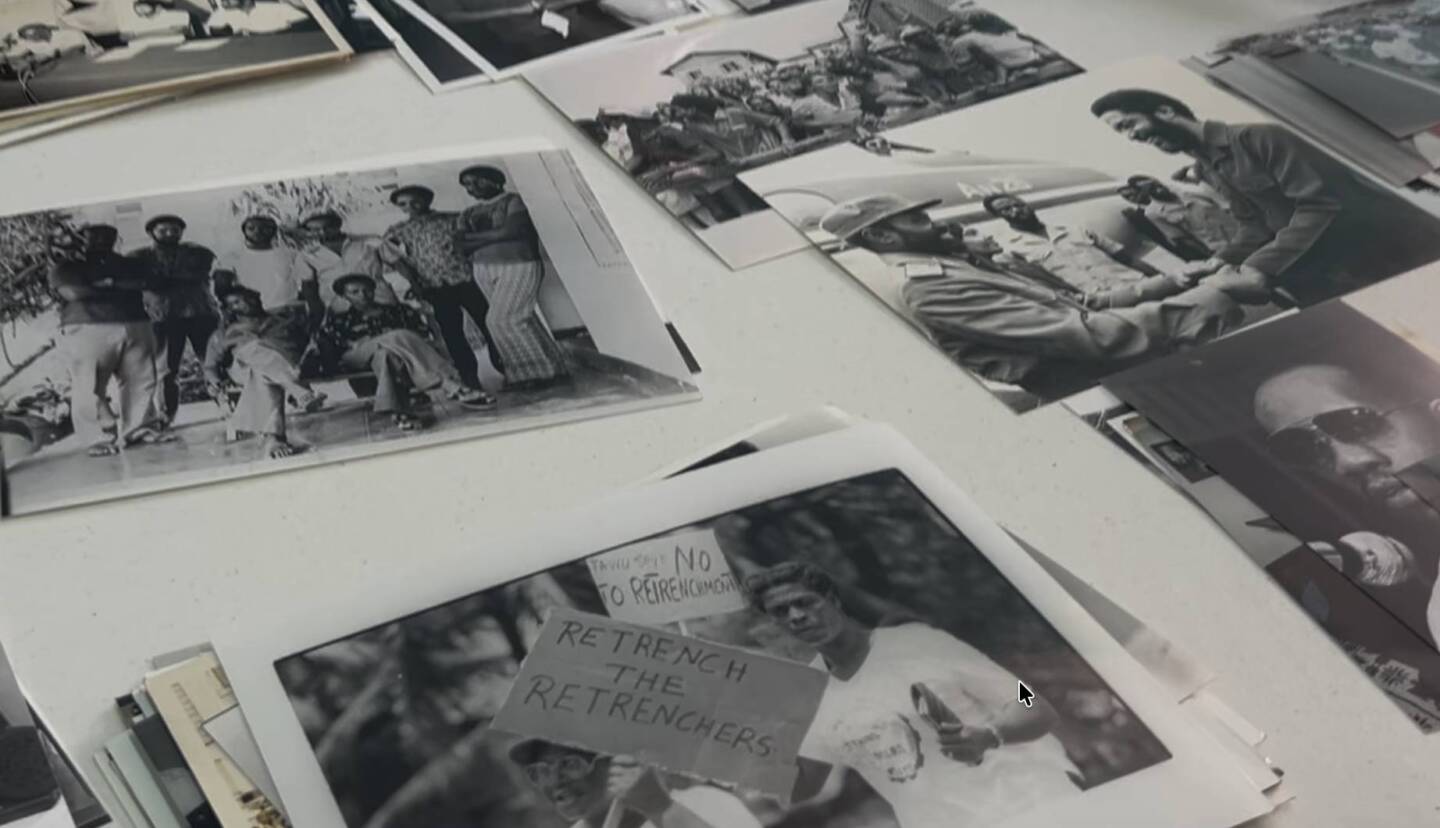
For years, photographer Arthur Winner moved quietly behind the scenes of history, camera in hand, documenting defining moments of the Grenada Revolution. At 81, the veteran photographer insists he is not a hero, not a celebrity, but simply “a servant of the people.”
His black-and-white images — preserved through turmoil, rescued in the aftermath of invasion, and now formally entrusted to the Grenada National Trust — are among the most significant visual records of Grenada’s modern story.
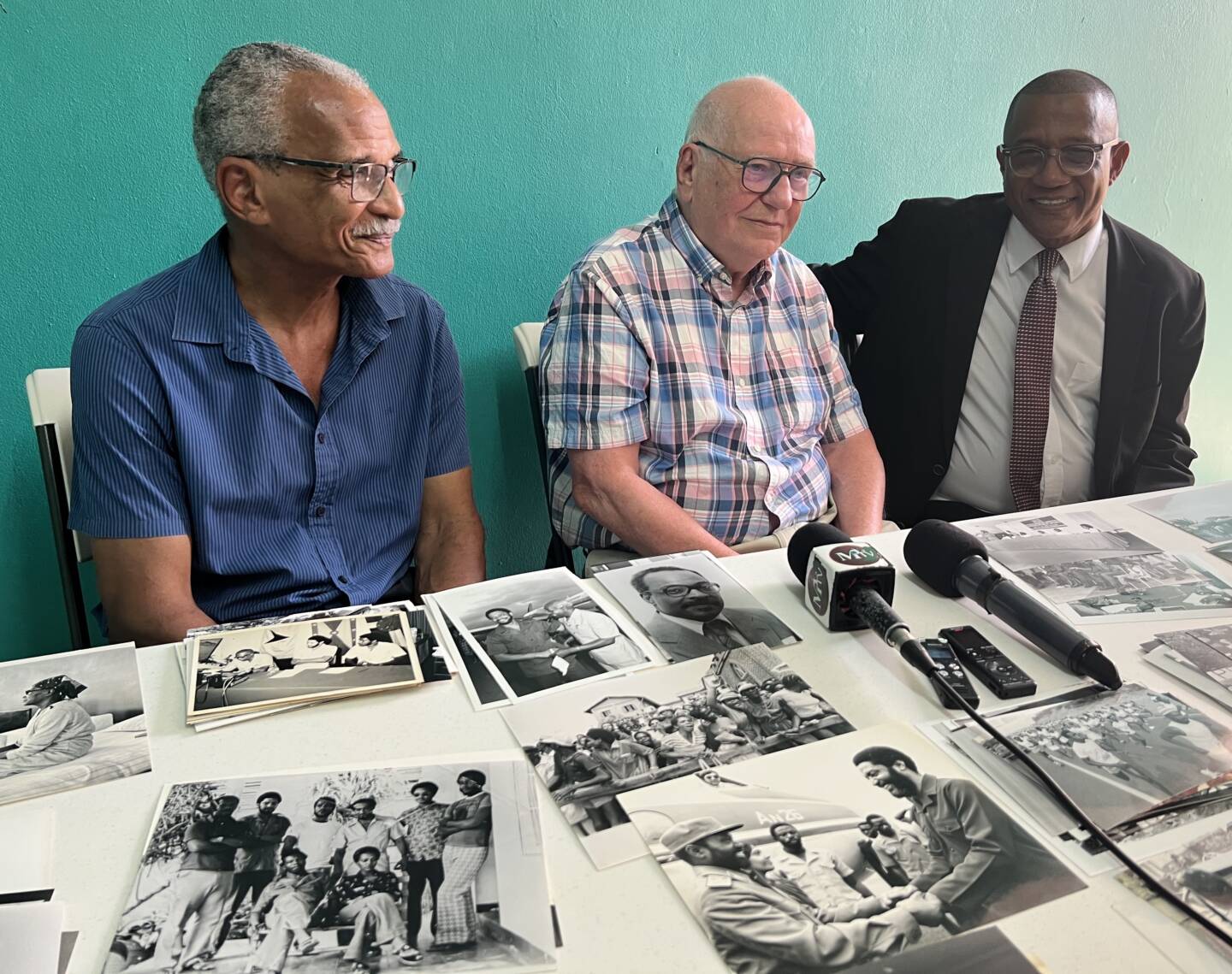
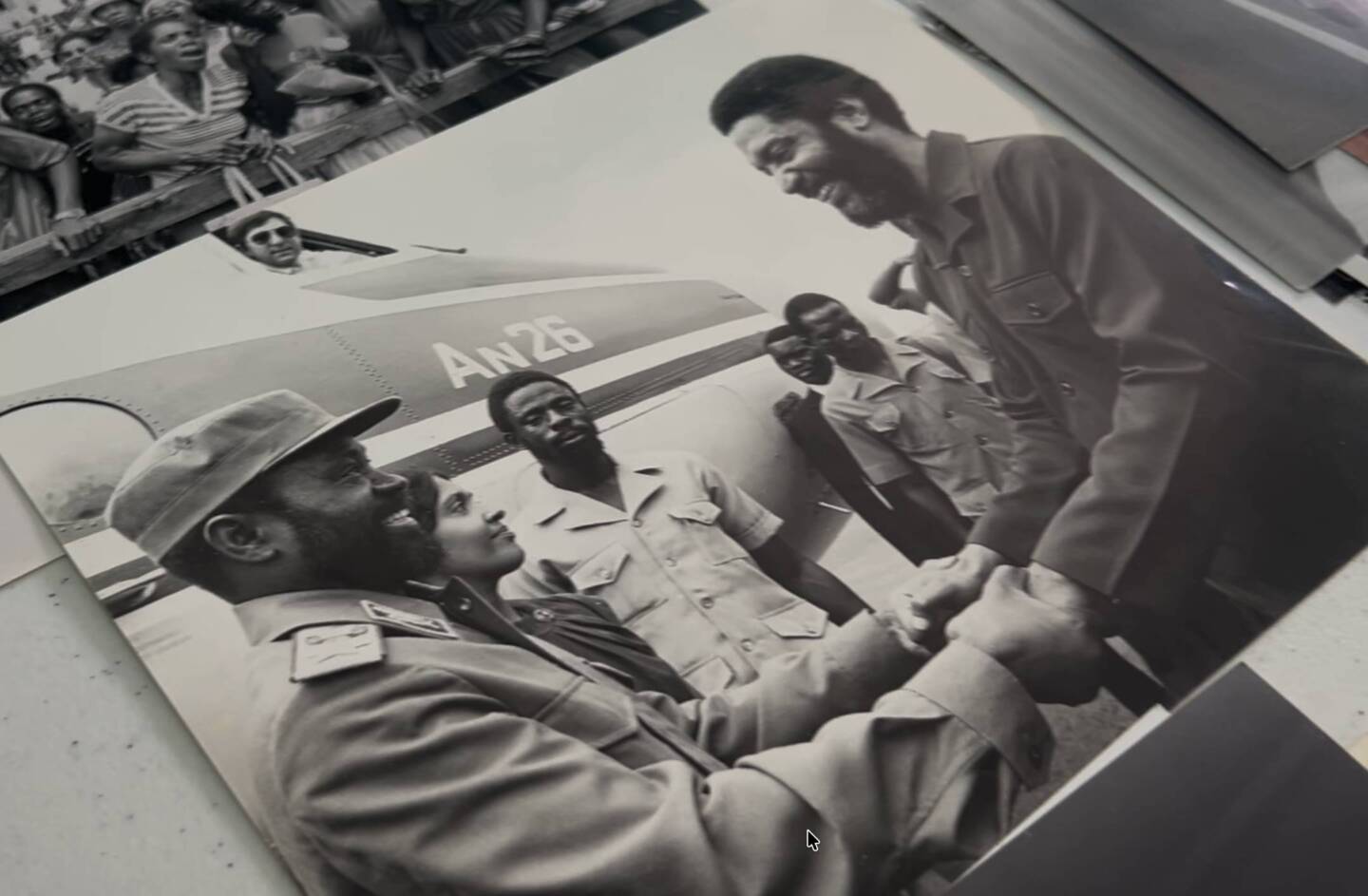
“I feel very uncomfortable with praise,” Winner said during the handover. “I prefer to be where you guys are. I’m just merely a servant.” Winner worked within the Government Information Service (GIS) at a time when events moved quickly, and history unfolded daily. Among the assignments etched in memory was the visit of Samora Machel, President of Mozambique. Winner and his colleagues laboured through the night to prepare a dossier of photographs for the departing African leader.
Former head of the government’s media centre Ruggles Ferguson remembers racing to the airport with the finished album. “We worked throughout the night,” he recalled, crediting Winner as the critical figure in ensuring the photographs were ready in time.
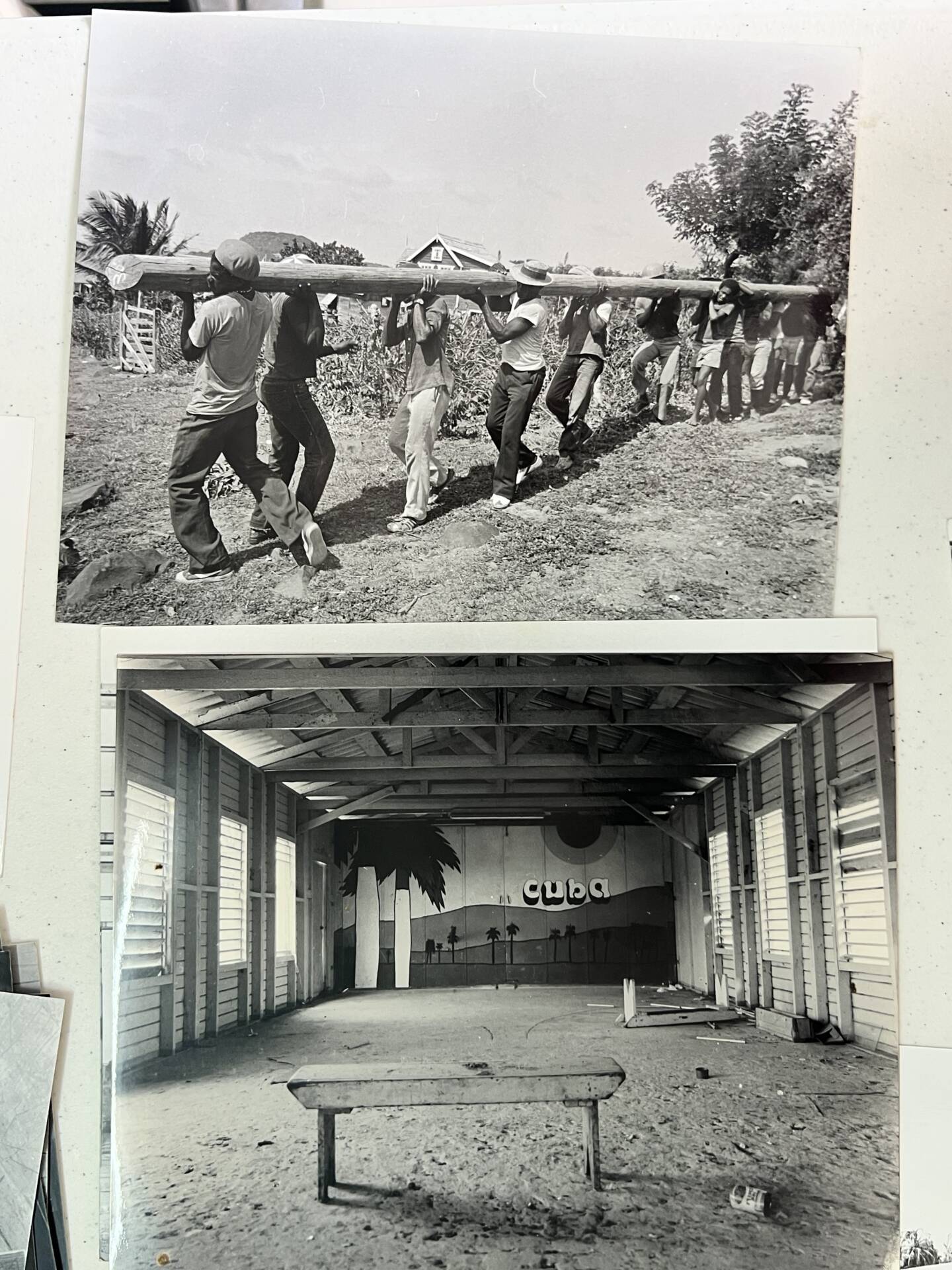
Another long-term project took Winner repeatedly to the construction site of what is now Maurice Bishop International Airport (MBIA). Week after week, he documented the transformation that would reshape the country’s future. “You couldn’t recognise it from where it started to where it finished,” he said, expressing gratitude to Maurice Bishop and his administration for making the project a reality.
Although Winner had safeguarded his negatives for years, the final push to donate them came unexpectedly. While online, he watched Jumaane Williams deliver an impassioned address about his love for Grenada during his swearing-in as New York City’s Public Advocate. Winner said the eloquence of this son of the soil, proud of his roots, struck him deeply. “It made me absolutely aware that time is pressing,” Winner said. “If this influences one Grenadian child and helps them understand who they are and what Grenada is, then the job is satisfactory.”
For Darryl Brathwaite, President of the Grenada National Trust, the donation represents far more than a transfer of old prints. It is a foundation stone in the country’s heritage infrastructure. “As a young nation, we are trying to build up our past to guide where we are going,” he explained. “This is a national treasure owned by the people.”
The GNT plans to digitise the collection, identify the faces and stories within it, and mount a national exhibition. Discussions are also underway for the establishment of a formal national archive where the originals can be preserved under proper conditions.
Brathwaite hopes the gesture will inspire others to bring forward photographs tucked away in drawers and under beds across the country, which may hold equally valuable pieces of the national narrative.