



Government is implementing a hiring freeze on all non-essential positions amid projections it will run out of cash by the end of the year.
Finance Minister Rolston Anglin said the island was headed for a $60 million budget deficit. He is trying to bring that under control by curbing the civl service’s single biggest expense – staff costs.
As of the end of June, core government employed 4,976 people, a modest increase of around 150 additional staff compared to the end of last year, but a near 20% jump on pre-COVID figures.
A cost-of-living salary increase of 5% for all civil servants, which kicked in this year, has also contributed to escalating costs.
Now Anglin says the National Coalition For Caymanians is implementing restrictions on hiring.
“We really need to constrict spending,” he said.
Running a budget deficit would trigger UK involvement in Cayman’s finances and could mean the island loses full control of its national spending plan.
Wes Howell, acting deputy governor, said chief officers had agreed to a soft hiring freeze, meaning they would restrict new recruitment to essential posts, which would require appeal from the deputy governor. That has been in place since July and is already yielding results, he said.
The strategy is in place across all of the core government, including in schools and the police service, until at least the end of the year. It does not apply to government companies and statutory authorities like the Health Services Authority and Cayman Airways, which control their own budgets.

Howell said the policy had already netted $11 million in savings compared to what was initially budgeted.
Given the size of the civil service, he said, “There’s a monthly churn rate” of people retiring, leaving the service or changing jobs, and any delay in refilling those posts has a significant savings impact.
Civil service keen to avoid tougher restrictions
While police are included in the freeze, Howell acknowledged that exceptions may have to be made, given the increased demand from a growing population as well as new financial crime-fighting requirements. In education – another area where government had been looking to bolster its ranks to improve results in mathematics – Howell said schools has completed their recruitment well in advance of the new term.
He said the current approach, which involves collaboration and consultation between chief officers and the deputy governor, allows necessary flexibility for frontline roles.
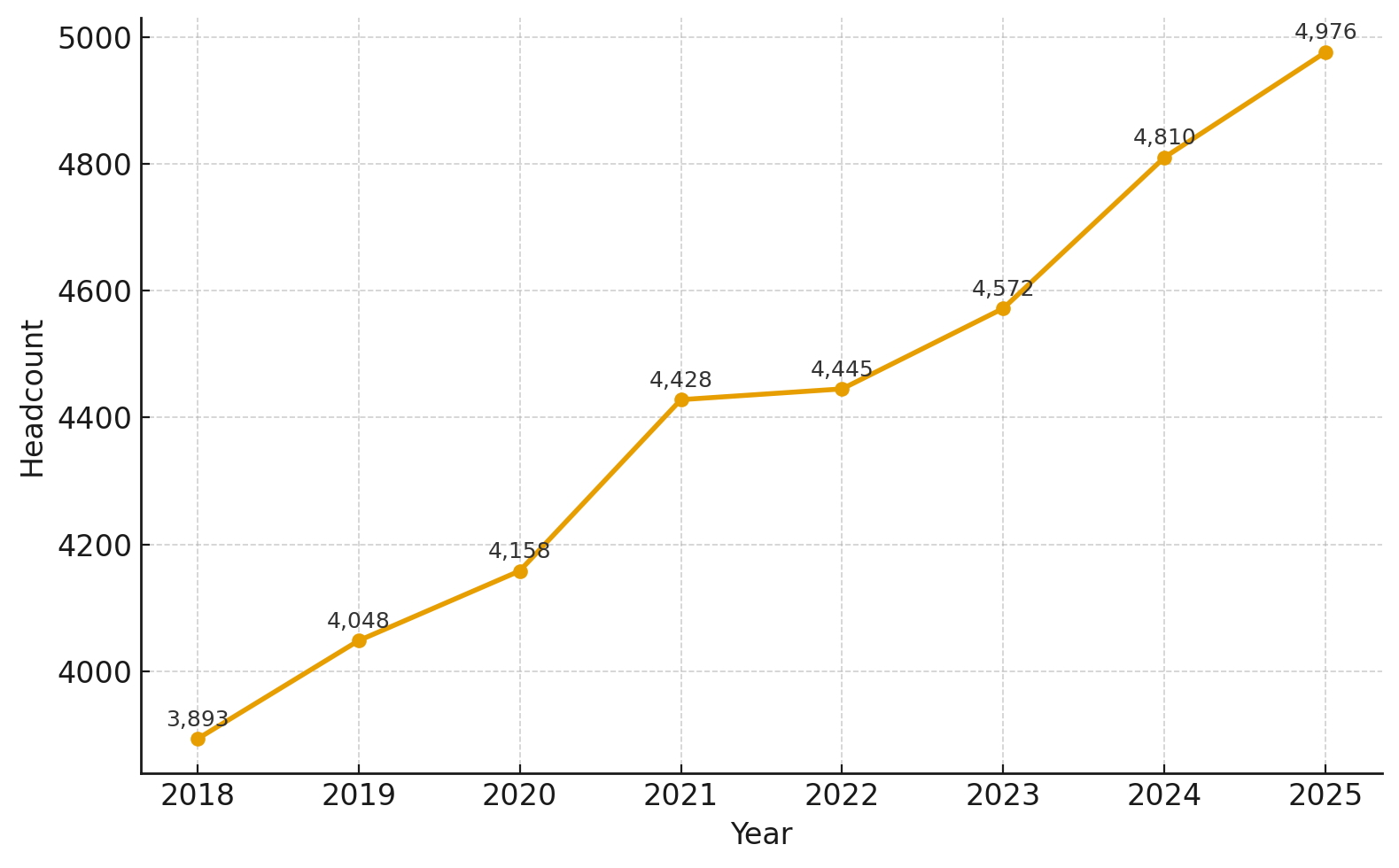
He described it as a “responsible look at HR costs” that allowed government leaders time to get spending down without drastically impacting services.
“If we can do a good job at managing some of these costs going forward, then we might stave off a full formal, hard hiring freeze, which absolutely doesn’t do the service any favours in that essential and non essential would be caught up in that,” he said.
Deficit forecasts explained
A pre-election economic and financial update (PREFU) put the likely deficit at the end of 2025 at $26.2 million – a major turnaround from the $80 million surplus projected in the budget.
In later interviews, government figures quoted more than double that figure as the estimated loss position by year end.
Speaking Friday, Finance Minister Anglin, who took over the ministry after the April election, said the larger number came from an inquiry he had commissioned on taking office.
“I asked the financial secretary to go back out to all ministries and get an update, because I wanted to see how close we would be to the PREFU numbers,” he said.
“When he went back out to ministries, the number that came back would have produced a deficit of approximately $60 million and that informed the type of cuts and restrictions that we were going to insist had to take place in the civil service.”
The gloomy economic forecasts contrast with actual results published for the first six months of the year, which show a sizeable government surplus. However, government gets the bulk of its revenue from financial services fees in the first months of the year, while its costs remain steady.
Howell likened it to the experience of families managing their own budgets.
“It’s akin to getting paid on the first of the month. … Your bank account looks really good, but over the course of the month, you then have to pay your bills, you pay utilities, you pay your rent, you pay your mortgage, and by the end of the month, you’re hoping to not be in a negative position.”
Spelling out the consequences of a deficit, he said, Cayman was still under strict monitoring through the Framework for Fiscal Responsibility, which requires it maintain positive cash balances and reserve funds.
“If we tip over that, then we involve the UK in the budgeting process. So, it’s very important, from an overall perspective that the government lives within FFR ratios and not incur a deficit,” Howell said.
Opposition leader Joey Hew said it was “concerning” that government found itself in such a position.
“While I understand the need for fiscal prudence, it’s essential to consider how such actions will affect the delivery of public services and the morale of civil service employees,” Hew said.