


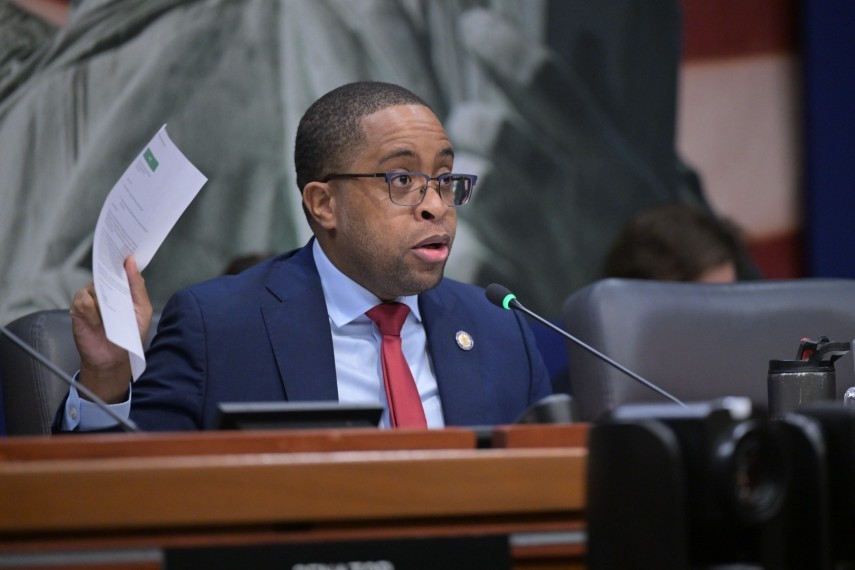
New York Sen. Zellnor Myrie (D-Brooklyn) on Wednesday, March 4, highlighted the urgent need for updates to New York State’s white collar criminal laws against fraud, scams and other types of financial crimes.
Office of Sen. Zellnor Y. Myrie
At a joint hearing of the Senate Codes and Consumer Protections committees, New York Sen. Zellnor Myrie (D-Brooklyn) on Wednesday, March 4, highlighted the urgent need for updates to New York State’s white collar criminal laws against fraud, scams and other types of financial crimes.
Myrie, whose grandmother hailed from Jamaica, said many of these laws and their associated penalties have remained unchanged since the 1980s, despite rapid technological advances that allow financial scams to be carried out with ever-increasing speed and sophistication.
“There are many dimensions to New York’s affordability crisis,” said Myrie, chair of the Codes Committee. “Without question, frauds and scams that rob people of their hard-earned wages, their property, their retirement savings is a key driver of the problem.
“Today’s hearing shed important light on the problems with our current white collar laws and the improvements we need to make,” he added.
At the hearing, Myrie and other lawmakers including Sen. Rachel May (D-Syracuse), chair of the Consumer Protection Committee, heard from state regulators, district attorneys, industry representatives, and advocates about the existing legal framework that exists to prevent and prosecute scams and frauds, especially those preying on the most vulnerable New Yorkers.
Topics included student loans, cryptocurrency, deed theft and foreclosures, wage theft and more.
“The last time we significantly changed our white collar laws, Ronald Reagan was in the White House and Patrick Ewing was the NBA’s Rookie of the Year,” said Myrie. “There were no smartphones, no cryptocurrency, no online banking, and no student loan securitization market.
“The scams have changed — it’s time our laws move into the 21st century,” he added.
Myrie said he sponsors the “Securing Customer Assets against Malfeasance (SCAM) Act,” which he described as “the most comprehensive update to white-collar criminal laws in generations.”
He said the bill updates fraud statutes, clarifies criminal procedure law, strengthens standards against bribery, protects tax dollars, and deters malfeasance by large corporations with a new penalty model.
Notably, Myrie said the bill would allow for “corporate equity fines” as a penalty for very large ($100M+ market cap) companies who commit serious crimes.
He said this legislation would permit courts to impose fines consisting of corporate stock to be deposited into a state-managed victims’ compensation fund.