



– Advertisement –
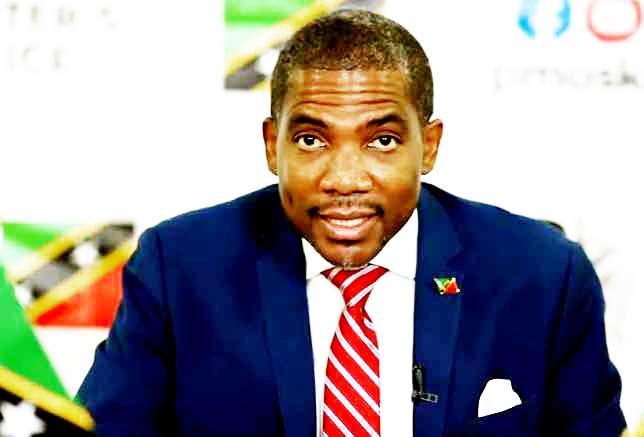
Prime Minister Dr. Terrance Drew has sought to clarify and defend his government’s position on Haiti, following intense public and regional backlash over a recent Memorandum of Understanding (MOU) with the United States that explicitly excludes Haitian nationals.
Speaking during a radio interview on Wednesday, Dr. Drew emphasised that St. Kitts and Nevis has already accepted one of the highest per-capita numbers of Haitians in the Caribbean, describing his administration as “empathetic” and proactive in its approach.
While he did not provide specific figures, the Prime Minister said the country’s record should speak for itself.
“Per capita, St. Kitts and Nevis has accepted one of the highest numbers of Haitians,” Dr. Drew said. “The reason we do that is that our administration is empathetic, it’s understanding, and of course, it helps. So we have taken a very proactive approach to Haitians.”
He stressed that the government’s ultimate goal remains a stable Haiti where citizens can live safely and securely.
“We wish Haiti well. At the end of the day, what you don’t want is a destabilised Haiti. What you want is a Haiti where citizens and residents can have a safe country to live in,” he said, adding that the federation continues to work within a Caribbean Community (CARICOM) framework, and would not abdicate its responsibilities.
Dr. Drew acknowledged the limitations faced by St. Kitts and Nevis as a small island state, noting that these constraints were central to the government’s decision-making.
“We are the smallest independent country in CARICOM, and there are limitations to what we can do,” he said. “We know we are small, we know our resource capacity, and even with that, we decided to settle a community of Haitians here. I want that record to stand for itself.”
He pointed out that Haitian children living in St. Kitts and Nevis attend school free of cost at the government’s expense, and that the federation has not engaged in forced deportations of Haitians intercepted at sea.
However, the Prime Minister said the country has now reached its capacity.
“We have taken the stance that we have reached a capacity where we cannot accommodate any more at this time because of the high numbers we have already accepted, relatively,” Dr. Drew explained. “Haiti represents 50 per cent or more of our capacity.”
Addressing criticism that other nationals are being accepted while Haitians are excluded, Dr. Drew said the decision is also tied to national security considerations.
“I would say to people: we are kind and generous, but please do not try to take advantage of us,” he said. “There are those who are nefarious and seek to distort the situation for their own benefit. We discovered there were persons committing crimes because of our position in helping to settle Haitians here. I have to protect the national security of St. Kitts and Nevis.”
The controversy centres on an MOU signed earlier this month between St. Kitts and Nevis and the United States, allowing the federation to accept up to 160 third-country deportees annually, provided they are nationals of CARICOM member states and have no violent or sexual criminal backgrounds. Under the agreement, the United States covers all associated costs, and St. Kitts and Nevis retains full discretion to accept or reject individuals on a case-by-case basis. Haitians are explicitly excluded.
Dr. Drew reiterated during a January 8 press briefing that “it does not include Haiti at this time,” citing security matters. The exclusion has sparked widespread criticism locally, regionally and internationally, particularly given Haiti’s status as a CARICOM member, and Dr. Drew’s role as current chair of the regional bloc.
The People’s Labour Party, in a strongly worded statement, condemned what it described as dismissive and harmful rhetoric toward Haiti, warning that such language undermines Caribbean solidarity and risks deepening regional divisions. The party argued that leadership at the CARICOM level demands sensitivity, unity and constructive engagement, especially with a nation facing prolonged humanitarian and political crises.
Efforts to obtain comment from the People’s Action Movement and Nevis Premier Mark Brantley were unsuccessful up to press time.
Former Prime Minister and current Minister of Finance Dr. Denzil Douglas also weighed in, calling for Caribbean unity and reminding the region of its shared African heritage and history of enslavement.
“Far more unites us than divides us,” Dr. Douglas said. “Now, more than ever, let us unite… We must remember the past — not to live in it, but to learn from it.”
In response to the uproar, Dr. McCarta Browne, a former assistant commissioner of police in St. Kitts and Nevis, issued a public apology to the Haitian people on January 18, calling the exclusion “discriminatory and exclusionary” and expressing regret on behalf of the nation’s citizens.
In a Miami Herald report, human rights advocates and diaspora groups have urged CARICOM to address the issue, arguing it undermines the bloc’s unity and Haiti’s inclusion in regional policies, such as the Single Market and Economy.
As the federation navigates this diplomatic tightrope, the backlash highlights deeper tensions in Caribbean migration politics, where small island nations balance U.S. pressures with internal capacities and moral imperatives.
The issue has highlighted broader tensions within Caribbean migration policy, as small island states balance limited resources, national security concerns and moral obligations, while navigating pressure from the United States amid renewed immigration crackdowns. The debate has also exposed divisions locally, with some defending the government’s stance as pragmatic, while others view it as a betrayal of regional and humanitarian principles.
Speaking recently on the radio programme, Dr. Drew again underscored that the agreement is narrow in scope and applies only to CARICOM nationals who are unable to return to their country of origin. Government officials have confirmed that the MOU does not involve Middle Eastern nationals or persons from outside the CARICOM framework, and includes strict safeguards around public safety.
– Advertisement –