


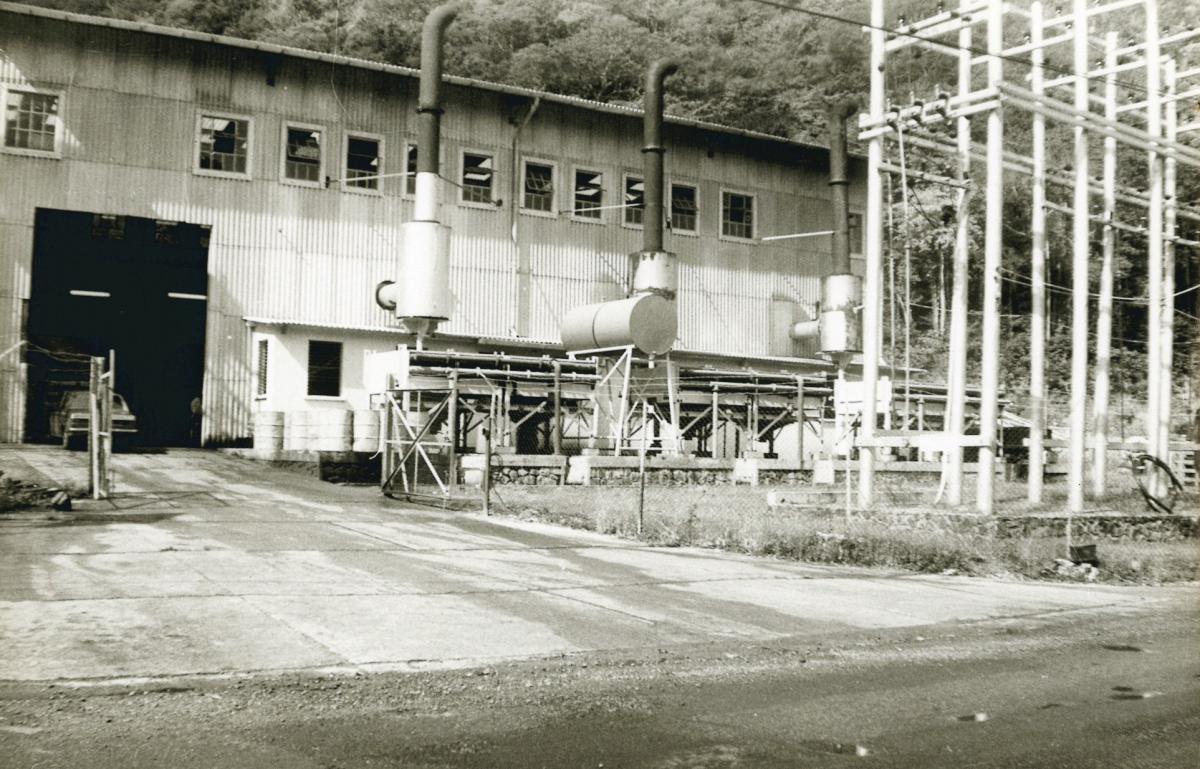
LUCELEC has brought the old Union Power Station back into use — not as a generating plant, but as a new standby capacity site designed to strengthen the country’s electricity resilience.
The facility was an integral part of LUCELEC’s early generation infrastructure, supplying electricity to much of the country’s north. That changed in 1990, when the Cul De Sac Power Station (CDSPS) became Saint Lucia’s sole power plant. Before then, LUCELEC operated two main generating stations – Union in the north and Vieux Fort in the south — each serving independent distribution systems.
Over time, those older units became increasingly inadequate, constrained by their small size and ageing infrastructure. Both the Union and Vieux Fort plants were eventually taken out of service.
Recently, however, renewed activity at the Union site has drawn public attention. LUCELEC’s Senior Planning Manager, Ormond Reece, says the former power station is now being used to provide additional standby capacity as part of the company’s broader push to strengthen electricity resilience.

“This investment ensures that LUCELEC meets its statutory obligation to maintain sufficient, reliable capacity to serve the island’s electricity supply,” Reece told St. Lucia Times. “LUCELEC is required by law to maintain this capacity, even in the event of a rare outage scenario where the largest generators at the Cul de Sac Power Station are out of service.”
According to Reece, the additional capacity also supports wider reliability goals as the energy mix evolves. “It helps to reduce the risk of system interruptions and supports a more stable grid as the integration of more renewable energy resources continues,” he said.
There was some additional movement on the renewable energy front this year. The World Bank approved the Caribbean Efficient and Green Energy Buildings Project, a US$131.87 million initiative that also includes Grenada and Guyana. The project aims to reduce reliance on imported fossil fuels and modernise energy infrastructure by retrofitting 500 public buildings with energy-efficient technologies and renewable energy systems, including rooftop solar panels. The goal is to cut energy consumption by at least 20 per cent.
“These efforts will not only decrease reliance on imported fossil fuels but will also build resilience against power outages, which are common in the region due to extreme weather events like hurricanes and floods,” World Bank officials said in a statement.
Not all developments moved forward as planned. In June, progress on the Electricity Supply Bill stalled in Parliament. Government officials have said the legislation is intended to advance Saint Lucia’s renewable energy agenda by formally opening electricity generation to independent power producers using solar, wind and other clean sources.
Then Minister for Infrastructure Stephenson King told the House that key stakeholders had requested more time to review the complex draft legislation.
Under the proposed framework, LUCELEC would remain central to the transition. The company’s transmission and distribution grid would stay intact, with the government maintaining that the local market is too small to support competing grids.
The power provider, meanwhile, has outlined major initiatives for the coming year. “LUCELEC has secured full approval from the Development Control Authority (DCA) for the construction of its 10MW solar farm on the southeast coast — a major step in the renewable energy transition,” Reece said. “Bids for the construction of the solar farm are due on 16 January 2026. Construction of the solar farm is scheduled to commence in Q2 of 2026.”
From January 2026, the company will begin to develop an Integrated Resource and Resiliency Plan (IRRP). Reece said the Nation Utilities Regulatory Commission (NURC) approved, multi-stakeholder framework — inclusive of feedback from the Government of Saint Lucia and all stakeholders in the energy space — will guide the future development of Saint Lucia’s electricity sector and define the timing and mix of renewable and conventional energy resources required to meet the goals outlined in the National Energy Policy.