



– Advertisement –
By Robert Andre Emmanuel
[email protected]
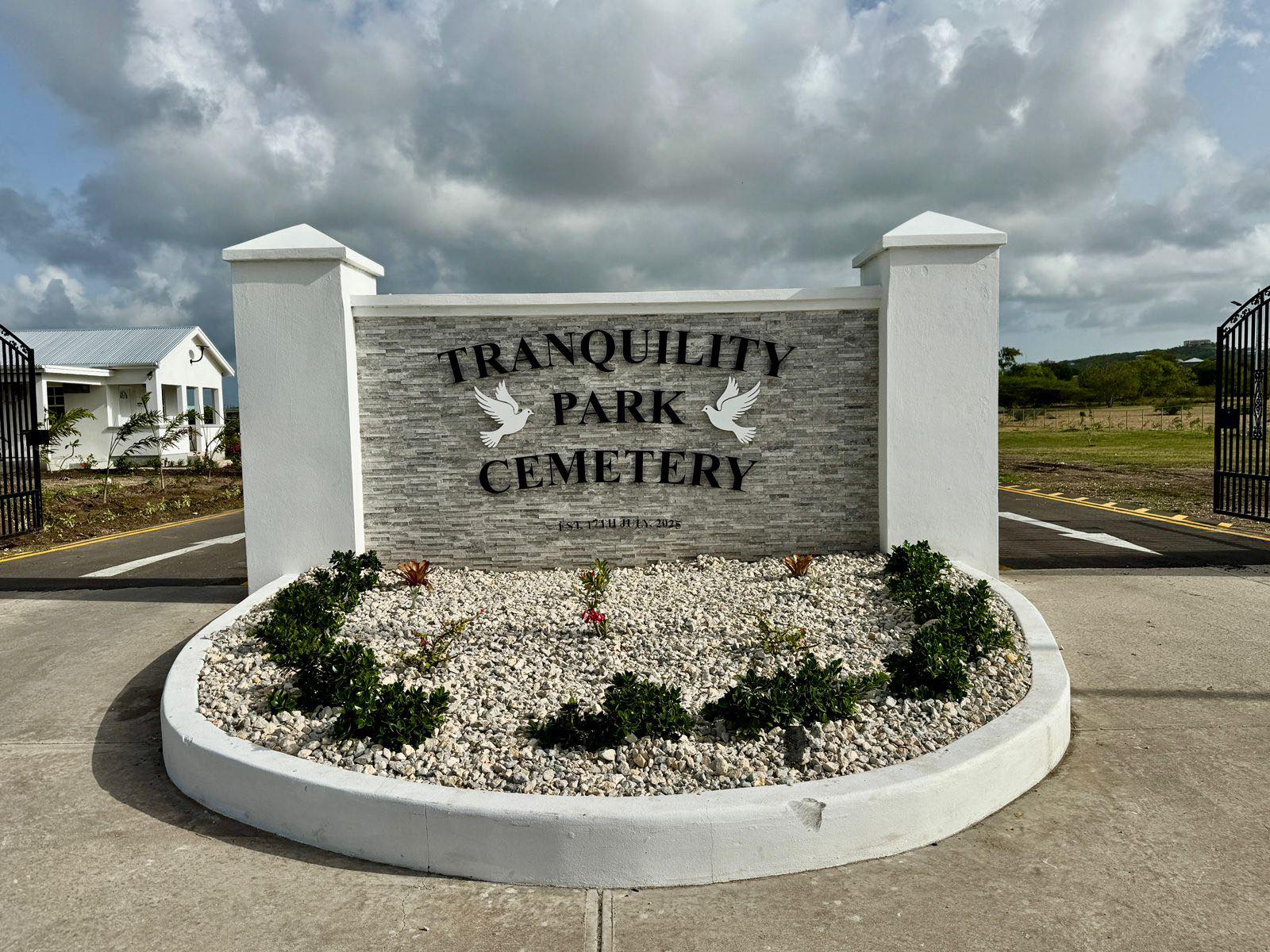
No more plastic flowers, a ban on alcohol drinking and raucous behaviour and a limit on vending in the area—these are some of the strict regulations the public can expect when burying loved ones at the new Tranquility Park Cemetery which will be open for burials on September 1.
Health Minister Sir Molwyn Joseph announced the opening date at a Tuesday press conference after conducting several dry runs to ensure professional management of interments.
Announcing the plans for stricter rules, the health minister criticised the behaviour of the public at the Public Cemetery, including the sale of alcohol.
“Those of you who have attended many funerals, I hope you become as disgusted as I have been many times to see at funerals people are cavorting, playing music, drinking, smoking, and behaving in an irreverent manner,” Sir Molwyn said during the Ministry of Health’s press conference. “That will not be allowed in this new cemetery.”
The facility will also operate from 6 am to 6 pm daily, with after-hours entry requiring prior authorization.
Loud, disruptive, or offensive behaviour will be strictly prohibited and security forces will be stationed at the cemetery to escort violators from the premises.
The cemetery had already experienced vandalism but has reportedly implemented security measures to address the problem.
According to the Minister, the plastic flowers ban was due to environmental concerns at burial sites, and he urged families to return to using live flowers for funeral arrangements, noting that the current public cemetery is “littered with plastic” from arrangements left for years.
“We banned plastic in Antigua and Barbuda and if you want to see how difficult a problem that is, visit the current public cemetery,” he said. “What I suggest is that we go back to the tradition of getting live flowers at our funerals.”
The minister clarified that while plastic arrangements cannot be placed in the burial ground, families can still use floral arrangements at home, stores, or offices during funeral preparations.
Meanwhile, authorized vendors will be restricted to designated areas, with unauthorized selling around the cemetery perimeter prohibited.
The ministry is currently identifying specific areas for approved vendors, with random or unescorted vending strictly forbidden.
Meanwhile, according to Sir Molwyn, graves will be dug to nine feet to accommodate two bodies each, a departure from the traditional six-foot depth, explaining that this will prevent disturbance of remains when graves are reused, dismissing speculation that the deeper graves were due to concerns over waterlogging.
“The boreholes were done by the experts. At no time when we did the boreholes, we observed any water,” he said. “It has nothing to do with water.”
The burial process itself will undergo significant changes with new equipment designed to eliminate the distressing sounds currently associated with interments. The ministry will replace backhoes with quiet ecliptor machines preloaded with finer burial material.
“You know that we are not going to continue the system of digging a hole and putting that same material in a hole, and then you end up with a big mound,” the minister explained. “And we are not going to continue the practice of using backhoes to fill the graves. I think that is so terrifying on some of the families where you hear this clanging and so forth.”
The new system includes improved grave preparation techniques to prevent surface collapse during excavation. Graves will be manually prepared six inches down before mechanical digging begins, creating proper square cavities without edge damage.
“You’re not going to be hearing a lot of noise. It’s a quiet piece of machine,” the minister noted after observing Sunday training exercises with cemetery operators.
Several regulations will require legislative amendments, including changing burial depth requirements from six to nine feet and establishing time restrictions such as prohibiting burials after sunset.
The cemetery will initially focus on burials, with monument installation and plot purchase policies to be established at a later date with the Minister indicating that while some visitors may need time to adjust to the new standards during the opening period, strict enforcement will begin within several months.
Meanwhile, September 1 will also mark the start of cremation services in Antigua and Barbuda, and Sir Molwyn said that the Deputy Chief Health Inspector, Daryl Spencer, is currently developing regulations for ash handling, storage, and transport procedures.
“It might not appear to be important, but when you have ashes and so forth, there ought to be regulation how it’s handled, how it’s stored, and who can carry it out,” Sir Molwyn remarked.
About The Author

– Advertisement –