


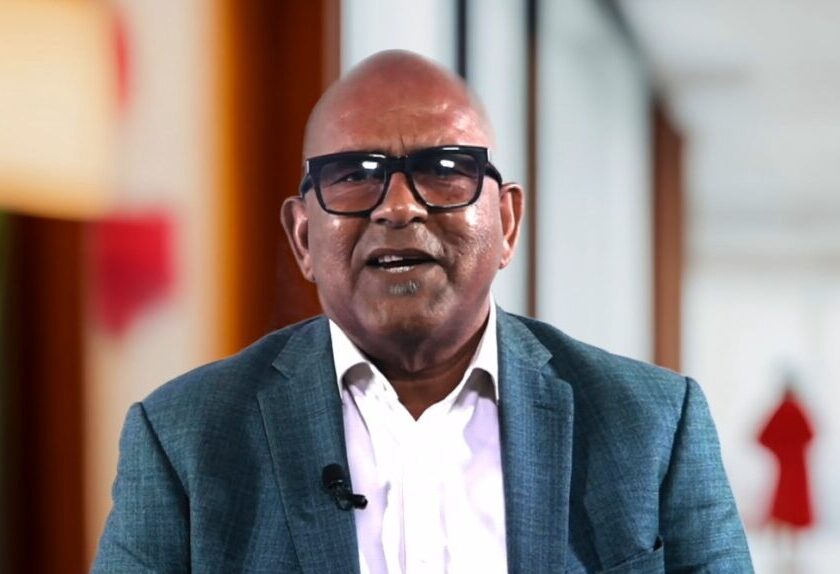

A United States import ban on Grenada fish that goes into effect in January will cost Grenada “millions of dollars”, says former Agriculture Minister Peter David, noting that the US is the “largest export market” for local fisheries products.
“Over 90% of our fish exports go to the US. This will cost our nation millions of dollars when we’re already facing economic uncertainty,” according to David, who also has offered suggestions on what Grenada could do before he ban takes effect.
The US government, through the fisheries division of the National Oceanic and Atmospheric Administration (NOAA) of the Commerce Department, recently announced stringent import restrictions aimed at ensuring that seafood entering the United States markets adheres to the same high standards as American-caught seafood.
Other nations must demonstrate “comparability finding” for their fisheries, said NOAA, underscoring the need for adequate protections by countries to ensure the safety of marine mammals during commercial fishing.
The American announcement, under what’s known as the “Marine Mammal Protection Act”, has resulted in the US decision to ban — from Grenada and other countries — imports of certain fish products, beginning 1 January 2026.
Grenada is one of 46 nations that will face the US import restrictions. The Americans are prohibiting fisheries imports that do not meet comparable standards for protecting marine mammals from accidental deaths, also known as bycatch.
Countries denied a “comparability finding” for their fisheries will be restricted to the US market, requiring certifications of admissibility to prove their products are not from non-compliant fisheries.
The US announcement is troubling news for the Grenadian fishermen and women, said David, MP for the Town of St George and Leader of D Movement, an opposition political organisation.
The impact of the ban will be felt by all Grenadians — including fisher folk from Gouyave, Petite Martinique and Grenville — and in the loss of “millions of dollars that normally circulate in our economy,” said David, who is also a former Minister of Foreign Affairs.
Grenada has found itself in an “avoidable” crisis after failing to meet a “simple” requirement that the US has had in place for years, David said.
“The requirement is simple: prove your fisheries protect marine mammals, like US fishers do. The deadline was extended in 2020 due to Covid-19 until 2022; then, extended again in 2023 until 2025. When the US evaluated 135 countries this year, Grenada was among 42 nations denied approval,” David explained. “I’ve spoken with fishers in Gouyave this week; they’re asking how we got caught unprepared with so much time to act.”
While progress has been made in the local fisheries sector, including the construction of the Japanese-funded facility in Gouyave under the previous administration, and the NDC government’s “good vision for our blue economy” and the party’s manifesto promising to make Petite Martinique a fishing centre; at the same time, no efforts have been attempted at the “unsexy fishing compliance work,” David charged.
“No comprehensive bycatch monitoring,” he said. “No trained observer programmes. No data systems proving we protect marine mammals while fishing.” What’s necessary is to “organise around proactive governance that protects market access”, and to “move forward together with leadership that shields working people from avoidable crises,” David argued.
“Before comments start flying about previous administrations, let’s be clear: we keep looking back when the problem is before us, and the responsibility lies with those in office currently,” he said.
“Here’s what must happen before January 2026: bycatch monitoring programmes, trained marine mammal observers, proper data collection systems, and government transparency about progress. Other Caribbean nations have succeeded; we can, too, but it requires immediate, focused action,” said David. “Our fishing communities have sustained their families and fed our nation for generations. They deserve leadership that anticipates international requirements, instead of scrambling after deadlines pass.”
D Movement