


By Deslyn A Joseph
The corridors of St. John’s Catholic Primary School were transformed into a hub of scientific discovery on Tuesday, March 24 as students hosted a vibrant Science Fair that bridged the gap between classroom theory and real-world application.
The event, which drew attention from the Ministry of Education, served as a powerful showcase for the next generation of Antiguan innovators and environmental stewards.
The morning commenced with an inspiring address during assembly by Andrea Otto, Science Studies Tutor at Antigua State College.


“I encourage the student body to recognize the scientific principles governing your everyday environments,” she stated. Her remarks set a sophisticated tone for the day, urging students to move beyond textbooks and embrace curiosity as a lifelong tool.
The revival of the fair carries a deeper academic purpose for the institution’s faculty.
Learning support teacher Priscilla Joseph, emphasized that the initiative is designed to have a lasting impact on the student’s intellectual development. “Our goal in restarting the Science Fair is to spark curiosity and a love for science among our students, while helping them develop critical thinking and problem-solving skills,” Joseph stated.
The fair was characterized by a diverse array of exhibits that balanced traditional agriculture with modern Science, Technology, Engineering, and Mathematics (STEM) initiatives.
A standout feature was the hydroponic system presented by Adrian Bowen, which captivated attendees by demonstrating how crops can thrive without soil. This forward-thinking display was complemented by a lush exhibit of sample plants, including kale, tomatoes, eggplants, and celery, which allowed students to explore the intersection of healthy living and food security.
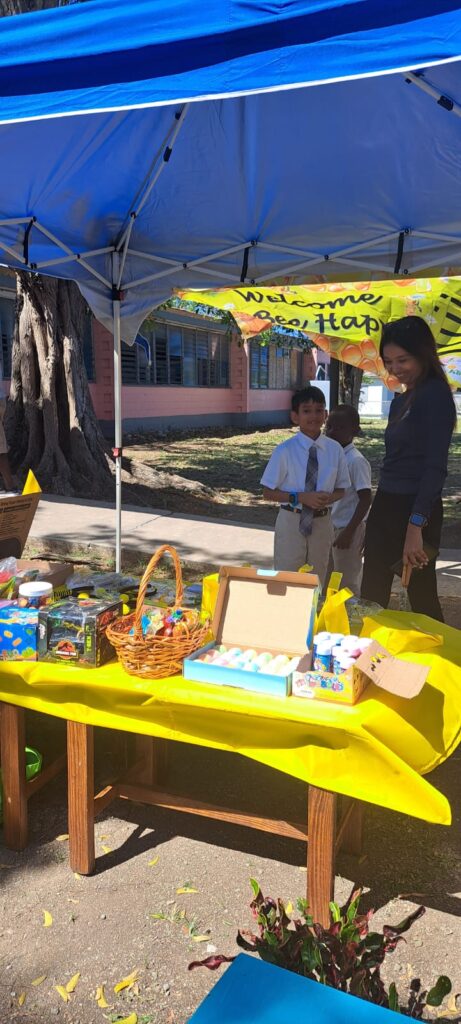
Sustainability was a recurring theme throughout the exhibition. The Good Humans 268 organisation contributed a special feature that promoted environmental awareness, while a dedicated display of bee products highlighted the critical role of pollinators in our ecosystem. Students further demonstrated their commitment to the planet through creative workshops, such as crafting necklaces from recycled materials to reinforce the necessity of waste reduction.
The significance of the event was underscored by the presence of key educational officials who observed the students’ handiwork. Among the distinguished guests were Mrs. Brenda Cochrane from the Early Learners Support Department and Mr. Philip Lloyd, Education Officer for Social Sciences. Their attendance highlighted the collaborative nature of the fair, where scientific inquiry met social responsibility.
Regarding modern technology, the fair pushed the boundaries of primary education through robotics and simple machines. These hands-on projects encouraged students to engage in complex problem-solving and engineering, proving that age is no barrier to innovation.
By the conclusion of the event, the Science Fair 2026 had established itself as an enriching success, fostering a deep-seated appreciation for the sciences and leaving the school community with a renewed sense of wonder for the natural and mechanical world.