


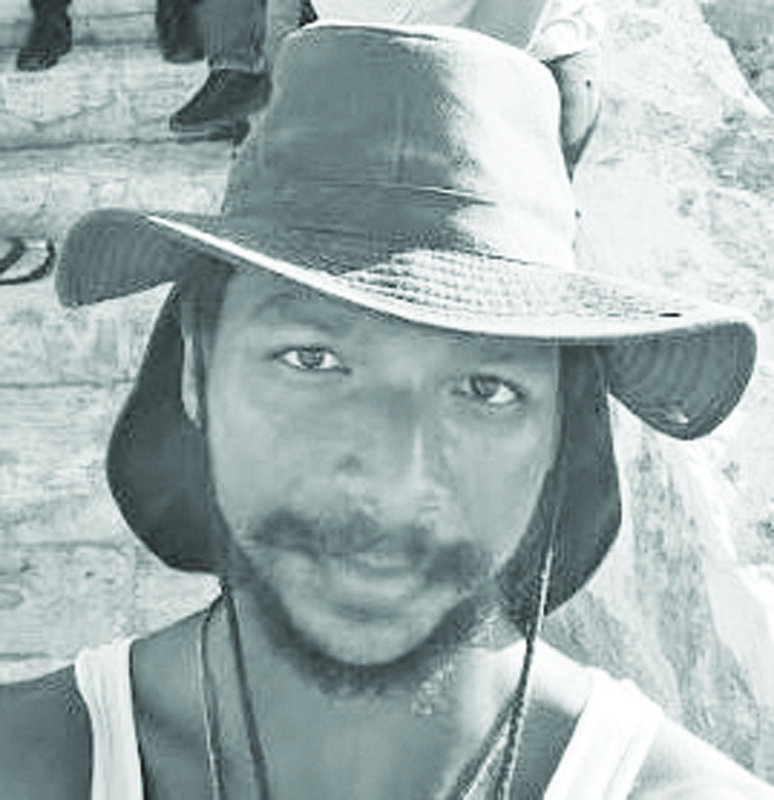

When Carl Webster, Jr. (CJ) walks through the streets of Anguilla, you don’t need to see his face to be able to point him out. The first thing that stands out is his quintessential Indiana Jones-style hat. It is a symbol of the adventure that has defined his passion from an early age for uncovering, preserving, and sharing the rich history of his island.
CJ’s fascination with Anguilla’s past started at home, even before he could fully grasp the significance of the island’s history. Growing up, his father Carl Webster, Sr., would share stories and lessons that he learned from CJ’s great grandfather, Ranny Webster (Pappy). “My dad would always start his life lessons with the phrase ‘as the old people would say…,’” CJ recalls. “He’d tell me everything Pappy told him. Naturally, I started wondering, ‘If my Dad knows all of this, what else is out there for me to learn?’
As CJ listened to his father’s recollections of people, places, events, and even trees planted decades earlier, he began to see the island in a new light. “The stories he told gave me a personal attachment,” CJ explained. “You realize how close everything is and how connected you are to it.” Through those shared memories, CJ understood the dramatic differences between his and his father’s generation. He has come to appreciate his own upbringing with modern amenities which contrast sharply with his father’s life of tending animals, fetching water, and after all that was done, walking to school.
For him, discovering Anguilla’s history became an adventure. He likens it to the exploits of Indiana Jones: “Like in the old-time movie—Indiana Jones, he would go out exploring and gathering information. That’s how it started for me¬¬, information gathering.”
Yet this passion goes beyond exploration. It is driven by a sense of urgency. CJ worries about the parts of Anguilla’s past that are fading from memory: pre-Revolution Anguilla, Arawak sites and practices, significant landmarks, maritime trade history, unique slavery practices, traditional ways of life, and Anguilla’s place in the region’s aviation industry. He has a concern for long standing trees that silently bear witness to centuries of change. “Imagine if a tree could talk,” he says. “It would tell you stories of life in Anguilla hundreds of years ago.”
He continued: “Of Anguilla’s history, most people can only recall the Revolution, but even its true meaning has been lost or politicised. Few remember the salt-making era, the migration of families to places like Curacao and Trinidad, or the lives of those who refused to leave the island during difficult times.” He also noted how modern life has changed daily practices and relationships with the environment: “Back then, people relied on livestock and gardening for food, and on large trees, which were cut down for shipbuilding and fuel. Now, everything is Americanised, and traditional ways are fading.”
CJ sees history as a guide for the future. His message to young people: “You need to know where you come from to know where you are going.” For him, understanding the past helps communities make better decisions and appreciate the richness of their heritage.
Preserving Anguilla’s history, CJ argues, requires more than passion and curiosity; it requires action, funding and active participation. He is an advocate for stronger legislation to protect historical buildings, landmarks, and trees, and for active community participation in passing oral traditions to the younger generations. “The more heritage is embraced by the population and younger generations, the more it survives,” he says.
Finally, CJ sees the preservation of history as a tool for understanding identity and guiding the future.
CJ’s journey into Anguilla’s history started with family storytelling, curiosity, and a desire to know more about his history, and became personal through the tangible connections he made to places shared through his father’s stories. His desire is to preserve and share the past before it’s lost––reminding us that history isn’t just about dates and events—it’s about people, stories, and connections that shape our identity.